
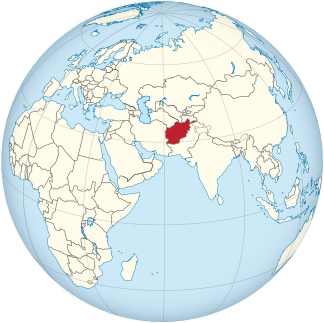
Afghanistan (Pashtun and Persian افغانستان, DMG Afġānistān) is a landlocked country at the interface of South Asia, Central Asia and the Near East, bordering Iran, Turkmenistan, Uzbekistan, Tajikistan, the People’s Republic of China and Pakistan. Three-quarters of the country consists of hard-to-reach mountain regions.
After the invasion of the Soviet Union in 1979, mujahideen– funded by the United States and Saudi Arabia – defeated the Soviet-backed government. However, the division of power failed due to rivalries; the fundamentalist Islamic-oriented Taliban militias came to power and enforced a radical interpretation of Islam and especially Sharia law with all their might. After the terrorist attacks on September 11, 2001, in the United States, the Taliban regime, which had harbored members of terrorist organizations, was overthrown in the largely United States-led war on terror. Since then, this war, which has also been fought in Afghanistan, has dominated events.
The country was constituted as a democratic Islamic republic during the International Stabilization Mission (ISAF) by the 2004 constitution. From 2004 to 2014, Hamid Karzai was President of the Islamic Republic of Afghanistan. After the 2014 presidential election, Ashraf Ghani was declared the winner and sworn in as head of state on September 29, 2014. After the progressive and finally complete withdrawal of international troops on August 30, 2021, the Taliban quickly regained control of the country and proclaimed the Islamic Emirate of Afghanistan.
Geography
Topography of Afghanistan
Afghanistan is a landlocked country of strategic importance in the region. The country is mostly mountainous. Less than 10 percent of the country’s surface is below 600 m. The central highlands consist of several mountain ranges, the highest of which is the Koh-e Baba (up to 5048 m). The Hindu Kush (up to 7500 m) is located in the northeast, the Safed Koh (up to 4755 m) in the east on the border with Pakistan. On this 2643 kilometer long demarcation line is the Durand line.
In the southwest, there is a drainless plain with the Hilmendsee on the border with Iran. Its most important tributary is the Hilmend, which rises in the east of the country near the capital Kabul. Afghanistan is mainly a mountainous country in the eastern Iranian highlands. Only in the north are plains on the Amudarja and in the southwest smaller desert-like basins. The northeast is crossed by the Hindu Kush. Between the basin of Kabul and the northern part of the country, there has been a winter-proof road connection over the mountain ridge with an almost 3 km long tunnel (SalangPass road) since 1964. Through the Wachan Corridor in the Pamir Mountains, Afghanistan also shares a border with the People’s Republic of China.
The southern Hindu Kush drops steeply into the Nuristan landscape, which is still partly covered by coniferous forests. The landscapes between the capital Kabul and the Chaiber Pass on the border with Pakistan are the political and economic core area of the country. The settlement core in western Afghanistan is the city of Herat. Southern and southwestern Afghanistan consists of deserts and semi-deserts. It is crossed only by the Hilmend, which is the longest Afghan river. The Hilmend ends in the salt lakes of Sistan on the border with Iran. East of the Hilmend lies the Rigestan desert (“Sandland”) and west of the Hilmend the Dascht-e Margo, which consists mainly of gravel and clay surfaces.
In the northeastern Hindu Kush mountain range and in parts of the province of Badakhshan, the earth often shakes. Such earthquakes cause landslides and snow avalanches in winter. In a strong earthquake on May 30, 1998, in the area of the province of Badakhshan, about 6000 people died. Also in March 2002, thousands of people died there. In 2012, an earthquake destroyed over 2000 houses; eleven people died.
Afghanistan contains coal, copper, iron ore, lithium, uranium, rare earth metals, chromite, gold, zinc, talc, barite, sulfur, lead, marble, gemstone, natural gas, crude oil and other raw materials. In 2010, the U. S. and Afghan governments estimated the value of the mineral deposits found by 2007 but still untapped at between $900 billion and $3,000 billion.
The highest point of the country is the summit of the 7485 m high Noshak in the Hindu Kush. The lowest point (285 m) is in the Amudarja river plain on the border with Turkmenistan.
The Band-e-Amir Lakes near Bamiyan are among the most famous sights in the Western world. They have been designated as the first national park in Afghanistan since 2009.
Climate
Afghanistan has a continental climate with hot dry summers (only in the extreme southeast the monsoon brings rain) and very cold winters. The wintry westerly winds usually bring moderate rainfall. In winter, due to the high altitude of the country, especially in the north, snowfalls are occasionally possible into the valleys. Climatically, the south of the country is already one of the warmer subtropics in which the cultivation of date palms is possible, while the north belongs more to the temperate zone.
In 2000, half of the population suffered from one of the most frequent severe droughts. Such droughts could become more frequent in the future; Global warming could lead to less precipitation, especially in winter and spring (→ arid climate). For the southeast affected by the monsoon, on the other hand, it is to be expected that the amount of precipitation in summer will vary more; the additional warming of the atmosphere also makes the Indian monsoon system more unstable. Agriculture in particular (where many Afghans work) could be negatively affected.
| Place | in January | in July |
|---|---|---|
| Herat | 9 °C/−3 °C | 37°C/21°C |
| Kabul | 5 °C/−7 °C | 32 °C/15 °C |
| Kandahar | 12 °C/0 °C | 40°C/23°C |
In the mountains and high mountains surrounding these places it is colder; according to the altitude formula, the air temperature drops by a typical 0. 65 °C per 100 m altitude.
Flora
With up to 5000 suspected higher plant species, Afghanistan has a fairly high number of species in view of the drought (for comparison: for the approximately half as large Federal Republic of Germany around 4000 plant species are estimated). With a proportion of endemic species of around 30%, the Afghan flora is very rich in plants that are not found anywhere else in the world.
Large parts of the country are reshaped by human influence, millennia of overgrazing, deforestation and agricultural use, despite the size of the country, have meant that very few, especially remote regions, still have natural vegetation. Continuous floristic exploration of Afghanistan did not begin until the middle of the 20th century, which is also complicated by the political situation of the state.
Nature conservation
Afghanistan has a high habitat diversity with very different ecological conditions. The establishment of systematic nature conservation is opposed by the country’s political situation, which has been unstable for decades, and it was not until 2009 that the Band-e-Amir Lakes near Bamiyan, the first national park in Afghanistan, was designated.
Population
Afghanistan had a population of 38. 9 million in 2020. Annual population growth was +2. 3%. Afghanistan has one of the youngest and fastest-growing populations in the world. Despite several wars, the population almost tripled from 13. 4 million people in 1980 to today’s level. By 2050, Afghanistan is expected to have 61 million inhabitants, which will put a heavy strain on the country’s limited resources. The number of births per woman was statistically 4. 2 in 2020. Outside Africa, Afghanistan is the country with the highest fertility rate. Most women do not have access to contraceptives and often become pregnant at a very young age.
In 2020, 26 percent of Afghanistan’s residents lived in cities. 5 percent live as nomads. The largest cities in 2019 were Kabul (4. 273 million inhabitants), Herat (556,200 inhabitants), Kandahar (506,800 inhabitants), Mazar-e Sharif (469,200 inhabitants), Jalalabad (263,300 inhabitants) and Kunduz (183,300 inhabitants).
Ethnicities
The population of the country feels that they belong to a variety of ethnic groups and tribes; for historical reasons, the Pashtuns, the largest ethnic group in Afghanistan, often see themselves as a state-supporting people. In many areas, several ethnic groups live together; membership of one of the groups is not statistically recorded and can only be estimated. In addition, the assignment of the individual to a particular ethnic group is not always clear, as self-identification and external attribution often differ. The following values are based on the population in 2009.
- The Pashtuns, historically referred to as “Afghans”, are the founders and namesakes of the country. They make up about 42% of the population. The numerically largest subgroups are the Durrani (south and west) and the Ghilzai (east). Several nomadic tribes are also assigned to the Pashtuns, above all the Kuchi with around 5 million people. The nomads are particularly protected by Article 14 of the Afghan Constitution (“The state develops and implements effective programs [. . . ] to settle the nomads and improve their living conditions”); for example, in Article 84, the Kuchi were promised two representatives in the Mezhrano Jirga, appointed by the President. In addition, under the 2005 Electoral Act, Kuchi can send ten deputies to the Volesi Jirga.
- Tajiks are the second largest group in the country with about 27%. “Tajik” is a general term of the Persian-speaking population in Afghanistan, often referred to as “Parsiwan” (“Persian speaker”) or, in the east and south, as “Dihgan” and “Dihwar” (“village owner”, in the sense of “sedentary”). The Tajiks are not an ethnic group separated from the Persian population of neighboring states; in the west of the country they form the direct continuation of the Persian-speaking population of Iran, in the north that of the Persian-speaking population of Central Asia, which is also referred to as Tajiks (cf. Tajikistan). The term “Tajik” is often used by other groups as a collective name for those populations that do not belong to a tribal society, speak Persian and are predominantly Sunni. Other Persian-speaking groups, such as the “Qizilbash” and the “Aimaken”, also increasingly identify as Tajiks.
- Hazara, also Persian-speaking, but mostly Shia and Of Mongolian descent, make up about 9% of the population. Because of their ethnic and religious affiliation, they were discriminated against, persecuted and sometimes deliberately killed in Afghanistan.
- The Uzbeks, one of the many Turkic peoples of Central Asia, make up about 9% of the population of Afghanistan.
- The Sayyids, who derive from the family of the Prophet Muhammad, occupy a place of honor in Afghanistan. The majority of Sayyids, who focus on Balch and Kunduz in the north and Nangarhar in the east, are Sunni Muslims, but there are also some, including in Bamiyan province, who belong to Shia Islam. These are often referred to as Sadat, a word traditionally “applied in northern Hejaz territory and British India alike to the descendants of Hasan and Hussein [the first Shia martyrs], sons of Ali and grandsons of Muhammad. “On March 15, 2019, President Ashraf Ghani decided to mention the “Sadat tribe” in the electronically recorded national personal data.
- There are also several small groups: the Aimaks (4%), Turkmen (3–4%), Baloch (2%), Nuristani and numerous other ethnic groups (4%).
After 1992, ethnic conflicts shaped the conflicts between the mujahideen. The traditional rulers of Afghanistan were the Pashtuns, who also form the vast majority of the Taliban movement. The fall of the Taliban regime in 2001 gave an alliance of Tajiks, Hazara and Uzbeks the opportunity to push through a power-sharing agreement. The Pashtuns have since faced retaliatory attacks. Under the Taliban, there had also been clashes between Sunnis and Shiites.
In 2017, 0. 4% of the population was born abroad.
Languages
In Afghanistan, about 49 languages and over 200 different dialects are spoken. In 1964, as part of the confirmation of a new constitution, the Grand Council (Loya Jirga) designated Persian (“Dari”) and Pashto as official national and governmental languages.
Pashto
Pashto, the language of the Pashtuns, has been an official language by royal decree since 1936 and is spoken as a mother tongue by around 35 to 38% of the population;other estimates go as high as 55%, but this is well above the share of Pashtuns in the Afghan population and ignores the dominant role of the Dari as a lingua franca. Traditionally, the national anthem of Afghanistan is sung in Pashto. Military titles are also borrowed from the Pashtun language.
Persian (Dari)
Dari (درى) is the official name for the Persian language used in Afghanistan. The term is derived from Fārsī-ye Darbārī, “Persian of the royal court” (فارسی درباری). As a native language in Afghanistan, it is spoken in particular by the Tajiks and the Hazara, who together make up about 35 to 45% of the country’s population. Other native speakers are parts of the Pashtun population and the Aimaks.
Persian has been the dominant administrative and cultural language of the region since the Middle Ages all the way to northern India. The Persian written language has served as an official and administrative language since the founding of the state of Afghanistan. The Farsi of Iran differs from Dari mainly in phonetics, accentuation and syllable structure. The Dari of the inhabitants of the capital Kabul not only shapes the government and economic language of Afghanistan but also serves as a lingua franca for those ethnic groups whose mother tongue is neither Pashto nor Dari.
Until the 1960s, the title of the reading book used in Afghan schools was Qerahate Farsi (Persian Reading Book), and in 1964 the ministry renamed it Qerahate Farsi e Dari and finally Qerahate Dari. While the population often still calls the national language Farsi, the state institutions and media use the term Dari.
In 1776/77 Johann Friedrich Kleuker used the term Deri for Persian for the first time in the German-speaking world, which had developed since the Sassanid period as the court language of all countries of the Iranian highlands. In 1818, Joseph von Hammer-Purgstall used the same name in his translation of the divan of the poet Hafis. The name Dari appeared in the 9th/10th century at the court of the Samanids in Central Asia, who had elevated Persian to the court language.
Afghan Persian or Dari is closely related to Tajik, and the largest Persian-speaking population in Afghanistan is Tajik. Nevertheless, the language name Tajik is only common for Persian Tajikistan and some other areas of the former Soviet Union where Tajik minorities live. Tajik is mostly written in Cyrillic script, while Dari, like Persian, is written in Persian-Arabic script.
Regional national languages
In addition, five minority languages have been recognised as national languages since 1980 in those regions where they are spoken by the majority; the most important is Uzbek. Turkmen, Baloch, Pasha and Nuristani (Kati) have also experienced an appreciation under the government of Hamid Karzai.
English
English was already the trade and business language in Afghanistan in British India. Even after independence from the United Kingdom in 1919, English was learned in Afghanistan as an international means of communication. The Afghan Constitution is also available in English. It is also used on posters, in advertising and official signage. There have been efforts to make English the third official language of Afghanistan.
Urdu
The mother tongue of the Hindu and Sikh minorities in Afghanistan is Urdu. The great popularity of Indian and Pakistani films led to the fact that Urdu knowledge also occurs in other parts of the population. Urdu is used by some Afghan poets as a literary language and is also taught as a foreign language in some Afghan schools.
Religion in Afghanistan
Over 99. 9% of the population are Muslims, of which about four-fifths are mostly Hanafi Sunnis and one-fifth Imamite Shiites.
Islam in Afghanistan has been interpreted very conservatively by Afghans over the centuries, with Pashtun tribal law playing a role. However, Islam is understood and interpreted differently depending on ethnic group, region and level of education. To this day, the pre-Islamic customs of the population play an important role, such as the Old Iranian New Year (Nouruz) according to the Iranian calendar or the belief in beneficial incense (Espand), both Zoroastrian customs.
The situation of the Christian minority in Afghanistan came to a head in early June 2010 after the private television channel “Noorin TV” and other channels broadcast a film about the baptism of converts and showed their faces. Afterward, Afghan government officials called for Islam”apostates” to be punished with death. President Hamid Karzai instructed the government and state security to ensure that there were no further transfers. Deputy Speaker of Parliament Abdul Satter Chowasi (Kabul) called for the public execution of people who convert from Islam to Christianity.
One MP said the murder of Christians who were previously Muslims was not a crime. Since then, numerous Christian families have gone into hiding or fled abroad. Humanitarian aid agencies are subject to strict state control. Two who have the term “church” in their name had to cease their activities – the Norwegian Church Aid and the US organization World Church Services.
In addition, there are at most 15,000 Hindus and a few hundred Sikhs. Zebulon Simentov was the last Bukharian Jew to leave Afghanistan in 2021. Little is known about the number of Christians.
Women
Under Amanullah Khan, there was a proposal in 1923 for a new constitution that included suffrage for women. Nadir Shah and Zahir Shah canceled the pro-women measures, and women were denied the right to vote. In the 1963 Constitution, which came into force in 1964, women were given the right to vote and to stand as candidates. But it was limited to women who could read and write. This restriction was later removed.
Especially in cities and larger towns, women usually only leave the house with a full veil (burqa). However, the burqa only became common in larger cities. In the countryside, the burqa was not common, as it is a hindrance to fieldwork, for example. Only in the short phase of the communist government in 1978 and during its support by Soviet troops since 1979 did women receive formal independence, freedom and education.
The Taliban required all women to wear a burqa in the mid-1990s. This tradition was not widespread among the Tajiks and other ethnic groups until then. The burqa requirement was officially lifted in 2001, but the burqa remains the usual clothing for most women.
Few women dare to move in public without male accompaniment. Attacks against women are not uncommon in Kabul and other major cities.
Under the Taliban, women were banned from working, and girls were also prohibited from attending school. Since there were about 30,000 widows in Kabul alone as a result of the war, they were completely on their own. Many had no choice but to beg.
Since 2009, marital cohabitation has been mandatory in Article 132 of the Act on the Regulation of Family Life. It says: “The woman is obliged to meet the sexual needs of her husband at all times. ” Under Article 133, husbands may discourage their wives from unnecessary employment. Even if women want to leave the house, they must first obtain the permission of the husband.
In August 2020, President Ashraf Ghani announced his intention to create a High Council for Women ahead of the planned peace talks with the Taliban, with 26 representatives of social groups working for women’s rights, including human rights activists, activists, politicians and civil servants. Hundreds of women, meanwhile, wrote an open letter calling on the Taliban to respect their rights.
In March 2021, the Afghan Ministry of Education banned all girls over the age of twelve from singing in the presence of men.
Education
Invasion, civil war and the Taliban’s hostility to culture caused large parts of the population to grow up without any access to education. Women are more affected by exclusion from the education system than men. At 61. 8%, the illiteracy rate in 2015 was very high by international standards (women: 75. 8%; Men: 48%). Illiteracy is one of the biggest obstacles to the country’s reconstruction.
After the end of the Taliban regime, numerous schools were established with foreign aid, some with newly trained teaching staff, so that a large proportion of children and young people, especially girls, gained access to schooling. The average length of school attendance over 25 years increased from 1. 5 years in 1990 to 3. 6 years in 2015. The educational expectation in 2018 was 10. 1 years.
In 2014, there were 17 universities and 17 Institutions of Higher Education (IHE) under state control in Afghanistan. In addition, there is a growing number of private universities of very different quality. Only universities and colleges whose names come from the “previous national [. . . ] Technical terms”.
The state makes the recognition and promotion of colleges and universities in the non-Pashtun areas dependent on the Pashtun name of the university, which finds its justification that Pashto is one of the two official and national languages. In the Pashtun areas, however, the Persian naming of the universities may be missing without fear of sanctions there. The last paragraph of Article 16 of the Constitution (“the previous national [. . . ] and administrative terms are retained” – alluding to the status of the Pashtun language as a national language in the time of Mohammad Zahir Khan, 1933–1973) repeals the previous, actually democratic paragraphs on freedom of language.
While the Taliban announced in March 2022 that they would allow girls to attend secondary schools (lower and upper secondary), the Taliban changed their education policy in the same month and closed the girls’ schools for all children aged 13 and over. Lessons for girls from that age group onwards, therefore, take place, if at all, only by volunteers in secret.
Refugees
As of 1980, more than 6 million Afghans had fled to the neighboring Islamic Republic of Pakistan and Iran. Many came back, but the fighting in 2001 created a new wave of refugees; Hundreds of thousands have been displaced within the country. With 3. 2 million returnees from Pakistan and 860,000 from Iran, UNHCR supported around 4 million Afghans in their return to their home country from 2002 to 2007. About 3 million registered Afghans were still in exile at the end of 2007, of which about 2 million were in Pakistan, especially in Peshawar, and 910,000 in Iran.
The start of the voluntary return program from Pakistan continued in March 2008. Afghanistan has a growing diaspora in Western countries. In 2018, around 257,000 people of Afghan origin lived in Germany. Around 580,000 people returned to Afghanistan from January to September 2018, also due to the economic situation in Iran.
As a result of the Taliban coming to power in 2021 and the associated increase in poverty, the number of refugees increased again.
Poverty and malnutrition
Afghanistan’s population has been suffering from famine since at least the late 2010s, partly due to droughts. At the end of 2021, about half of the 38 million Afghans were living below the poverty line, according to the United Nations (UN). The percentage of the population in poverty rose dramatically in 2022, to as much as 97 percent, according to UN projections, with 38 percent of the population (23. 34 million people) receiving food aid. The number of people suffering from acute food insecurity was 22. 8 million in 2021 and 19. 7 million in 2022. According to a UN estimate, 1. 1 million children under the age of five will most likely suffer from severe malnutrition in 2022.
Orphans
As of 2021, there are around 120,000 underage orphans. About 20,000 of them are in the care of state or private institutions.
Naming
Afghanistan literally means “land of the Afghans”. The Persian ending -stan goes back to the Indo-Iranian expression for “place” or “place where you stand”. An Afghan is not to be understood in the modern sense as a citizen of Afghanistan, but as a member of the people and tribes of the Pashtuns, who in the Persian-speaking world are referred to transnationally as Afghans and on the Indian subcontinent as Pathans. Today, however, the Constitution of Afghanistan expressly stipulates that all citizens of Afghanistan, regardless of their ethnicity, are understood as Afghans.
In 1801, the name Afghanistan was first officially mentioned in the Anglo-Persian peace treaty in connection with the Pashtun settlement areas, after it had already been mentioned in Babur’s 16th-century Chagata-language memoirs, in a regionally limited sense and referring to the Pashtun tribes south of Kabul. It was not until 1919, with Afghanistan’s full independence from the British Empire, that the name was officially recognized and established in 1936, with the country’s first constitution.
Another name for most of the area is Kabulistan or Kingdom of Kabul, which was preferred in the 19th century by the Scottish historian Mountstuart Elphinstone as a country name.
Probably the most famous historical name of this region is Khorasan, which for many centuries stood for the Islamic and Persian heyday. Even in Elphinstone’s time, the term Khorasan was common among locals for the Afghan state. So he mentioned that on his first visit to the country known to the outside world as Afghanistan, he was welcomed by the locals in Khorasan.
History
From antiquity to modern times
In ancient times, the area of today’s Afghanistan, which corresponds to the east of the ancient “Aryānām Xšaθra”, belonged to the Persian Empire. Later, a Greek-Bactrian kingdom emerged in Bactria, ruled by the successors of Alexander the Great. The area has been ruled by various groups since the 2nd century BC and belonged largely to the Parthian and Sassanid empires.
In late antiquity, the so-called Iranian Huns settled there before their last ruling structure, the Hephthalite Empire, was destroyed by Sassanids and Gök-Turks. After the fall of the Persian Sassanids in the course of the invasion of the Muslim Arabs (see Islamic Expansion) and the slow disintegration of the Abbasid caliphate, Iranian dynasties dominated there, which were at most nominally subordinate to the caliphate. Nevertheless, Islam prevailed relatively slowly in this region against the resistance of the Turk Shahi and the Hindu Shahi.
Only towards the end of the 10th century, with the conquest of the region by Turkish nomads and military slaves (including the Ghaznavids and Seljuks), most of the inhabitants in the Ghor area (between Herat and Kabul) were Muslims, according to an Islamic chronicle. At that time, under the Ghaznavids and Ghurids, today’s Afghanistan was the heartland of powerful empires. From the 16th to the 18th century, the region was at the center of conflicts between the Persian Safavids in the west, the Indian Mughal Empire in the southeast and the Uzbek Sheibanids in the north.
Rise of the Pashtuns in Afghanistan
The history of modern Afghanistan is inextricably linked to the national history of the Pashtuns. Countless Pashtun uprisings against the respective rulers (Persian Safavids and Indian Mughals) finally led to the overthrow of the Safavids in Persia (1722) with the uprising of the Ghilzai tribe (1719). However, this victory of the Pashtuns did not last long. Only seven years later, they were defeated by Nader Shah and pushed back to Kandahar. Through the subsequent conquests of Nader Shah (1736–1747), the Persian Empire temporarily regained control of the region, which is now called Afghanistan. After his assassination, the Durranis tribe, who were allied with Nader Shah against the Ghilzai and fought under his command, took power independently.
Founding and naming of the state
In 1747, after the death of Nader Shah Afshar, the Pashtun Ahmad Shah Durrani founded an independent Pashtun kingdom in the east of his empire, which can be regarded as the predecessor of the modern state of Afghanistan. This makes him generally regarded as the founder of Afghanistan. The empire, founded by Ahmed Shah Durrani, later broke up due to internal strife and outside interference. A little later, Afghanistan came under the influence of the expanding British. The name “Afghanistan” was only introduced in the 19th century and was not established as a state name until 1919.
Sphere of influence of British and Russian interests
In Afghanistan, Russian and British colonial interests collided (The Great Game). Since the establishment of the Imperial Russian Navy by Tsar Peter the Great, it has been the goal of Russian expansionist policy to advance to the Indian Ocean and build an ice-free port there. In order to pre-empt Russia, Afghanistan was to be conquered and annexed to later British India as part of the British Empire. In 1839–1842, a large Anglo-Indian army fought in the first Anglo-Afghan War against a relatively poorly equipped Afghan resistance. The British were able to occupy the country, but could not achieve their goals. In 1842, an armistice was agreed, in which the British agreed to withdraw their troops. However, these were attacked shortly afterward at the Chaiber Pass and all soldiers, including 690 British and 2840 Indian, but also 12,000 civilians were killed.
In response to this defeat, a punitive expedition was sent under Major General George Pollock, which took Kabul on September 15, 1842. As early as October 11, 1842, the British troops withdrew completely from Kabul and subsequently from Afghanistan. As a result of this war, the British colonial administration did not take any further direct action in Afghanistan for a long time and complicated its political-economic efforts, such as controlling the trade routes in Central Asia and the attempted attack on the Chinese Qing Dynasty from there. The catastrophe in Afghanistan also aroused many Indians, as the British-Indian army consisted largely of Baloch.
Driven by the previous humiliation, in 1878 the British government again declared war on Afghanistan. Despite small military successes of the Afghans in the Second Anglo-Afghan War, such as the Battle of Maiwand in 1880, the resistance was crushed by the British, the capital Kabul burned down in revenge and a puppet was installed as a queen stable. At the same time, the British took over Afghan foreign policy for the next 40 years.
Due to many uprisings in Afghanistan, in 1893, the country was divided by the Durand Line by the British and the southeastern area (today’s Pakistani provinces NWFP, FATA and a small part of Balochistan) was incorporated into the Indian crown colony. In order to control this line, the Khyber Rifles regiment, consisting of Afridis, a Pashtun tribe, was established in 1880, as only locals can move freely in this area. The regiment still exists today as part of the Pakistani Army.
The Third Anglo-Afghan War in May 1919 – a final attempt by Afghanistan to free itself from British colonial aspirations – eventually led to the Treaty of Rawalpindi through skilful negotiations by Afghan diplomats under Amanullah Khan (the Afghans threatened the British to move closer to Russia) and, on August 8, 1919, to Britain’s recognition of Afghanistan as a sovereign and independent state.
Thus, after more than 60 years of British domination, Afghanistan had gained its full independence, while a large part of the territories, such as parts of Pakistan’s Northwest Province, were referred to as frontier areas, also known as tribal areas, were lost to the British and later granted to the state of Pakistan. Independent Afghanistan provided a buffer between Russian and British interests. This was also reflected in the demarcation of the border and can still be seen today on the Wachan Corridor.
Afghanistan after independence
Since 1933, Mohammed Zahir Shah (Mohammedzai) at the head of a constitutional kingdom existed. Zahir Shah, however, heralded a democratic turn in Afghanistan. Under his rule, among other things, elections, a bi-chamber parliament, the emancipation of women and women’s suffrage, modernization of infrastructure and freedom of the press were established. Shah’s progressive and Western policies, however, were not without controversy among the Afghan population. Afghanistan has been a member of the United Nations since 1946. In 1973, Mohammed Daoud Khan, leaning on the Soviet Union, overthrew the royal family and proclaimed the republic. After Daoud’s overthrow in the Saur Revolution in 1978, the Communist-influenced People’s Democratic Party of Afghanistan, led by Nur Muhammad Taraki, took power in Kabul, proclaimed the Democratic Republic of Afghanistan and, with Soviet support, tried to transform society, such as literacy of the rural population.
This met with military resistance in some regions, which was supported by the USA and Pakistan, among others. With the invasion of Soviet troops in December 1979, the civil war developed into a ten-year proxy war (→ Soviet invasion of Afghanistan) between the Soviet occupying power and the Islamic guerrillas (Mujahideen) supported by the United States, Saudi Arabia and Pakistan, see Operation Cyclone. In 1989, soviet troops were withdrawn. According to various estimates, 600 thousand to 2 million civilians were killed in the war. After the Soviet withdrawal, the Soviet-backed government under President Mohammed Najibullāh was able to hold its own until the capture of Kabul by the Mujahideen in 1992.
In April 1992, the Islamic State of Afghanistan was established by the Peshawar Agreements. The new president was Burhānuddin Rabbāni. The United Nations presented a transitional plan, but there were already numerous battles on the ground by various competing mujahideen in changing alliances among the new warlords. The mujahideen refused to allow the resigned President Najibullāh to go into exile, who then fled to a UN building.
Two important competing warlords, each trained by the Pakistani intelligence service ISI, were Gulbuddin Hekmatyār and Ahmad Shah Massoud, who became defense minister under Rabbāni. Likewise, General Abdul Rashid Dostum, who defected to the Mujahideen shortly before the end of the Najibullāh government, led troops. When Hekmatyār wanted to take Kabul, the troops of Massoud and Dostum preceded him and took over most of the ministries. Peace negotiations failed and Hekmatyār’s troops, supported by Pakistan, shelled Kabul. The different factions blamed each other for the fighting.
There were numerous human rights crimes in these power struggles. As Human Rights Watch reported, it was possible to be killed in Kabul at virtually any time, both the artillery shelling of Hekmatyār’s troops and the competing mujahideen factions hit many civilian facilities. There were also numerous kidnappings, looting, rapes and murders from the various sides of the mujahideen – under Hekmatyār, Massoud, Dostum and other factions.
In 1993, for example, there was a massacre in the Kabul district of Afshar by the troops under the warlords Sayyaf and Massoud, in which an estimated 750 people, mainly members of the Shiite minority of the Hazara, were killed or abducted. By 1993, more than half a million people had fled Kabul. After negotiations, Hekmatyār was appointed Prime Minister of Afghanistan in June 1993. However, the peace did not last and in 1994 and 1995 there was renewed fighting between the competing militias. The fighting only stopped with the invasion of the Taliban, which in turn was accompanied by many human rights violations.
The south of Afghanistan was predominantly neither under the control of the central government nor under the control of the militias from the north. Local militia or tribal leaders ruled the south. In 1994, the fundamentalist Taliban first appeared in the southern city of Kandahar. The Taliban movement consisted of people who used to fight as mujahideen and continued to recruit from religious schools for Afghan refugees in Pakistan. In the schools, the jihad-glorifying propaganda material produced by the USA was also used. The fighting between the mujahideen militias and the hope for peace through a new order gave the Taliban a boost. Its leader and later head of state was Mohammed Omar.
In the course of 1994, the Taliban took power in various southern and western provinces of Afghanistan. By March 1995, the Taliban had captured six provinces and reached Kabul. In early 1995, the Taliban held negotiations with both Rabbani’s government and the Shiite militia Hizb-i Wahdat, but these did not lead to peace. While the Taliban initially lost the battle for Kabul, they continued to advance in the west of the country. This led to a temporary secret alliance between the Taliban and the warlord Dostum.
With logistical support from the ISI and new weapons and vehicles from Pakistan and Saudi Arabia, the Taliban reorganized their troops after some defeats in the country and also planned a renewed offensive against Kabul in 1996. On September 26, 1996, Defense Minister Massoud ordered a withdrawal of troops to northern Afghanistan. On September 27, 1996, the Taliban invaded Kabul and established the Islamic Emirate of Afghanistan, which was recognized only by Pakistan, Saudi Arabia and the United Arab Emirates.
The disempowered President Rabbāni, Massoud and Dostum, former opponents, founded the United Front (known as the Northern Alliance) in response to the Taliban offensives. Massoud was considered the most powerful man in the alliance, and the United Front was joined by the later President Hamid Karzai. Iran and Russia support Massoud’s troops, Pakistan intervened militarily on the side of the Taliban. According to declassified documents from US authorities (National Security Archives), the Pakistani government provided the Taliban with logistical weapons, fuel and food after they came to power in Kabul in 1996. An estimated 10,000 Islamist militiamen from Arab countries, Pakistan and other Asian countries such as Uzbekistan were also active in the offensive of 25,000 Taliban fighters against the northern alliance.
In early 2001, the United Front applied a new strategy of local military pressure. Massoud toured Russia and the EU in 2001, where he also met with a CIA envoy and asked for military support. Massoud professed a moderate Islamic state in his speeches, warned the states against al-Qaeda and the tour was a PR success. However, he was later killed in a bomb attack in 2001.
The Taliban enforced their political and legal interpretation of Islam in the areas they controlled. The women lived under house arrest, so to speak. In the course of the fighting, the Taliban continued to radicalize and implement radical measures directed against non-Muslims. On March 10, despite enormous protests in the Islamic world, they destroyed the Buddha statues of Bamiyan with explosive charges and artillery shelling.
According to a United Nations report, the Taliban committed systematic massacres among civilians while trying to consolidate their control in western and northern Afghanistan. This led to a massacre in Mazar-e Sharif and the villages of Bedmushkin and Nayak. According to Amnesty and HRW, both the Taliban and the Northern Alliance forces did not take civilians into account in their shelling of Kabul, among other things. In 1999 and 2000 there was a drought in Afghanistan, which further exacerbated the distress in the country.
After the attacks of September 11, 2001
On September 9, 2001, Massoud was murdered. Two days later, terrorist attacks were carried out in the United States, resulting in the deaths of at least 2993 people and considered terrorist mass murder. The United States identified members of the Al-Qaeda terrorist network, which was based in the Taliban emirate and was allied with the Taliban, as the perpetrators of the terrorist attacks of September 11, 2001. However, the Taliban refused to extradite those responsible for Osama bin Laden, who had claimed responsibility for the attacks.
As a result, in October 2001, the United States began an invasion of Afghanistan with the help of a military alliance under its leadership. The US administration under President George W. Bush used a decision of the United Nations Security Council to legitimize this invasion, which granted the United States the right to self-defense. As a result of this invasion, the Taliban ruling in most regions of Afghanistan were quickly ousted from power, with the United Front providing the bulk of the ground forces.
In December 2001, leaders of the United Front and Afghan exile groups met at the Petersberg Conference in Bonn, where they agreed on the so-called “Petersberg Agreement”, which provided for a step-by-step plan for the democratization of the country and the formation of a provisional government with the Durrani Pashtun tribal leader Hamid Karzai as chairman. Members of the victorious United Front assumed key positions in the new government. It also requested the deployment of an international force under a United Nations mandate to ensure the security of the Provisional Government. This task was taken over by the International Security Assistance Force (ISAF). For the time being, the Taliban withdrew to hard-to-reach mountain regions.
The provisional government was replaced in June 2002 by a transitional government appointed by a nationwide extraordinary Loya Jirga, again headed by Karzai as interim president. At the end of 2003, a constituent Loya Jirga was convened, which ratified the new Afghan constitution in January 2004. The presidential election held on 9 October 2004 confirmed Karzai as the now democratically legitimized president. The democratization process provided for in the Petersberg Agreement was marked by the parliamentary elections in September 2005, which constituted the first freely elected Afghan parliament since 1973. These elections were originally scheduled to take place in June 2004, but had to be postponed several times due to delays in voter registration.
Many Taliban fled across the Durand Line to Pakistan and regrouped there. In 2003 they reappeared for the first time. From the beginning of 2006, together with the Haqqani Network and the Hizb-i Islāmī of Gulbuddin Hekmatyār, they intensified attacks against Afghan civilians and ISAF soldiers. Suicide bombings, previously completely unknown in Afghanistan, and bombings of non-military targets increased sharply.
Babak Chalatbari described the motives of the “terror of the Taliban” in an article for the Federal Agency for Civic Education as follows: “The terrorist tactics behind the massive intimidation are aimed at the fact that hardly anyone dares to resist the views of the theologically not particularly trained masterminds of the Taliban. “The number of attempted and executed suicide attacks increased sharply from three in 2003 to 106 in 2006, most of which the Taliban – especially the Haqqani network – claimed responsibility. In the south and east of Afghanistan, there were areas that were avoided by foreign aid organizations and also ISAF troops.
Pakistan plays a central role in Afghanistan. A 2010 analysis by the London School of Economics and Political Science states that Pakistan’s intelligence service (ISI) is pursuing an “official policy” of supporting the Taliban. The ISI finances and trains the Taliban. This is happening despite the fact that Pakistan officially claims to be an ally of NATO. As a result, the analysis states: “Pakistan seems to be playing a double game of astonishing proportions. “Amrullah Saleh, Afghanistan’s former intelligence chief, criticized in 2010: “We’re talking about all these proxies [Taliban, Haqqani, Hekmatyar], but not their master: the Pakistani army. The question is, what does Pakistan’s army want to achieve [. . . ]? They want to gain influence in the region. “
The Taliban and Gulbuddin Hekmatyār’s troops targeted the Afghan civilian population in attacks. In 2009, they were responsible for over 76% of casualties among Afghan civilians, according to the United Nations. In 2010, the Taliban were responsible for more than three-quarters of civilian deaths in Afghanistan. Civilians were more than twice as likely to be the target of Taliban deadly attacks as Afghan government forces or ISAF troops. The Afghanistan Independent Human Rights Commission (AIGRC) called the Taliban’s targeted attacks against civilians a “war crime. “Religious leaders condemned the Taliban attacks as a violation of Islamic ethics. Human rights groups have prompted the International Court of Justice in The Hague to conduct a preliminary investigation into the Taliban for war crimes.
Tensions ensued between sections of the former United Front and Hamid Karzai after he called the Taliban “brothers. ” Actors around former intelligence chief Amrullah Saleh and others feared that Karzai could conclude an agreement with the Taliban and Gulbuddin Hekmatyār that would allow the Taliban to return away from the democratic process. A split from Gulbuddin Hekmatyār’s party Hizb-i Islāmī claimed to be allied with Karzai from the autumn 2009, and provided the Minister of Economy with Abdul Hadi Arghandiwal from 2010 to 2017. However, these alleged allies of Karzai left no doubt about their loyalty to Hekmatyār in public statements in 2011.
The great influence of the United Front on the government has been reduced over the years. In the Afghan presidential election in August 2009, Abdullah Abdullah, former foreign minister until 2006 and once one of Ahmad Shah Massoud’s closest confidants, ran against Hamid Karzai and was considered a co-favorite. Karzai seemed to have won at first. During the counting of votes, however, the accusations of international observers that massive electoral fraud had been carried out increased. A complaints committee investigated for several weeks and announced in mid-October that hundreds of thousands of votes were invalid.
Thus, incumbent Karzai lost the absolute majority, and a run-off election was agreed between him and Abdullah on 7 November 2009. At the end of October 2009, less than a week before the election, Abdullah threatened to withdraw from the run-off, according to media reports. This was preceded by failed talks with Karzai. Abdullah had demanded, among other things, the dismissal of the chairman of the controversial Electoral Commission (IEC) in order to allow a “free and fair” run-off election. Six days before the scheduled run-off, he declared his boycott of the vote. When his supporters wanted to take to the streets, Abdullah held them back so as not to jeopardize Afghanistan’s fragile stability.
After the killing of Osama bin Laden by US forces in Operation Neptune Spear in May 2011, attacks on prominent Afghan politicians increased sharply, including ex-president Burhānuddin Rabbāni, Mohammed Daud Daud, Jan Mohammed Khan and President Karzai’s half-brother Ahmad Wali Karzai. In October 2011, Afghan and NATO forces launched an offensive against the Haqqani network in the country’s southeastern border area. In 2014, the first democratic change of power was carried out in Afghanistan, but massive corruption and falsification were again suspected. President Ashraf Ghani signed an agreement with NATO legitimizing ISAF’s successor mission, Resolute Support. This began on 1 January 2015 and supported the Afghan security forces in training until 2021.
The country has also been threatened by the Islamic State since 2015 and continues to be violently attacked by the Taliban.
In February 2020, the United States and the Taliban signed a peace agreement. The US and NATO pledged to withdraw their forces from Afghanistan within 14 months. In return, the Taliban guaranteed to start peace talks with the Afghan government within two weeks and to renounce terrorism or not tolerate it in Afghanistan.
The Afghan government, as a party to the conflict, had not co-signed the agreement. Since the Taliban are also not representatives of the state, the agreement was not formally a peace treaty under international law. The treaty did not affect the future shape of the political system in Afghanistan or the distribution of political power. Subsequently, in March 2020, negotiations began on a prisoner exchange between the Taliban leadership and the Afghan government, through which up to 5,000 captured Taliban were to be released, provided in return the Taliban released 1,000 of their prisoners.
In fact, by May 2020, the Afghan government began releasing over 1,000 of the 5,000 captured Taliban, while this militia released several hundred loyalists to the government. At the same time, however, terrorist attacks in Afghanistan in May 2020 continued the terror in Afghanistan, so Afghan President Ashraf Ghani announced in the same month that he wanted to fight the Taliban again from now on. Within a week in June, the Afghan government reported that the Taliban had carried out 222 terrorist attacks in the country, killing or wounding 422 state security forces.
After the end of the NATO mission in 2021
At the end of July 2021, the NATO mission ended; only U. S. and Turkish soldiers were still under national command in Afghanistan at the time. The Bundeswehr had already left the country in June.
After the withdrawal of international troops, the Taliban had quickly taken control of large parts of the entire country, as government forces had largely abandoned resistance. After finally only the capital Kabul had been the only major city under the control of the government, on 15 August 2021 the then acting Minister of the Interior Abdul Sattar Mirzakwal announced a peaceful handover of Kabul, and thus almost all of Afghanistan, to the Taliban.
President Ghani fled to Tajikistan and the Taliban announced their victory on the same day after the capture of the presidential palace and large parts of Kabul. A small area, the Panjzhir Valley, was still partly under the control of remnants of the Afghan army and government (see Punjshir Resistance). On September 6, 2021, the Taliban announced that they had also conquered this part of Afghanistan. According to media reports, the leaders of the resistance, Vice President Amrullah Saleh and Ahmad Massoud, fled to Tajikistan.
After the 20-year NATO mission, the country’s humanitarian situation deteriorated enormously. According to Welthungerhilfe, this is “catastrophic”. Without an improvement in the supply situation, the poverty rate is expected to rise to 97 percent in 2022.
Afghanistan politics
Political system of the Islamic Emirate of Afghanistan
After the Taliban came to power, they announced a transitional government on September 7, 2021. Under a head of state known as Amir al-Mu’minin, an interim prime minister and two deputies were appointed. In total, the government has 33 members.
In September 2021, the Taliban enacted the constitution of the Kingdom of Afghanistan from the term of King Sahir Shahin for the period of the transitional government.
Political system of the Islamic Republic of Afghanistan
The presidential republic adopted a constitution in 2004, according to which a directly elected president was elected for a five-year term. It also determined a two-chamber legislature, with the Wolesi Jirga being filled with a maximum of 250 parliamentarians under the Non-Transferable Single Voting system, while the Meshorno Jirga is staffed by local dignitaries and experts. The last elections for the presidency took place in 2019, the last parliamentary elections in 2018.
Political indices
| Name of the index | Index | Worldwide rank | Interpretation aid | Year |
|---|---|---|---|---|
| Fragile States Index | 102. 1 of 120 | 9 of 179 | Stability of the country: big alarm 0 = very sustainable / 120 = very alarming | 2021 |
| Democracy Index | 0. 32 out of 10 | 167 of 167 | Authoritarian regime 0 = authoritarian regime / 10 = complete democracy | 2021 |
| Freedom in the World Index | 10 of 100 | — | Freedom status: non-free 0 = non-free / 100 = free | 2022 |
| Ranking of press freedom | 38. 3 out of 100 | 156 of 180 | Very serious situation for freedom of the press 100 = good situation / 0 = very serious situation | 2022 |
| Corruption Perception Index (CPI) | 16 of 100 | 174 of 180 | 0 = very corrupt / 100 = very clean | 2021 |
Human rights
The human rights situation remains poor. Amnesty International documented torture and ill-treatment in numerous detention facilities in Afghanistan. Journalists were arrested, beaten or killed. Certain crimes may be punishable by death. Many children are forcibly married in Afghanistan and domestic violence is widespread.
Furthermore, there is child abuse and sexual abuse of children, for example through the practice of Bacha bazi. Since the Taliban regained power in 2021, support services for victims of sexual violence have also been reduced and people who have been imprisoned for violence against women and girls have been released. Victims of violence, on the other hand, are themselves threatened by imprisonment.
Persecution of the Hazara
At the end of the 19th century, the Hazara suffered a genocide for which the Pashtun Emir Abdur Rahman Khan was responsible because of their ethnic and religious affiliation. To this day, the Hazara in Afghanistan are discriminated against and persecuted.
On February 11, 1993, Ahmad Shah Massoud, the devout Sunni leader of the Persian-speaking Tajiks of northern Afghanistan, as well as the then Minister of Defense, carried out a serious massacre against the Shiite and ethnic minority of the Hazaras in the Kabul district of Afshar and had up to 1,000 civilians murdered with his followers. However, this massacre is denied by many Tajiks and the former defense minister is instead hailed as a national hero.
With the Taliban coming to power in 2021, the expulsion of the Hazara in Afghanistan began again.
Foreign policy
At the time of the Democratic Republic of Afghanistan from 1978 to 1992, the country maintained close relations with the states of the Eastern Bloc, including the Soviet Union. During the subsequent rule of the Taliban, the country was almost completely isolated in foreign policy. Only Pakistan, Saudi Arabia and the United Arab Emirates maintained official relations with the country during this time. Since the fall of the Taliban regime, Afghanistan has had close ties to the West. The country cooperates closely with the countries of the European Union and the USA in political, military and economic terms. Afghanistan is therefore on the list of major non-NATO allies of the United States. Afghanistan hopes to improve its security situation and an improved economic and social situation due to stronger economic exchanges.
Due to its inland location in the heart of Asia, it cannot decouple itself from regional events. Relations with neighboring countries are therefore of crucial importance for Afghanistan.
Afghanistan has complicated and occasionally strained relations with Pakistan. Afghanistan continues to accuse Pakistan of supporting the Afghan Taliban. Since the beginning of the Soviet invasion of the country, Pakistan has been massively supporting the Taliban with weapons and financial resources in order to gain influence on political events in the country with the help of the Taliban. A strategy that has now taken its own revenge in the form of an increased Taliban presence in Pakistan. At the same time, there are strong cultural similarities between the two nations. Thus, the Pashtun ethnic group lives in both countries. Pakistan has taken in 1. 3 million refugees from Afghanistan.
In order to escape Pakistan’s excessive influence, the country is trying to intensify relations with Pakistan’s regional rival India. India is one of the most important investors (including in the extractive sector) in Afghanistan and, with around 2 billion US dollars since 2001, the largest regional and fifth-largest donor of development aid overall.
There are close linguistic and cultural ties to Iran. Relations are strained by conflicts over control of water resources, drug smuggling and Afghan refugees in Iran.
China’s economic and political influence in Afghanistan is growing. Both countries are particularly interested in intensifying economic relations. Chinese direct investments in the country primarily benefit the extraction of raw materials.
The most important partner in security and economic policy cooperation is the USA. The country’s state and political structures in the post-Taliban era were largely conceived under the guidance and supervision of the United States. The US is by far the largest donor of development aid in the country. American troops remain stationed in Afghanistan. In August 2017, an increase in American troops in Afghanistan from 3,000 to 14,000 men was announced.
Afghanistan and Germany
The German government was one of the first states to recognize the government of Amanullah Khan and thus the independence of Afghanistan. Contacts between German companies and Afghan rulers had existed since 1898, but diplomatic relations between the two countries did not develop until 1922.
In 2017, 252,000 Afghans lived in Germany.
International organizations
Afghanistan has been a member of the United Nations since 1946. It has observer status in the WTO and is a state party to the ICC. It is also a member of the Organization of Islamic Cooperation and a member of the Non-Aligned Movement.
Since 2007, Afghanistan has also been a full member of SAARC (South Asian Association for Regional Cooperation).
Provinces
Afghanistan is divided into 34 provinces (velayat), which in turn are divided into 329 districts (woluswali). The provinces are each headed by a governor (waali), who is appointed or confirmed by the government in Kabul.
Safety
Security forces
After the temporary overthrow of the Taliban, who will again control many regions of Afghanistan as of 2021, the nations participating in ISAF had a great interest in being able to guarantee the Afghans full sovereignty again in the field of security policy. That is why they built up the police, military and intelligence services under the leadership of the United States. Afghanistan has been on the list of Major non-NATO ally since 2012, making it one of the closest diplomatic and strategic partners of the US outside NATO.
The Afghan National Army (ANA) had about 150,000 men in January 2011 and by October 2014 a troop strength of about 260,000 men was targeted. Since the establishment and maintenance of an operational air force was expensive, the United States took over the security of Afghan airspace. The need for an Afghan air force was debated, but due to the geographical conditions, it was considered to exist. The command structure was based on that of the United States. Thus, Afghanistan should be divided among militarily meaningful regional commands, comparable to the US armed forces. The primary goal, however, remained the improvement of training, morale and equipment as well as the cleansing of the military from spies and saboteurs.
In cooperation with Germany and the EU, the United States trained Afghan police officers.
The newly established Afghan secret service, the National Security Directorate (NDS), supported the Afghan government by gathering and evaluating information. In its recent history, the NDS attracted international attention by imprisoning journalists and killing a politician. The NDS enjoyed de facto impunity in Afghanistan.
Security
In the years from 2014 to 2019, according to the Afghan government, 45,000 soldiers of the Afghan armed forces fell in the fight against groups such as the Taliban and the Islamic State.
In the summer of 2016, 36 out of 400 regions or up to a third of Afghanistan were no longer under government control. Despite peace negotiations between the Afghan government and the Taliban in 2020, the country is covered by fighting between the soldiers and militias of these two actors. In 2016 and 2020, the Taliban killed between about 1300 and 1625 civilians annually, according to UNAMA. In addition, between about 2500 and 3600 civilians were injured directly or indirectly by Taliban IEDs each year.
According to the Federal Foreign Office’s status report, organized crime and tribal conflicts contribute to a complex security situation in Afghanistan.
Landmines
Afghanistan is heavily polluted with landmines. According to the United Nations Mine Action Service (UNMAS), the country is contaminated with 10 million mines on 530 km². The capital Kabul is considered the most landmine-laden city in the world. The mines date from the time of the Soviet occupation from 1979 to 1989, as well as from the United States, Great Britain and Iran from the time of the Civil War. The Taliban used Pakistani landmines.
The mines are a constant threat to the civilian population. In 2002 alone, the Red Cross counted 1286 landmine victims, with a high number of unreported cases to be assumed. Afghanistan acceded to the Ottawa Convention on the Prohibition of Landmines in 2002. However, there is suspicion that the Taliban have since continued to use mines to combat the foreign military presence.
The economy of Afghanistan
After two decades of war, the country’s economy was largely destroyed in 2001, as was much of its livestock.
The gross domestic product in 2016 was estimated at $18. 8 billion. This made Afghanistan one of the poorest countries in the world. The agricultural sector accounted for an estimated 60% of GDP, industry for an estimated 15% and services for an estimated 25%. By 2017, the share of the agricultural sector had fallen to 23%, while the share of industry and services rose to 21% and 52% respectively. The unemployment rate was 23. 9% in 2017, in addition to underemployment, which is widespread. In 2017, 44. 3% of the total workforce worked in agriculture, 18. 1% in industry and 37. 6% in services. The total number of employees is estimated at 8. 5 million in 2017; of these, only 17. 3% are women.
In the 2008/2009 marketing year, economic growth was 3. 6%. The reason for the low growth was mainly due to the almost complete failure of the grain harvest due to a drought. Growth rose to 15% in 2009/2010 and grew by only 2. 4% in 2016. Growth of 3 to 4 percent is expected over the next few years, which is not considered sufficient for a sustainable reduction in poverty and high unemployment or underemployment.
In the Economic Freedom Index, Afghanistan ranked 163rd out of 180 countries in 2017. In the World Bank’s Ease of Doing Business Index, Afghanistan ranks 183rd out of 190 countries in 2018. The United Nations Development Programme ranks the country among the countries with low human development.
Despite existing problems such as inadequate infrastructure, partly insecure security situation and corruption, major investments have taken place in Afghanistan in recent years: various state-owned enterprises have been privatized, industry destroyed by the war has been rebuilt. The Afghanistan Investment Support Agency (AISA), founded in 2003, registers new companies and supports investors in the event of problems after the company has been founded.
In addition to states in the region, Pakistan and Iran, the most important trading partners include the European Union.
As of 2021, around a tenth of Afghanistan’s economic output is based on the cultivation of intoxicant opium.
Key figures
| Year | 2002 | 2003 | 2004 | 2005 | 2006 | 2007 | 2008 | 2009 | 2010 | 2011 | 2012 | 2013 | 2014 | 2015 | 2016 | 2017 |
| GDP (purchasing power parity) | 18. 76 billion | 20. 81 billion | 21. 52 billion | 24. 84 billion | 26. 97 billion | 31. 39 billion | 33. 24 billion | 40. 39 billion | 44. 33 billion | 48. 18 billion | 55. 92 billion | 60. 05 billion | 62. 78 billion | 64. 29 billion | 66. 65 billion | 69. 55 billion |
| GDP per capita (purchasing power parity) | 845 | 900 | 896 | 999 | 1. 052 | 1. 191 | 1. 230 | 1. 458 | 1. 561 | 1. 655 | 1. 875 | 1. 966 | 2. 007 | 2. 009 | 1. 923 | 1. 957 |
| GDP growth (real) | . . . | 8,7% | 0,7% | 11,8% | 5,4% | 13,3% | 3,9% | 20,6% | 8,6% | 6,5% | 14,0% | 5,7% | 2,7% | 1,3% | 2,4% | 2,5% |
| Public debt (as a percentage of GDP) | 346% | 271% | 245% | 206% | 23% | 20% | 19% | 16% | 8% | 8% | 7% | 7% | 9% | 9% | 8% | 7% |
Agriculture in Afghanistan
Although only about 6% of the country’s land is agriculturally usable and this use is mostly dependent on artificial irrigation, 67% of the population is engaged in agriculture (as of 2001).
Extensive deforestation, overgrazing of soils and uncoordinated pumping of groundwater during the civil war years led to a decline in the country’s arable resources. As a result, the country’s supply has become more sensitive to droughts and other natural disasters. For example, crops are regularly threatened by droughts, which have increased in frequency and intensity over the past three decades. In some cases, certain rivers and lakes dried up completely. Parts of the population are dependent on food aid.
A number of organizations are therefore involved in the collection, monitoring and development of concepts for the use of the country’s water resources.
Drug cultivation
Afghanistan is the largest opium producer in the world. In July 2000, opium cultivation was banned by the Taliban regime, after which opium production completely collapsed and fell to almost zero in 2001. After the US-led war, production rose again and has been higher since 2004 than in previous years. In 2006, trade in opium accounted for 46 percent of gross domestic product. Since the removal of the Taliban regime, the area under opium poppy cultivation has risen continuously, in 2006 again by 59 percent to around 193,000 hectares.
According to the United Nations Office on Drugs and Crime (UNODC), over 6,000 tons of opium were harvested in 2006, or 92 percent of total world production. According to the United States Department of State, the export value of this opium is 3. 1 billion US dollars, while the street price is around 38 billion US dollars. In autumn 2007, around 8200 tonnes of opium were harvested in Afghanistan, more than half of them in the Afghan province of Helmand. This exceeds global consumption by 3000 tons. The individual opium farmer achieves about 122 US dollars per kilogram of opium (“farm gate price”). Thus, opium poppy cultivation is about ten times more lucrative for them than wheat cultivation.
Afghanistan is also the largest producer of hashish, as noted by UNODC in 2010. According to the UNODC study, 145 kilograms of cannabis resin are extracted per hectare in Afghanistan. In Morocco, the largest cannabis-growing country in the world, it is only 40 kilograms per hectare for comparison.
In the province of Nimrus, ephedrine, a precursor of crystal meth, is made from a species of crow, a native plant. The annual production is estimated at 350,000 kilograms.
To combat drug-related crime, the Counter Narcotics Police of Afghanistan (CNPA) has been established in Afghanistan since 2002. Since 2005, opium cultivation has been increasingly combated as part of field destruction by the Afghan Eradiction Force and the national police. The disadvantage of this measure, demanded by Western donor countries, is that many peasants whose livelihoods have been destroyed have become followers of local warlords, a reason for the deterioration of the security situation since that time.
An economically negative effect is that the market shortage of the current surplus production plays into the hands of drug traffickers because it causes prices to rise. In 2003, with a harvest of 4000 tons, the gross income achievable by farmers was still 27 times that of wheat cultivation. The re-cultivation of opium becomes more lucrative through the destruction of fields, but the political power of the drug barons is not attacked.
Mining and industry
The most important mineral resources are iron and copper ores, natural gas, coal, gemstones (mainly lapis lazuli) and crude oil. In the 1880s, the British geologist Karl Griesbach carried out geological explorations and documented rich deposits of minerals. In 1937, Afghanistan awarded a concession to a US company for the extraction of mineral and oil deposits over a period of 75 years.
However, the latter soon renounced the use of the concession, because the economic exploitation would have required an investment of several hundred million US dollars. From the 1950s, the Soviet Union invested in exploration that continued into the 1980s. The most important finds were the copper ore deposits at Aynak, about 30 km south of the capital, the iron ore deposits in Hajigak in Bamiyan in central Afghanistan and the gas fields near Sheberghans. The Soviet Union completed a 101 km gas pipeline to Wachsch in the Tajik Soviet Republic in 1967, and from then on about 90 percent of Afghanistan’s gas reserves were exported to the Soviet Union.
In 2007, the United States Geological Survey used an airborne detection method to document additional mineral deposits. Deposits have been discovered in the north of the country that contain 18 times the originally estimated amount of oil deposits and about three times the amount of gas deposits. In 2010, there were a number of press reports in which there was talk of finds of mineral resources worth up to one trillion US dollars, with appropriate funding also up to four trillion US dollars. For example, Afghanistan is said to have deposits of lithium as previously only Bolivia. However, the vast majority of discoveries are due to exploration by the Soviet Union.
Many of the mines and deposits, which were once considered exclusively state-owned, have now been privatized, which makes the participation of foreign investors possible in the first place. In surveys of the possible mining of existing non-fossil mineral resources, 20 deposits were identified that are said to have the potential for economic mining. However, a prerequisite for starting production is a sufficient security situation, which is not yet present in many places.
In 2008, the Afghan government awarded a concession to the Chinese state-owned China Metallurgical Construction Corporation (MCC), which had pledged to invest $2. 9 billion in the project, for the extraction of the most significant copper deposits in Aynak with 5. 5 to 11. 3 million tonnes. However, the project was delayed due to contract disputes and the critical security situation. A concession for the mining of iron ores at Hajigak was awarded to a consortium of seven Indian companies and a smaller part to a Canadian company. Since 2009, the US has been supporting Afghanistan in establishing its own extractive industries.
Tourism
In Kabul, some hotels and guesthouses are open to foreigners. Traveling outside the capital is dangerous. Many cultural treasures such as the famous Buddha statues of Bamiyan were destroyed or looted. Afghanistan does not publish official figures on tourism. In the 1960s and 1970s, the so-called hippie trail led from Europe to South Asia through Afghanistan.
For Afghanistan, there is a travel warning issued by the Federal Foreign Office of the Federal Republic of Germany (as of 28 April 2016). Travel is considered dangerous, and they are strongly discouraged, as rescue (especially from the provinces) in the event of an accident is only possible under the most difficult conditions and cannot be guaranteed.
Telecom Industry
In 2008, mobile payment with M-Pesa was introduced by Afghanistan’s telecom companies Roshan and Vodafone. From 2009 onwards, the Afghan National Police used M-Pesa for payment in some parts of the country, which made it possible to track down non-existent police officers and prevent the usual partial withholding of salary by the upper police ranks.
Corruption
Afghanistan is one of the world’s most corrupt countries. Corruption is widespread in all parts of the economy and the state. Billions in aid for the economic development of the country have seeped away through corruption.
Budget
In 2016, the state budget included expenditures of the equivalent of 6. 39 billion US dollars, compared to revenues of the equivalent of 1. 70 billion US dollars, and Afghanistan also received international financial aid of 2. 7 billion US dollars. This results in a budget deficit of 10. 5% of GDP. Public debt in 2016 was $1. 540 billion, or 8. 2% of GDP.
In 2010, Afghanistan was enacted 441 million US dollars by the states of the Paris Club, a waiver of another 585 million US dollars is being sought. Already in 2007, Afghanistan had been forgiven billions of euros in sovereign debt as part of the HIPC initiative, and in 2006 the external national debt was the equivalent of USD 11. 6 billion.
In 2006, government expenditure (as % of GDP) accounted for the following areas:
- Education: n/a
- Health: 9. 2%
- Military: 1. 9%
Infrastructure
The country has a scarce infrastructure, which has also been severely damaged in various wars. In the Logistics Performance Index, compiled by the World Bank, Afghanistan ranked last out of 160 countries. In terms of the quality of the existing infrastructure, the country ranked third last among all the countries surveyed.
Pipelines
Afghanistan has been considered as a possible transit country for fossil fuels for decades; this is due to its location between the Turkmen oil and gas fields of the Caspian Sea and the Indian Ocean. The start of construction of the long-planned Turkmenistan-Afghanistan-Pakistan pipeline (TAP), which would supply Pakistan and possibly India with Turkmen natural gas, should have taken place in 2006. However, the project has been postponed indefinitely due to the uncertain security situation and unclear financing and may no longer come about. Building the pipeline would create thousands of jobs and bring the state about $100 million to $300 million in transit fees annually.
Energy supply
After the Taliban were ousted from power in Afghanistan in 2001, the electrical infrastructure in large parts of the country was destroyed: in 2003, only 6-7% of the population had access to electricity, which was only available for about four hours a day. 30% of all electricity connections in the country were located in Kabul, the then existing 42 power plants provided only 240 MW instead of the nominal 454 MW.
Afghanistan’s energy grid was separated into interconnected subgrids in the following years. In the north there were sub-grids between individual areas and neighboring countries: at Sheberghan (natural gas production and power generation in a 100 MW power plant), at Mazar-e Sharif and at Kunduz, in the east there were unconnected grids at Kabul and Jalalabad, in the west at Herat and in the south a sub-grid between Kandahar, Lashkar Gah, Musa Qala and the Kajakai Dam.
After mainly local hydropower plants had been repaired in the first few years, such as the Sarobi hydropower plant near Kabul, the plan for a supra-regional energy system was created, which could be built within a few years. In 2009, the first 90 megawatts (later up to 150 megawatts) reached Kabul via a 442-kilometer power line from Uzbekistan, with several cities near the high-voltage line also connected at that time, for example, Pol-e Chomri, or which will soon be connected. The fast-growing city of Mazar-e Sharif also received energy from Uzbekistan via a branch, in addition to an already existing connection.
As a result, the level of supply rose again, albeit at a low level. In 2009, the per capita consumption of electrical energy was 49 kWh, which was one of the lowest values in the world. In 2011, 28% of the population had a power connection. The country had an installed capacity of around 500 MW, distributed among hydropower plants and diesel generators. Electricity consumption totaled 3086 GWh, of which 73% was imported from abroad. In 2021, Afghanistan imported almost 80 percent of its electricity from abroad (mainly from neighboring Central Asian countries). As of 2021, 35% of all households had a power connection.
In Afghanistan, hydropower, in particular, is given a lot of potentials: It is planned to expand the Kajakai Dam with an additional Kayakai II hydropower plant, among other things. Other renewable energies such as wind energy and solar energy, which, apart from decentralized stand-alone plants, have not yet played a significant role, also have great potential. Reasons for their expansion include less dependence on energy imports from neighboring countries with fluctuating and unpredictable delivery conditions, a longer range of domestic energy resources coal and natural gas, and a reduction of diesel imports, whose costs are rising and causing environmental damage. The use of wind power and photovoltaic systems in the provinces of Herat and Balch is considered particularly promising, where a wind and solar power share of 65 to 70% could be achieved without major curtailment. In Herat, for example, strong winds blow about 120 days a year.
Transport infrastructure
The road network is being rebuilt and is also being expanded. The so-called Ring Road, the country’s main artery, in the vicinity of which around 60 percent of the population live, has been repaired. By 2007, 715 kilometers of it had already been renewed. However, the completion of the last 400 km long, newly routed section, which would close the last gap in the northwest of the country, is delayed due to the locally precarious security situation. In addition, more than 800 km of secondary roads had been renewed or rebuilt by mid-2007. The entire road network in 2017 covered about 34,903 km, of which 17,903 km were paved.
The border river Amudarja or its source river Punj represents a natural obstacle for overland transport to the northern neighboring countries Uzbekistan and Tajikistan, as there are only a few bridges over these two rivers. There is sometimes a high risk of mines and many roads are often heavily undermined depending on the season.
Around 2000, the road traffic regulations of the GDR were adopted because many Afghan soldiers had been trained in the GDR.
There are over 60 airfields and airports in Afghanistan, most of which are simple gravel roads. Only in some cities are larger airports available, these are also or predominantly used by the U. S. Air Force militarily. The largest airport in the country is Kabul Airport. Over a dozen airlines fly to destinations in Afghanistan, with Afghan airlines being Ariana Afghan Airlines, Kam Air and Pamir Airways.
The Afghan rail network currently has a length of 87 kilometers in Russian broad gauge of 1520 millimeters. From Turkmenistan, Uzbekistan and Pakistan, short branch lines lead to Afghan territory, with the Chaiber Pass railway line to the Pakistani-Afghan border town of Landi Khana being shut down. The route from Termiz in Uzbekistan crosses the Amudarja River on the Bridge of Friendship (combined railway-road bridge) and has led since August 2011 to the airport of Mazar-e Sharif, 85 kilometers away. Almost half of the Afghan imports are handled via this bridge.
From the Turkmen Serhetabat, a freight line leads 2 kilometers to Afghan territory, which was renewed in 2007. These two lines were built during the Soviet occupation. Due to the increasing foreign trade with Iran, there are efforts to build a railway line between Mashhad and Herat. Furthermore, there are concrete construction plans for a route from the Pakistani border town of Chaman to Kandahar and for a connection from Pakistan via Kabul to Uzbekistan. This link will facilitate the export of copper ore from the China Metallurgical Group’s Aynak mine, which is also building the line.
Telecommunication
There are four mobile networks. At the beginning of 2008, there were 4. 5 million mobile phone users in Afghanistan. Afghan Telecom’s telecommunications network serves all 34 Afghan provincial capitals as well as 254 towns and villages. In 2017, 11 percent of Afghanistan’s residents used the Internet.
Health service
For every 10,000 inhabitants, there are two doctors and 4. 2 hospital beds. Only about 66 percent of the rural population has access to medical care. 80 percent of the doctors work in Kabul. The capital is also home to 60 percent of hospital beds and 40 percent of pharmacies.
Afghanistan has one of the highest mother-child mortality rates in the world. Only 19 percent of births have medical professionals available. Every year, about 24,000 women die before, during or immediately after childbirth. According to the World Bank, child mortality has been greatly reduced. The mortality rate among under 5-year-olds in 2020 was 58. 0 per 1000 live births, in 1980 it was still 244 per 1000 live births.
In 2019, 26% of the population was malnourished. In 2001, the rate was still 48%.
The life expectancy of Afghans from birth in 2020 was 65. 2 years (women: 66. 7, men: 63. 7).
Culture
The region was Buddhist from about the 2nd to about the 10th century. Numerous remains of Buddhist sites have been preserved from this period. Islam, which had reached the area in the 7th century, spread rather slowly at first.
One of the biggest sights was the Buddha statues of Bamiyan. In 2001, these works of art, incorporated into a rock face, were destroyed by the Taliban. The numerous remains of monasteries, painted caves, statues and fortifications in the Bamiyan Valley are on the UNESCO World Heritage List, as is the minaret of Jam located in the province of Ghor with the archaeological remains there.
The Taliban destroyed and looted many works of art (including paintings and figures from Buddhist times), especially those depicting people. Employees of the local Institute of Art managed to save works of art from the Taliban.
Culinary specialties of Afghan cuisine include Khabilie Palau with delicate vegetable sauces, Borani Badenjan and Ashac.
Literature
Afghan literature includes, among other things, the literature in Dari and Pashto, written by authors in the field of the Afghan state, which has existed since the 18th century. Dari speak as their mother tongue mainly Tajiks and Hazara, but also more and more Pashtuns. The spread of the Pashtun language, an Eastern Iranian language that is very different from the Dari, does not coincide with today’s Afghan territory; it reaches as far as Pakistan. Conversely, Urdu, which is widespread in Pakistan, is also spoken by a minority in Afghanistan and used by some authors as a literary language.
Pashto
The Pashto produced noteworthy literature that was hardly noticed or little known outside the Pashtun language area. The beginnings of Pashto literature date back to the 17th century and are strongly influenced by Persian. The authenticity of older manuscripts from the pre-Iranian period, which may not have been written by Mohammed Hotak until 1728–1729, is doubted.
Pīr Roschān (1525–1581/1585), a warrior, poet and Sufi master from the Ormur tribe, developed his own script that reproduced the phonetic structure of the Pashto better than the Arabic script. The most famous poets and writers of the Pashto of the classical era are Khushal Khan Khattak (Hushal Han, 1613–1689), a tribal ruler born on the territory of today’s Pakistan, leader of the uprising against the Mughal rulers and master of the landai, a form of two-line Pashtun short poems, who occasionally also wrote in Persian, as well as the mystical-erotic poet Abd ur-Rahman Mohmand (Rahman Baba, 1653–1709/1711) and the secular love poet Abd ul-Hamid (* ~1732).
They used the models and forms of classical Persian poetry, e. g. ghasel, whose meter was adapted to Pashto folk poetry. Rahman Baba’s poems were most revered by the Pashtuns. Nazo Tokhi (“Nazo Ana”, “Grandmother Nazo”, c. 1651–1717), a daughter of the chief of the Tokhi tribe, became known as a warrior as well as a poet. But the first king of Afghanistan, Ahmad Shah Durrani (1724–1773), also went down in the history of the country as a great poet. Kushal Khan’s grandson, Afzal Khan Khattak, compiled a history of Afghanistan from various sources around 1708 with the Tarich-e morassa.
In addition, there is the rich folk poetry, which was first documented in the 19th century (but in the area of Peshawar in today’s Pakistan) by James Darmesteter. However, the Afghan bards were usually not court poets, but popular chiefs (such as those of the Kahttak clan in Pakistan until modern times) or dervishes who wrote poetry in Pashto. The distance between vernacular and literary language is small. A Pashto Academy was founded in Kabul in 1931. It strives to cultivate the Pashtun language as well as its counterpart, the Pakhto Akedemi in Peshawar, the literary center of the Pashto in today’s Pakistan.
In the thirties, especially in the feuilletons, the Western genres such as novella, short story, play and (sequel) novel prevailed. This was not easy, since the prose in Pashto was also bound to the ideal of the Persian courtly style. Two major areas of material emerged: historical themes, which were treated with transfiguring patriotism, and realistic criticism of the present, whereby the religious and socio-political basic rules of Islamic society were not shaken.
After the Second World War, literature became radicalized. The short-lived literary association Wesch zalmayan (Guard Youth) was in charge. Abdul Rauf Benawa (1913–1987) and Gul Pacha Ulfat (1909–1977) were important authors of the time. Both wrote teaching poems, among other things. Benawa’s cycle of poems Preschana afka (Sad Thoughts 1957) is about the powerlessness, abandonment and disenfranchisement of people.
The social activist Benawa addresses the differences between rich and poor in his country and the arbitrary rule of civil servants to which the mass of the dispossessed is exposed, while Ulfat gives a voice to women’s complaints about their social position. However, the young radicals used stereotypes that were distorted to the point of caricature: the village lord with a thick belly and rifle, the peasant barefoot under the whip of the feudal lord, his forcibly married daughter, the doctor trained abroad, the mullah, etc. Benawa had to emigrate and died in American exile in 1987.
Nur Muhammad Taraki (1917–1979), translator, diplomat and temporarily in exile, also published socially critical short stories that were not free of clichés. From 1978 to 1979 he was Prime Minister and was probably murdered. The author of patriotic poems, writer and psychologist Kabir Stori (1942–2006) studied in Germany. He was arrested in Pakistan in 1983 and was only able to emigrate to Germany because of the successful international pressure.
Dari
A pioneer of modernization after independence in 1919 was Mahmud Tarzi (1865/68?–1935), who supported political reforms, published the first important newspaper Seraj ul Akhbar (Lamp of the News) and became foreign minister in 1919. He translated the aesthetic literature from European languages into Dari and introduced modern Western terminology (nation, freedom, exploitation, science, railway, airplane, …) into Pashto literature, where formerly terms such as love, flower, nightingale and the traditions of tribal society dominated.
The narrative tradition remained lyrical for a long time. The first modern short stories appeared around 1933; most of the authors were translators and journalists at the same time. Afghanistan’s first novel was published in 1938; its author was Sayed Mohammed Ibrahim Alemschahi.
In the same year, other novels and sequel novels appeared, such as Khanjar (dagger) by Jalaluddin Khozhnava and Begom by Suleiman Ali-Jagur, which were influenced by traditional storytelling but criticized traditional conditions. The most famous playwright of the 1940s was Aburraschid Latifi. Azizurrahman Fathi became known for two great socio-critical novels of 1949 (Sunrise) and 1952 (Under the Wild Rose), through which he set new standards for long prose.
Since about 1953, authors such as Balzac, Maupassant, Dickens, Jack London, Hemingway, Dostoevsky, Chekhov and Maxim Gorky have been translated into Dari. Since then, the realistic, regional-popular, often absurd short story has gained ground – also under the influence of the Iranian left and the communist movement in Afghanistan. Worth mentioning are Abdul-Ghafur Berschna (1912–1982), who obtained his material from folk tales, Babrak Arghand (* 1946), Jalal Nurani, Rahnaward Zaryab (1944–2020) and Akram Osman.
Rosta Bakhtari wrote under the influence of symbolism and the literature of the absurd. Although the hope for democratization was quickly dashed, the situation of women in particular improved, which was also expressed in the work of the author and translator Roqqiya Abu Bakr (1919–2004). The poet and narrator Shafiq (1932–1979), a trained Islamic theologian and lawyer, who writes in Pashto and Dari and by no means avoids clichés in describing the everyday life of the elites, became Foreign Minister in 1971 and Prime Minister from 1972 to 1973.
After the communist overthrow of April 1978, Shafiq was murdered in 1979. Mahbub emigrated to Pakistan, India and later To Canada in 1979. Literary resistance arose against the Soviet occupation, including from Layla Sarahat (1958–2004), Partov Naderi (born 1952) and Gholamshah Sarhar Shomali (1930–1981), who died in prison.
The novelists Assadullah Habib (* 1941), Babrak Arghand and Alim Eftekhar can be regarded as literary representatives of the new regime. The narrators were Maga Rahmani and Marjam Mahbub (*1955) (The Desolate House 1990). The writer, literary scholar and president of the Afghan Writers’ Association Assadullah Habib was rector of Kabul University from 1982 to 1988.
During the Taliban rule, many intellectuals went into exile, mostly to Iran due to their linguistic affinity, but also to the USA, such as the narrator and author of classical poems Razeq Fani. Among the authors who continued their work in Western exile were Spôjmaï Zariâb (* 1949), Tamim Ansary and the peace educator Ahmad Jawed. Marjam Mahbub also published further works in Dari in Canada.
The promising poet Nadia Anjuman was slain by her husband in 2005 at the age of 25.
Urdu
Rahbeen Khorshid and Mohammad Afsar Rahbin, who actually speaks Dari, (also) write poetry in Urdu. Typical of Urdu literature is the Muschaira, the poets’ symposium where many poets recite their poems.
Media
According to the report by the NGO Reporters Without Borders, the situation of press freedom in the country is “difficult”. While freedom of the press is guaranteed by the Constitution, in reality, it is not respected by local rulers and diverse political groups. There is no media freedom in the Taliban-dominated regions of the country.
In 1906, the first Afghan daily newspaper appeared in Dari, which was banned again after just one issue. In 1911 it was revived by Mahmud Tarzi. After 1919, the press and newspaper industry was very much promoted, and the first women’s magazine was published as early as 1921.
After the Taliban came to power in 1996, there were no television stations for five years, today there are already 16 channels that mainly broadcast films and series from abroad such as India, Pakistan and Iran in the entertainment program. Revealing clothing in advertising or in Indian series is made unrecognizable or blurred by image filters. Information programs and talk shows are also hosted by women.
Calendar
Legal or state and agricultural holidays and festivals such as Nouruz, Independence Festival and State Remembrance Days are celebrated according to the Iranian solar calendar. Religious festivals are celebrated according to the Islamic lunar calendar.
The calendar after the solar year is a state calendar, even if it has been repeatedly suspended in the course of history on the soil of today’s country, but also since the naming “Afghanistan” in the 19th century. Most recently, the solar calendar was declared invalid by the Taliban in 1996. The Islamic lunar calendar was the calendar of the “Islamic Emirate of Afghanistan”.
Since the Loya Jirga of 2004, the calendar based on the solar year has once again been enshrined in the constitution. Accordingly, the beginning of the calendar is based on the time of the pilgrimage (Hijra) of the Prophet Muhammad. The working basis of the state is the solar calendar based on that pilgrimage. 22 solar years correspond to 23 lunar years. The twelve month names of the solar calendar correspond to the signs of the zodiac in Afghanistan. Afghan calendars with German holidays (GPL license) as well as further information about the Afghan calendar are available under Afghan Calendar Project.
Sport
Afghanistan’s traditional sport and national sport is Buzkaschi, an equestrian game that attempts to capture a dead goat or calf. Cricket and football are the most popular sports in Afghanistan. Basketball, volleyball, taekwondo and weightlifting also have a certain popularity. Afghanistan’s sports culture is mainly influenced by that of the neighboring countries of Central and South Asia.
Cricket was the only sport tolerated by the Taliban, and its geographical location near the cricket-playing countries of the Indian subcontinent helped cricket in Afghanistan grow rapidly. The Afghan national cricket team was founded in 2001 and has shown a steady upward trend ever since. Afghanistan participated in the 2011 Cricket World Cup qualifiers, but they did not yet qualify for the tournament; They eventually qualified for the 2015 and 2019 tournaments. On 22 June 2017, Afghanistan was awarded Test status along with Ireland, eligible to participate in the most prestigious level of cricket.
The Afghan national football team was founded in 1933 and has participated in international sports since 1941. Between 1984 and 2002, however, she did not play any more games; Today the team is active again and plays competitive matches, but they have not yet managed to qualify for a Football World Cup. In 2013, Afghanistan won its first international title at the South Asian Football Championship. Since 2012, there is the first professional football league in Afghanistan, the Afghan Premier League.
On November 4, 2016, a marathon took place in Bamiyan, in which female athletes took part for the first time.
References (sources)
|