
Albert Einstein (March 14, 1879 – April 18, 1955) was a German theoretical physicist who developed the theory of general relativity, one of the pillars of modern physics alongside quantum mechanics. Although best known for its mass-energy equivalence formula, E = mc² — which was called “the world’s most famous equation” — was awarded the 1921 Nobel Prize in Physics “for its contributions to theoretical physics” and especially for its discovery of the law of the photoelectric effect, which was instrumental in establishing quantum theory.
| Birth date | March 14, 1879 |
|---|---|
| Birthplace | Ulm, Kingdom of Württemberg, German Empire |
| Death date | April 18, 1955 (age 76) |
| Death place | Princeton, New Jersey United States |
| Residence |
|
| Nationality |
|
| Parents | Mother: Pauline Koch Father: Hermann Einstein |
| Spouse |
|
| Child(s) | Lieserl Einstein Hans Albert Einstein |
| Alma mater | Zurich Federal Institute of Technology University of Zurich |
| Occupation | physics |
| Main works |
|
| Signature | |
 |
|
Born into a family of German Jews, he moved to Switzerland at a young age and began his studies at the Polytechnic School of Zurich. After two years of looking for a job, he obtained a position in the Swiss patent office while joining the doctoral course at the University of Zurich. In 1905, he published a series of revolutionary academic papers. One of his works was the development of the theory of special relativity. He realized, however, that the principle of relativity could also be extended to gravitational fields, and with his subsequent theory of gravitation, from 1916, he published an article on the theory of general relativity.
While accumulating positions at universities and institutions, he continued to deal with problems of statistical mechanics and quantum theory, which led to his explanations of particle theory and the Brownian movement. He also investigated the thermal properties of light, which laid the foundations of photon theory. In 1917, he applied the theory of general relativity to model the structure of the universe as a whole. His works earned him world celebrity status as he became a new figure in human history, receiving international awards and being invited by heads of state and authorities.
He was in the United States when the Nazi Party came to power in Germany in 1933 and did not return to his home country, where he had been a professor at the Berlin Academy of Sciences. He then settled in the country, where he was naturalized in 1940. On the eve of World War II, he helped warn President Franklin Delano Roosevelt that Germany might be developing an atomic weapon, recommending Americans begin similar research, which led to what would become the Manhattan Project. He supported allied forces, denouncing, however, the use of nuclear fission as a weapon. Later, with the British philosopher Bertrand Russell, he signed the Russell-Einstein Manifesto, which highlighted the danger of nuclear weapons. He was affiliated with the Institute for Advanced Studies at Princeton, where he worked until his death in 1955.
He has made several trips around the world, gave public lectures at prestigious universities and met famous personalities of his time, both in science and outside the academic world. Also, he has published more than 300 scientific papers, along with more than 150 non-scientific works. His great intellectual achievements and originality made the word “Einstein” synonymous with genius. In 1999, he was elected by 100 renowned physicists the most memorable physicist of all time. In the same year, TIME magazine, in a compilation with the most important and influential people, ranked him the person of the twentieth century.
Early life of Einstein
Early years and education
Albert Einstein was born in Ulm, In the Kingdom of Württemberg, German Empire (present-day Baden-Württemberg, Germany) on 14 March 1879. His parents were Hermann Einstein, a salesman and engineer, and Pauline Einstein (born Koch). The Einsteins were non-practicing Asquenaze Jews. In 1880 the family moved to Munich, where his father and uncle founded the Elektrotechnische Fabrik J. Einstein & Cie, a company that manufactured direct current-driven electrical equipment. A year later her parents gave birth to a girl, Maria “Maja” Einstein, her younger sister.
At the age of five, young Albert attended a Catholic primary school for three years. At eight he was transferred to the Luitpold Gymnasium, now known as Albert Einstein Gymnasium, where he received primary and secondary school education, until leaving Germany seven years later. His uncle Jacob, an engineer, and Max Talmey, a poor young medical student who dined at the family home once a week between 1889 and 1894, were major influences during his years of training. They encouraged their inherent and insatiable curiosity about everything. Talmey brought popular science books, including Immanuel Kant’s Critique of Pure Reason, which Einstein began to read.
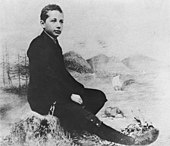
In 1894, his father’s company went bankrupt: the direct current lost the Chain War to alternating current. In search of business, Einstein’s family moved to Italy, first to Milan and, a few months later, to Pavia. When the family moved to the Italian city, Einstein stayed in Munich to finish his studies at the Luitpold Gymnasium. His father wanted him to follow electrical engineering, but the young man clashed with the authorities and resented the school’s regime and teaching method. He later wrote that the spirit of knowledge and creative thinking were lost in the wake of mechanical learning. In late December 1894, he traveled to Italy to join his family in Pavia, convincing the school to let him go using a medical certificate. It was during his time in Italy that he wrote a short essay titled “On the Investigation of the State of Ether in a Magnetic Field”.
At the end of the summer of 1895, at the age of sixteen, two before the standard age, he took the admission exams to the Swiss Federal Polytechnic School (now ETH-Zurich). He failed to achieve the required standard in various disciplines, but obtained exceptional grades in physics and mathematics. Following the advice of the Director of the Polytechnic, he attended the Cantonal School in Aarau, Switzerland, between 1895 and 1896 to complete secondary school.
While staying with the family of Professor Jost Winteler, he fell in love with his daughter, Marie Winteler (later his sister Maja married the Wintelers’ son, Paul). On January 28, 1896, with the approval of his father, he renounced his citizenship in the Kingdom of Württemberg to avoid military service. On October 29, he passed the Matura exam with good grades. Although he was only 17 years old, one less than the other students, he enrolled in the four-year course to obtain a physics teacher’s degree from the Polytechnic School. During his undergraduate years, he lived on an allowance of 1 Swiss franc per month, from which he saved a small amount to pay for his naturalization papers. Marie Winteler moved to Olsberg, Switzerland, where she obtained a position as a teacher.
Einstein’s future wife, Mileva Marić, also enrolled in the Polytechnic School in the same year, and was the only woman among the six math and physics students in the course classes. Over the years, his friendship with Marić developed into a romance, and together they read extra-curricular physics books where Einstein was showing a growing interest. In 1900, Einstein was awarded the teaching degree of the Zurich Polytechnic, but Marić was disproved in the exam with a low grade in a component of mathematics, the theory of functions. There were allegations that Marić collaborated with Einstein on his celebrated works of 1905, but physics historians who studied the issue found no evidence that she made any substantial contributions.
Family and early career

Einstein and Marić married on January 6, 1903, in Bern. On May 14, 1904, the couple’s first child, Hans Albert Einstein, was born in the Swiss capital. Their second son, Eduard, was born in Zurich in July 1910. Your marriage doesn’t seem to have been very happy. In letters revealed in 2015, he wrote to his former love, Marie Winteler, about his marriage and his still strong feelings for her. In 1910, he wrote “I think of you from the bottom of my heart in every free minute I have, and I am as unhappy as only one man can be”, while his wife was pregnant with her second child. He talked about a “misguided love” and a “wasted life” in relation to his feelings for Marie. In 1914 he moved to Berlin, while his wife stayed in Zurich with their children.
They divorced on February 14, 1919, after living apart for five years. There are rumors that he was a “wanton womanizer and had many affairs”. However, these stories would not be substantiated. After becoming famous, many women, young and old, approached him on the pretext of trying to understand his theory. Mileva would not tolerate this behavior and became quarrelsome, and this was one of the reasons for her divorce. She lived in Zurich as a widow. By most accounts, her mental state calmed down, and she took care of her two children. Einstein visited his ex-wife and son Eduard, who was schizophrenic and lived in a mental institution for the last time on the eve of World War II. Marić died peacefully in a hospital in August 1948.
The discovery and publication in 1987 of an initial correspondence between Einstein and his wife revealed that they had a daughter, Lieserl, born in Novi Sad, where Marić was with her parents. Marić returned to Switzerland without the child, whose real name and fate are unknown. Einstein probably never saw his daughter. Its fate is unknown, but the content of a letter he wrote to Marić in September 1903 suggests that the child was adopted or died of scarlet fever in childhood.
He later married Elsa Löwenthal on June 2, 1919, after having had a relationship with her since Easter 1912. Elsa was her first cousin and second-degree paternal. In 1933, they emigrated to the United States. In 1935 Elsa Einstein was diagnosed with heart and back problems and died on December 20, 1936. Of his sons with Marić, Hans Einstein was the only one to generate offspring, with a boy, Bernhard Caesar, born in 1930; Einstein’s only known grandson.
After graduating, Einstein spent nearly two frustrating years looking for a teaching position. He acquired Swiss nationality on February 21, 1901 but was not summoned for conscription for medical reasons. Marcel Grossmann’s father helped him get a job in Bern at the Swiss Federal Institute of Intellectual Property, the Swiss patent office, where he began working on June 16, 1902, as an assistant examiner. Among other activities evaluated patent applications for electromagnetic devices. In 1903 his post in the patent office became permanent, although he was deprecated for promotion until he “fully mastered machine technology”.
Much of his work in the patent office related to questions about the transmission of electrical signals and electromechanical synchronization of time, two technical problems that appear visibly in mental experiments that led him to his radical conclusions about the nature of light and the fundamental connection over space and time. With some friends he met in Bern, he began a small discussion group, self-styled Olympia Academy, which met regularly to discuss science and philosophy. The group’s readings included works by Henri Poincaré, Ernst Mach and David Hume, which influenced his scientific and philosophical view.
Albert Einstein’s academic career
From the patent office to the consecration

In February 1901, Einstein acquired Swiss nationality. A few months later, earlier that year, his article “Conclusions Drawn from the Phenomena of Capillarity” (“Folgerungen aus den Capillaritätserscheinungen”) was published in the prestigious academic journal Annalen der Physik. It was his first scientific paper to be published, the editors were impressed and published the work of the unknown young scientist in March, when he was just 22 years old. Encouraged by his initial success a few months later, in September, the young father began his Ph.D. at the University of Zurich with professor of experimental physics Alfred Kleiner as an advisor, with the thesis “A New Determination of Molecular Dimensions” (“Eine neue Bestimmung der Moleküldimensionen”), an article on molecular forces in gases in which he hoped to confer his academic degree of Ph.D..
Also in the summer of 1901, he worked as a substitute teacher at a technical school in Winterthur and as a tutor at a private school in Schaffhausen. Einstein completed his thesis on April 30, 1905. In that same year, which has been called the Miraculous Year, he published four revolutionary works on the photoelectric effect, the Brownian movement, special relativity, and the equivalence between mass and energy, which would bring him to the knowledge of the academic world.
In 1906, while promoted to the patent office, he formally received the title of doctor and met Max Planck, who began discussing some implications of the theory of special relativity. At the end of that year, he finished a key article on specific heat, in addition to writing book reviews for the Annalen der Physik. In late 1907, he made his first important steps toward the theory of general relativity trying to reconcile Newtonian gravity with special relativity, in addition to trying to use the principle of equivalence to construct a new theory of gravity.
In February 1908, he was already recognized as an important scientist and was appointed Privatdozent (professor) at the University of Bern. The following year, he left the patent office and the position of professor and began teaching electrodynamics at the University of Zurich, Alfred Kleiner recommended to the college a newly created position as a professor of theoretical physics. He was appointed adjunct professor in 1909. He became a full professor at The Carolina University in Prague in 1911, accepting Austrian citizenship in the Austro-Hungarian Empire to do so.
In 1912, however, he returned to his alma mater in Zurich. From 1912 to 1914 he was a professor of theoretical physics at the Federal Institute of Technology of Zurich (ETH), where he taught analytical mechanics and thermodynamics. He also studied continuum mechanics, the molecular theory of heat, and the problem of gravitation, in which he worked with mathematician Marcel Grossmann.
In 1914, he returned to Germany after being appointed director of the Kaiser Wilhelm Institute of Physics (1914-1932) and professor at the Humboldt University of Berlin, with a special clause in his contract that freed him from most of the faculty’s obligations. He became a member of the Prussian Academy of Sciences. Moreover, in 1916, Einstein was appointed president of the German Society of Physics, a position he would hold until 1918.
In November 1911, he was invited to attend the first Solvay Conference in Brussels, which brought together some of the greatest scientists of all time, together with Max Planck and Marie Curie. In the same year, he calculated that, based on his new theory of general relativity, the light of a star would be curved by the sun’s gravity. This prediction was confirmed in observations made by two British expeditions during the solar eclipse of May 29, 1919: one led by Sir Arthur Stanley Eddington on Prince’s Island; and another led by Andrew Crommelin and Charles R. Davidson in the Brazilian city of Sobral, Ceará.
International media news made Einstein instantly famous. On November 7, The Times, Britain’s largest newspaper, published a headline that read: “Revolution in Science – New Theory of the Universe – Ideas of Newton Overturned”. Using his cover image, the German weekly magazine Berliner Illustrirte Zeitung published a headline titled “New figure in the history of the world”. Much later, questions were raised whether the calculations were accurate enough to support the theory.
In 1980, historians John Earman and Clark Glymour published an analysis suggesting that Eddington had suppressed unfavorable results. Eddington’s data selection seems valid and his team actually made astronomical measurements verifying the theory. Later, in 1979 the Royal Greenwich Observatory made a modern re-analysis of the data, supporting the original measurement of 1919. On November 10, 1922, Einstein was awarded the 1921 Nobel Prize in Physics “for his contributions to theoretical physics and especially for his discovery of the law of the photoelectric effect”. Relativity was not well understood. He later also received the Copley Medal from the Royal Society in 1925 and the Gold Medal of the Royal Astronomical Society in 1926.
Trips abroad
Einstein first visited New York City on April 2, 1921, where he received an official reception from Mayor John Francis Hylan, followed by three weeks of lectures and receptions. He presented several conferences at Columbia University and Princeton University, and in Washington accompanied representatives of the National Academy of Sciences on a visit to the White House. On his return to Europe, he was invited by the British statesman and philosopher Viscount of Haldane in London, where he met with several renowned scientific, intellectual and political figures and gave a lecture at King’s College London.
In 1922, he traveled throughout Asia and then Palestine as part of a six-month tour presenting lectures. His travels included Singapore, Ceylon and Japan, where he gave a series of lectures to thousands of Japanese. His first lecture in Tokyo lasted four hours and after the presentation met the emperor and empress at the Imperial Palace, where thousands came to watch him. In a letter to his children, he described his impression of the Japanese as modest, intelligent, considerate and sensitive to art. On his return trip, he also visited Palestine for 12 days, in what would become his only visit in that region. Upon arriving at the home of British High Commissioner Sir Herbert Louis Samuel with a cannon-firing salute, he was greeted as if he were a head of state rather than a physicist.
During a reception, the building was overrun by people who wanted to see and hear it. In the lecture to the audience, he expressed his happiness that the Jewish people were beginning to be recognized as a force in the world.
Einstein made a trip to South America in 1925, visiting countries such as Argentina, Uruguay and also Brazil. In addition to conducting scientific conferences, he visited universities and research institutions. On March 21, he passed through Rio de Janeiro, where he was greeted by journalists, scientists and members of the Jewish community. He visited the Botanical Garden and made the following comment, in writing, to journalist Assis Chateaubriand: “The problem that my mind formulated was answered by the luminous sky of Brazil”.
This statement concerned an observation of the solar eclipse recorded in the city of Sobral by a team of British scientists, led by Andrew Crommelin and Charles R. Davidson, who searched for traces that could prove the theory of relativity. On April 24, 1925, Einstein left Buenos Aires and reached Montevideo. He held three conferences there and, as in Argentina, participated in several receptions and visited the president of Uruguay.
Einstein remained in Uruguay for a week, from where he left on the first day of May, towards Rio de Janeiro, on the ship Valdívia. Landed again in Rio de Janeiro on May 4. In the following days, he would visit several sights of the city, including sugar loaf, Corcovado and Tijuca Forest. The notes in his diary illustrate well his perceptions of the tropical nature of the place. On May 6, he visited the then president of the republic, Artur Bernardes, as well as some ministers.
Its tourism-scientific program in Brazil included several visits to institutions such as the National Museum of Rio de Janeiro, the Brazilian Academy of Sciences and the Oswaldo Cruz Institute, and two conferences: one at the Engineering Club of Rio de Janeiro on May 6, and the other at the Polytechnic School of Largo de São Francisco, current Polytechnic School of the Federal University of Rio de Janeiro, two days later. Through waves of the Radio Society, created in 1923, Einstein delivered in German a message to the population, which was translated by the chemist Mário Saraiva.
In this message, the scientist highlighted the importance of radio media for the dissemination of culture and scientific learning, provided that they are used and preserved by qualified professionals. Einstein would leave Rio on May 12. His visit was widely disseminated by the press and influenced the struggle for the establishment of basic research and for the dissemination of the ideas of modern physics in Brazil. Leaving Rio, the already famous German physicist sent a letter to the Nobel Committee from the ship. In this letter, he suggested the name of Marshal Cândido Rondon for the Nobel Peace Prize. Einstein would have been impressed by what was reported about Rondon’s activities in relation to the integration of indigenous tribes into civilized man, without the use of weapons or anything like that.
In March 1928, during a trip to Davos, Switzerland, he collapsed with a severe heart condition. Confined to bed for four months, it took him a year to fully recover. In December 1930, he visited the United States for the second time, originally conceived as a two-month work visit as a researcher at the California Institute of Technology (Caltech). After the national attention he received during his first trip to the country, he and his coordinators aimed to protect their privacy. Although flooded with telegrams and invitations to receive awards or public speaking, refused them all.
After arriving in New York, he was taken to various places and events, including Chinatown, a lunch with the editors of the New York Times, and a performance by Carmen at the Metropolitan Opera, where he was applauded by the audience on his arrival. During the following days, he received the keys to the city by Mayor Jimmy Walker and met the president of Columbia University, who described him as “the monarch of the mind.” Harry Emerson Fosdick, the pastor of Riverside Church, gave him a tour of the church and introduced him to a life-size statue of the physicist standing at the entrance.
In addition, during his stay in New York, Einstein joined a crowd of 15,000 at Madison Square Garden during a Hanukkah party. He then traveled to California, where he met with Caltech president and Nobel Laureate Robert Andrews Millikan. His friendship with him was “strange”, as Millikan “had a penchant for patriotic militarism”, where Einstein was a pronounced pacifist. During a speech to students at the institution, he noted that science was often willing to do more harm than good.
This aversion to war also led him to befriend author Upton Sinclair and film star Charlie Chaplin, both known for his pacifism. Carl Laemmle, head of Universal Studios, gave the physicist a walk in his studio and introduced him to Chaplin. They had an instant communication, with Chaplin inviting him with his wife, Elsa, to his home for dinner. Chaplin said Einstein’s calm and gentle outward personality seemed to hide a “highly emotional temperament”, from which came his “extraordinary intellectual energy”.
Chaplin also recalled that Elsa told him about the time when she conceived the theory of relativity. Over breakfast, he seemed lost in thought and ignored his food. She asked him if anything bothered him. He sat on his piano and started playing. He continued playing and writing notes for half an hour, then went on to his studies, where he stayed for two weeks, with Elsa bringing her food. At the end of the two weeks, he went down the stairs with two sheets of paper that flaunted his theory.
His film, City Lights, was released a few days later in Hollywood, and Chaplin invited them to join him as his special guests, described by Isaacson as “one of the most memorable scenes of the new celebrity era”. They both arrived together in black tie, with Elsa joining them, “radiant”. The audience applauded as they entered the theater. Chaplin visited Einstein at his home on a later trip to Berlin, and recalled his “modest little apartment” and the piano on which he had begun to write his theory. Chaplin speculated that it was “possibly used as a grave to by the Nazis”.
Institute for Advanced Studies
In February 1933, during a visit to the United States, Einstein decided not to return to Germany due to the rise of the Nazi Party to power with his new Chancellor Adolf Hitler. While at U.S. universities earlier that year, he made his third two-month visit as a professor at Caltech in Pasadena. Together with his wife Elsa, he returned by ship to Belgium at the end of March. During the trip, they were informed that their house had been raided by the Nazis and their confiscated personal sailboat.
After landing in Antwerp on 28 March, he immediately went to the German consulate where he presented his passport and formally renounced German citizenship. On the same day, he sent a letter in which he submitted his resignation to the Prussian Academy of Berlin. In early April, he learned that the new German government had instituted laws prohibiting Jews from holding official positions, including teaching at universities.
Historian Gerald Holton described that “virtually no sound protests were raised by his colleagues,” thousands of Jewish scientists were suddenly forced to give up their university positions and their names were removed from the lists of institutions in which they were employed. A month later, Einstein’s works were among the targets of the Nazis’ book burning, and the Ministry of Propaganda Joseph Goebbels proclaimed, “Jewish intellectualism is dead”. Einstein also became aware that his name was on a list of murder targets, with a “$5,000 bounty on his head”.
A German magazine included him on a list of enemies of the regime with the phrase “not yet hanged”. He temporarily resided in Coq sur Mer, off the coast of Belgium, where with his wife they had guards assigned by the government to protect them. In July he went to England for about six weeks, at the personal invitation of British Navy Officer Commander Oliver Locker-Lampson, who had become his friend in previous years. To protect him, Locker-Lampson secretly had two assistants watching him at his secluded cottage outside London, with the press publishing a photo of them protecting Einstein. In a letter to his friend, physicist Max Born, who also emigrated from Germany and lived in England, Einstein wrote that “their degree of brutality and cowardice came as a surprise”.
Locker-Lampson took him to meet Winston Churchill at his home and later Austen Chamberlain and former Prime Minister David Lloyd George. Einstein asked them to help bring Jewish scientists from Germany. In the following days, the Commander introduced a bill in Parliament to “expand citizenship opportunities for Jews”. On October 17, he returned to the United States, taking up a position at the Institute for Advanced Studies at Princeton, which required his presence for six months a year. Still undecided about his future, had offers from European universities, including Christ Church, Oxford, but in 1935 came to the decision to remain permanently in the United States and apply for U.S. citizenship.
In the same year, he purchased a house in Princeton at 112 Mercer Street, less than a mile walk from the institute’s future campus, which was under construction. He was one of the faculty members of the Institute, along with mathematicians Oswald Veblen, James Alexander, John von Neumann, and Hermann Weyl. He never came back to Europe. His affiliation with the Institute for Advanced Studies would last until his death in 1955.
In 1937 he completed the final version of an article on gravitational waves. A year later, he wrote in partnership with his friend and physicist Leopold Infeld The Evolution of Physics, a popular science book published to help him financially. Einstein and Infeld met in Berlin, at the time when he was a student. Between 1936 and 1937 he was a member of the Institute for Advanced Studies, where they collaborated together in three articles on the problem in the movement in general relativity. Infeld was a professor at the University of Toronto from 1938 until 1950, and at the University of Warsaw from 1950 until his death in 1968.
Manhattan Project and U.S. Citizenship
In 1939, a group of Hungarian scientists that included migrant physicist Leó Szilárd tried to warn Washington of ongoing Nazi research on the atomic bomb. Group warnings were ignored. Einstein and Szilárd, along with other refugees such as Edward Teller and Eugene Wigner, “considered it their responsibility to warn Americans that German scientists could win the race to build an atomic bomb, and to warn that Hitler would be more than willing to resort to such a weapon”. On July 12, a few months before the start of World War II in Europe, Szilárd and Wigner visited Einstein and explained the possibility of atomic bombs through uranium and fission experiments, as well as calculations indicating a chain reaction. He replied, “I never thought of this”.
He was persuaded to lend his prestige, writing a letter with Szilárd to President Franklin Delano Roosevelt to warn him of this possibility. The letter also recommended that the U.S. government pay attention and engage directly in uranium research and research associated with a chain reaction. For Sarah Diehl and James Clay Moltz, the letter is “probably the fundamental stimulus for the adoption by the United States of serious investigations into nuclear weapons on the eve of the country’s entry into World War II”.
The president appointed a committee to evaluate the letter, and the group that sent it was expanded to coordinate nuclear research among U.S. universities. Members were Szilárd, Teller and Wigner. Roosevelt followed the letter’s suggestion. Einstein was invited to join the group, but refused. Between 1940 and 1941, preliminary research confirmed the feasibility of an atomic bomb. On December 7, a surprise Japanese attack on the Pearl Harbor naval base forced the United States into the war. Shortly thereafter, Germany also declared war on the country over a defense treaty with Japan.
This has increased the urgency of atomic research. The following year, the U.S. government authorized a larger effort to produce atomic bombs. In order to keep this project secret and avoid mentioning it, it was placed under the Manhattan District of the Army Corps of Engineers and called the Manhattan Project. For Einstein, “war was a disease, and he always appealed to resistance against war.” By signing the letter to Roosevelt, he acted contrary to his pacifist principles. In 1954, a year before his death, he told his old friend Linus Pauling, “I made a big mistake in my life—when I signed the letter to President Roosevelt recommending the construction of the atomic bomb; but at that time there was a justification —the danger that the Germans would build it”.
Einstein became an American citizen on October 1, 1940. Not long after starting his career at Princeton University, he expressed his appreciation for the “meritocracy” of American culture when compared to Europe. According to Isaacson, he recognized the “right of individuals to say and think what they wanted”, without social barriers and, as a consequence, the individual was “encouraged” to be more creative, a characteristic he valued from his own initial education.
After the end of World War II and the memories and images of Hiroshima and Nagasaki still fresh in people’s minds, scientists asked him to participate in an appeal to the scientific community to refuse to work on the development of nuclear energy because of its possible uses for evil. Although reluctant to do so due to negative answers to critical questions, Einstein later signed the letter of proposal. He was more willing to unite his name and participate in collective activities with other scientists. At Szilárd’s insistence, in May 1946, he agreed to be the chairman of the Emergency Committee of Atomic Scientists, whose mission was to promote the peaceful use of nuclear energy, spread knowledge and information about atomic energy, and promote a general understanding of its consequences.
As a member of the National Association for the Progress of Colored People (NAACP) in Princeton, which campaigned for the civil rights of African Americans, Einstein corresponded with black rights activist W.And.B. Du Bois, and in 1946, called racism “America’s worst disease”. He later stated that “race prejudice has unfortunately become an American tradition that is uncritically transmitted from one generation to another […] The only remedies are enlightenment and education”.
Einstein also gave a lecture at Lincoln University in Pennsylvania, the first historically black university in the United States, where he received an honorary degree from President Horace Mann Bond in May 1946. In October of the same year, he received members from the same university for fraternization at his home in Princeton. After the death of Israel’s first president, Chaim Weizmann, in November 1952, Prime Minister David Ben-Gurion offered him the position, a mainly ceremonial position in a system that invested more power in the prime minister and cabinet. The offer was presented by Israel’s ambassador to Washington, Abba Eban, who explained that it “embodies the deepest respect that the Jewish people can rest in any of their children”. However, he refused and wrote in his reply that he was “deeply moved” and “at the same time sad and ashamed” as he could not accept it:
“All my life I have dealt with objective issues, hence I lack both the natural aptitude and the experience to deal properly with people and to exercise the official function. I am very saddened by these circumstances, because my relationship with the Jewish people has become my strongest human bond, since I have managed to understand the clarity about our precarious position among the nations of the world.”
Last years and death of Albert Einstein
In the summer of 1950, his doctors discovered that an aneurysm —a weak blood vessel—in his abdominal aorta was getting larger. When it was found, doctors had few treatment options and wrapped the inflamed blood vessel with cellophane paper in hopes of preventing a hemorrhage. Einstein seemed to have received the news well, as well as refused any additional surgical attempts to fix the problem. He refused the surgery saying, “I want to go whenever I want. It’s in bad taste to be prolonging life artificially. I’ve done my part, it’s time to go and I’ll do it with elegance”.
On March 18, 1950, he signed his will. He appointed his secretary, Helen Dukas, and friend Otto Nathan as his literary executors; he left all his manuscripts to the Hebrew University of Jerusalem, the school he helped found in Israel; and bequeathed his violin to his first grandson, Bernhard Caesar Einstein.
Einstein also organized his funeral affairs. I wanted a simple, no-head of the ceremony. He chose not to be buried since he did not want to have a tomb that could be turned into a tourist site, and, contrary to Jewish tradition, asked to be cremated. His last days were relatively peaceful. He died on Monday morning on April 18, 1955, at Princeton Hospital at 1:15 a.m., at the age of 76, and continued to work until almost the end of his life. His last words spoken in German could not be understood by the nurse.
During the autopsy, Princeton Hospital pathologist Thomas Stoltz Harvey removed Einstein’s brain for preservation. Harvey dissected the organ into about 240 sections, sealed some of the paraffin parts to preserve them, and others were left floating freely in formaldehyde. As research into his brain continued, the pathologist soon became public, saying he intended to study the organ for science. Because he was not a neuropathologist, field experts questioned his ability to study the brain, and tried to persuade him to turn him in.
But Harvey refused. Since then, the organ has been the subject of several scientific studies. People have been researching anatomical motives in relation to intelligence. His remains were cremated and his ashes scattered most likely along the Delaware River near Princeton by his friends. In his lecture at Einstein’s memorial, nuclear physicist Robert Oppenheimer summarized his impression of him as a person: “It was almost entirely unsophisticated and totally unworldly […] There was always with him a wonderful purity at the same time childish and deeply wed”.
After a long-standing collaboration with writer, pacifist and Nobel Prize winner Bertrand Russell, Einstein along with a group of prominent scientists signed the Russell-Einstein Manifesto on February 11, 1955. The manifesto is an appeal that declared its concerns about the use of nuclear weapons in the arms race between the United States and the Soviet Union. He called on scientists to assume their social responsibilities and inform the public about technological threats, particularly nuclear ones. In addition to Einstein and Russell, the other nine signatories of the manifesto were Max Born, Percy Williams Bridgman, Leopold Infeld, Frédéric Joliot-Curie, Hermann Muller, Linus Pauling, Cecil Frank Powell, Józef Rotblat and Hideki Yukawa. It was published on July 9, 1955, in London, a few months after Einstein’s death. It was his last political statement.
Scientific contributions of Albert Einstein
Throughout his life, Einstein published hundreds of books and articles. In addition to individual work, he also collaborated with other scientists on other projects, including Bose-Einstein statistics, Einstein’s refrigerator, and others. He has published more than 300 scientific papers, along with more than 150 non-scientific works.
Articles of the Miraculous Year
The texts of The Miraculous Year are academic works that established Einstein as one of the most important physicists in the world. Not only did he publish important articles that year, but he also found time to write another 23 revisions for a number of magazines. He accomplished all this in his spare time after he got home from work.
In early 1905 he was 25 years old, was a family man, with two years of marriage, and found time to think about physics. Regardless of how he managed to concentrate on his hectic life, the results achieved that year were remarkable. They are among the deepest works ever published in physics. One of them would finally earn him his doctor’s degree and help establish that atoms actually exist. Two others launched a new area of physics — special relativity — for which he became world famous. A fourth article linked to curious observation about the erratic movement of pollen — the Brownian movement — the size of atoms. All of them were published in the prestigious German magazine Annalen der Physik. The four articles are:
- From a heuristic point of view on the production and transformation of light. A scientific article focusing on the photoelectric effect was received by the journal on March 18 and published on June 9. Solved an unsolved puzzle, suggesting that energy is exchanged only in discrete amounts (quanta). This idea was fundamental to the early development of quantum theory.
- About the movement of small particles suspended inside liquids at rest, as required by kinetic-molecular theory of heat. Article focused on the Brownian movement, it was received on May 11 and published on July 18. He explained empirical evidence for atomic theory, supporting the application of statistical physics.
- About The Electrodynamics of Moving Bodies. Focusing on restricted relativity, it was presented on June 30 and published on September 26. He reconciled Maxwell’s equations of electricity and magnetism with the laws of mechanics, introducing important changes in mechanics near the speed of light, which result from analysis based on empirical evidence that the speed of light is independent of the observer’s movement. He discredited the concept of a “luminous ether”.
- Does the inertia of a body depend on its energetic content?. An article investigating mass-energy equivalence was presented to the journal on September 27 and published on November 21. The equivalence of matter and energy, E = mc² (and, consequently, the ability of gravity to “bend” light), the existence of “resting energy” and the basis of nuclear energy (the conversion of matter into energy by humans and the cosmos) is presented.
Other scientists, especially Henri Poincaré and Hendrik Lorentz, had theorized parts of special relativity. However, Einstein was the first to gather the whole theory together and realize what a universal law of nature was, not an invention of movement in the ether, as Poincaré and Lorentz had thought. Originally, the scientific community ignored the articles of The Miraculous Year. This began to change after he received the attention of Max Planck, the founder of quantum theory, one of the most influential physicists of his generation and the only physicist who noticed the works. Both would come to know each other at an international lecture at the Solvay Conference after Planck gradually confirmed his theory.
Relativity, E=mc² and the principle of equivalence
He articulated the principle of relativity. This was understood by Hermann Minkowski as a generalization of rotational invariance, from space to space-time. Other principles postulated by Einstein and later proven are the principle of equivalence and the principle of adiabatic invariance of the quantum number.
General relativity is a theory of gravitation that was developed by Einstein between 1907 and 1915. According to general relativity, the gravitational pull observed between masses results from the curvature of space and time by these masses. General relativity has become an essential tool in modern astrophysics. It provides the basis for the current understanding of black holes, regions of space where gravitational attraction is so strong that not even light can escape.
As I said later, the reason for the development of general relativity was that the preference for inner movements within special relativity was not satisfactory, while a theory that, from the outset, does not prefer any state of motion (even the most accelerated) should seem more satisfactory. Consequently, in 1907, he published an article on acceleration in the context of special relativity. In this article entitled “On the Principle of Relativity and the Conclusions Drawn from It”, he argued that free fall is an inertial movement, and that for a free-fall observer, the rules of special relativity must apply.
This argument is called the principle of equivalence. In the same article, Einstein also predicted the phenomenon of gravitational temporal dilation, gravitational shift to red, and deflection of light. In 1911, he published “On the Influence of Gravity on the Propagation of Light”, expanding the 1907 article, in which he estimated the amount of deflection of light by massive bodies. Thus, the theoretical prediction of general relativity can for the first time be experimentally tested.
His article “On the Electrodynamics of Bodies in Motion” (“Zur Elektrodynamik bewegter Körper”) was received on June 30, 1905, and published on September 26 of that year. It reconciles Maxwell’s equations for electricity and magnetism with the laws of mechanics, by introducing major changes to mechanics near the speed of light. This later became known as Einstein’s theory of special relativity. The consequences of this include the space-time interval of a moving body, which seems to slow down and contract (in the direction of movement) when measured in the observer’s plane. This document also argued that the idea of a luminiferous ether —one of the leading theoretical entities of physics at the time—was superfluous. In his article on mass-energy equivalence, Einstein conceived E=mc² of his equation of special relativity. His 1905 work on relativity remained controversial for many years, but was accepted by leading physicists, beginning with Max Planck.
The theory of general relativity has a fundamental law —Einstein’s equations that describe how space curves, the geodesical equation that describes how particles that move can be derived from Einstein’s equations. Since the equations of general relativity are nonlinear, a piece of energy made of pure gravitational fields, like a black hole, would move on a trajectory that is determined by Einstein’s equations, not by a new law. Thus, Einstein proposed that the path of a singular solution, such as a black hole, would be determined as a geodesic of general relativity itself. This was established by Einstein, Infeld and Hoffmann for point objects without angular motion and by Roy Kerr for rotating objects.
A few months after publishing his article on general relativity in 1916, they realized that distortions in space could lead objects to shortcuts that could connect very remote areas. Solutions were found that allowed the possibility of a wormhole —a shortcut between two remote parts of space and possibly time. A wormhole is created when a large mass creates a singularity in the fabric of space-time, something made possible by general relativity. When the singularity of one mass meets that of another, both can come together and create a passage through which something —matter, light, radiation—can pass relatively fast despite the great distance between them.
In the same year that Einstein published the theory, two physicists, Ludwig Flamm and Karl Schwarzschild, independently discovered that tunnels in space were valid solutions to the equations of relativity, which were tools to describe the shape of space. The equations show that gravity distorted the very nature of space, and in areas of immense gravity, a distortion, or tunnel, could appear. Schwarzschild had already postulated the existence of what would eventually become known as black holes —dead stars so dense and with such strong gravity that anything that came too close would be sucked in forever. The intense gravity associated with these black holes could very well lead to enormous spatial distortions. In 1935, Einstein and Nathan Rosen developed a more complete model of these tunnels, which today are referred to as Einstein-Rosen bridges.
Quantum mechanics and related
Throughout the 1910s, quantum mechanics expanded in scope to cover many different systems. After Ernest Rutherford discovered the nucleus and proposed that electrons orbit like planets, Niels Bohr was able to show that the same postulates of quantum mechanics introduced by Planck and developed by Einstein would explain the discrete movement of electrons in atoms and the periodic table of elements.
Einstein contributed to these developments, linking them with the arguments Wilhelm Wien had presented in 1898. Wien had shown that the hypothesis of adiabatic invariance of a state of thermal equilibrium allows all curves of a black body at different temperatures to be derived from one another by a simple process of displacement. Einstein noted in 1911 that the same adiabatic principle shows that the amount that is quantized in any mechanical movement must be an adiabatic invariant. Arnold Sommerfeld identified this adiabatic invariant as the action variable of classical mechanics.
Although the patent office promoted him to second-class examiner technician in 1906, Einstein had not given up his academic career. In 1908 he became privatdozent at the University of Bern. In “On the development of our vision on the nature and constitution of radiation” (“Über die Entwicklung unserer Anschauungen über das Wesen und die Konstitution der Strahlung”), on the quantization of light, and earlier in a 1909 article, Einstein showed that max Planck’s energy quanta should have well-defined moments and act, in some respects, such as independent point particles. This article introduced the concept of photon (although the photon name was later introduced by Gilbert Newton Lewis in 1926) and inspired the notion of wave-particle duality in quantum mechanics.
When physicists developed quantum mechanics, they felt a great emotion because they were designing the tools needed to describe the newly discovered world of subatomic particles. Einstein shared the emotion. But the field of quantum mechanics took a turn that frustrated him: the equations developed by scientists were only able to predict the probabilities of how an atom would act. Quantum mechanics insists that nature’s most fundamental laws are random. Even though Einstein’s early works led directly to the development of new science, he himself always refused to accept this randomness.
In 1917, at the height of his work on relativity, he published an article in the Physikalische Zeitschrift that proposed the possibility of stimulated emission, the physical process that makes maser and laser possible. This article shows that light absorption and emission statistics would only be consistent with Planck’s distribution law if the emission of light in a statistical fashion with ”’n”’ photons was statistically increased compared to the emission of light in an empty fashion. This article was enormously influential in the later development of quantum mechanics, because it was the first paper to show that atomic transition statistics had simple laws.
Einstein discovered the works of Louis de Broglie and supported his ideas, which were met with skepticism at first. In another great article at the same time, Einstein provided a wave equation for Broglie’s waves, which he suggested as the Hamilton-Jacobi equation of mechanics. This work would inspire Schrödinger’s 1926 work.
Einstein’s physical intuition led him to note that the energies of Planck’s oscillator had an incorrect zero point. He modified Planck’s hypothesis, defining that the lower energy state of an oscillator is equal to 1/2 hf, half the energy spacing between levels. This argument, which was made in 1913 in collaboration with Otto Stern, was based on the thermodynamics of a diatomic molecule that can separate into two free atoms.
Unified field theory and Cosmology
After his research on general relativity, Einstein went into a series of attempts to generalize his geometric theory of gravitation to include electromagnetism as another aspect of a single entity. In 1950, he described his “unified field theory” in an article by Scientific American entitled “On the Theory of Generalized Gravitation”. Although he continued to be praised for his work, he became increasingly isolated in his research, and his efforts were unsuccessful. In his quest for a unification of fundamental forces, Einstein ignored some developments in current physics, especially strong and weak nuclear forces, which were not well understood until many years after his death. Current physics, in turn, largely ignored its approaches to unification. Einstein’s dream of unifying the other laws of physics with gravity motivates modern missions to a theory of everything and in particular string theory, where geometric fields arise in a unified quantum mechanics environment.
In 1917, he applied the theory of general relativity to model the structure of the universe as a whole. He wanted the universe to be eternal and unchanging, but this type of universe is not consistent with relativity. To correct this, he modified the general theory by introducing a new notion, the cosmological constant. With a positive cosmological constant, the universe could be a static eternal sphere.
Einstein believed that a static spherical universe is philosophically preferred because it would obey the principle of Mach, elaborated by Ernst Mach. He had shown that general relativity incorporates the Mach principle, to a certain extent, into the trail of planes through gravitomagnetic fields, but he knew that Mach’s idea would not work if space continued forever. In a closed universe, he believed Mach’s principle would remain. Mach’s principle has generated much controversy over the years.
Photons, atoms and quantum energy
In his article “On a heuristic point of view concerning the production and transformation of light” (“Über einen die Erzeugung und Verwandlung des Lichtes betreffenden heuristischen Gesichtspunkt”), Einstein postulated that light itself consists of localized particles (quanta). Einstein’s light quanta were almost universally rejected by all physicists, including Max Planck and Niels Bohr.
This idea only became universally accepted in 1919, with Robert Millikan’s detailed experiments on the photoelectric effect, and with the Compton scattering measure. Einstein concluded that each f frequency wave is associated with a set of photons with an hf energy each, in which h is the Planck constant. He doesn’t say much more because he wasn’t sure how the particles are related to the wave. But he suggests that this idea could explain some experimental results, especially the photoelectric effect.
In 1907, he proposed a matter model in which each atom of a network structure is an independent harmonic oscillator. In Einstein’s model, each atom oscillates independently—a series of quantized states equally spaced for each oscillator. Einstein was aware that getting the frequency of real oscillations would be different, but he proposed this theory because it was a particularly clear demonstration that quantum mechanics could solve the problem of specific heat in classical mechanics. Peter Debye enhanced this model.
Critical opalescence theory
Einstein returned to the problem of thermodynamic fluctuations, giving a treatment of the density variations of a fluid at its critical point. Typically density fluctuations are controlled by the second derivative of free energy in relation to density. At the critical point, this derivative is zero, leading to large fluctuations. The effect of density fluctuation is that light of all wavelengths is dispersed, making the fluid appear milky white. Einstein relates this to rayleigh’s dispersion, which is what happens when the size of the fluctuation is much smaller than the wavelength, and which explains why the sky is blue.
Hole argument and Entwurf theory
In developing general relativity, Einstein became confused about gauge invariance in theory. He formulated an argument that led him to conclude that a general theory of the relativistic field is impossible. He gave up looking for completely general covariant tensoriar equations and looked for equations that would be invariant only under general linear transformations. In June 1913, the Entwurf theory (from the German “draft”) was the result of these investigations. As its name suggests, it was a theory sketch, with the equations of motion complemented by additional conditions of gauge fixation. At the same time less elegant and more difficult than general relativity, after more than two years of intense work, Einstein abandoned the theory in November 1915, after realizing that the argument of the hole was wrong.
Thermodynamic fluctuations and statistical physics
Einstein’s first work, published in 1900 in the Annalen der Physik, r- capillary attraction. It was published in 1901 under the title “Folgerungen aus den Kapillarität Erscheinungen”, which translates as “Conclusions on capillarity phenomena”. Two articles he published between 1902 and 1903 (thermodynamics) tried to interpret atomic phenomena from a statistical point of view. These publications were the basis for the 1905 article on the Brownian movement, which showed that it can be interpreted as solid evidence of the existence of molecules. His research in 1903 and 1904 focused mainly on the effect of finite atomic size on diffusion phenomena.
Energy moment pseudotensor
General relativity includes a dynamic space-time, so it is difficult to identify the energy and moment conserved. Noether’s theorem allows these quantities to be determined from the Lagrange function with translational invariance, but the general covariance transforms the translation allotance into a kind of gauge symmetry. The energy and momentum derived by general relativity by Noether’s prescriptions do not make a real tensor for this reason.
Einstein argued that this is true for fundamental reasons, because the gravitational field could be driven to disappearance by a choice of coordinates. He maintained that the non-covariant pseudotensor of energy-momentum was in fact the best description of the distribution of energy-momentum in a gravitational field. This approach has been echoed by Lev Landau and Evgeny Lifshitz, among others, and has become standard.
Collaboration of Einstein with other scientists
In addition to long-time collaborators such as Leopold Infeld, Nathan Rosen, Peter Bergmann and others, he also had some one-off collaborations with several scientists, such as Banesh Hoffmann, Jeroen van Dongen, Einstein and Wander de Haas have demonstrated that magnetization is due to electron movement, which is now known as rotation. To show this, they reversed the magnetization into an iron bar suspended on a torsionpen. They confirmed that this causes the bar to rotate, due to changes in the angular momentum of the electron with the magnetization changes. This experiment needed to be sensitive, because the angular momentum associated with electrons is small, but it definitely established that electron movement is responsible for magnetization.
He suggested to Erwin Schrödinger that he would be able to reproduce the statistics of a Bose-Einstein gas when considering a box. So for every possible quantum movement of a particle in a box, associate an independent harmonic oscillator. Quantizing these oscillators, each level will have an integer number of occupation, which will be the number of particles in it. This formulation is a form of second quantization, but it predate modern quantum mechanics. Schrödinger applied it to derive the thermodynamic properties of an ideal semiclassical gas. Schrödinger asked him to add his name as co-author, but Einstein declined the invitation.

The debates between Bohr and Einstein were a series of public disputes over quantum mechanics between Einstein and Niels Bohr, who were two of its founders. His debates are remembered because of their importance to the philosophy of science.
In 1924 he received a letter describing a statistical model of the Indian physicist Satyendra Nath Bose, who created a counting method where it is assumed that light can be understood as a gas of indistinguishable particles, using a new form to reach Planck’s Law. Bose’s new statistics offered more information on how to understand photon behavior. It showed that if a photon entered a specific quantum state, then there is a tendency for the next to enter the same state. Einstein noted that Bose’s statistics applied to some atoms, as well as proposed light particles, and submitted the translation of the German article to the Zeitschrift für Physikalische Chemie.
He also published his own articles describing the model and its implications. Among the results, in 1925 made the remarkable discovery in which some particles appear at very low temperatures; if a gas had a temperature very close to absolute zero —the point at which atoms don’t move—they would all fall into the same quantum state. Bose-Einstein condensate is a type of matter that is distinctly different from the others on Earth—unlike liquid, solid, or gaseous. It was Einstein’s last major contribution to physics. Only in 1995 was the first condensate produced experimentally by Eric Allin Cornell and Carl Wieman using ultra-cooling equipment built in the laboratory of the National Institute of Standards and Technology — Joint Institute of the Astrophysics Laboratory of the University of Colorado at Boulder. Today, Bose-Einstein statistics are used to describe the behavior of any set of bosons.
Between 1926 and 1930, Einstein and Szilárd worked together and developed a quiet home refrigerator. On November 11, 1930, United States Patent 1 781 541 was awarded to both by Einstein’s refrigerator. His invention was not immediately put into commercial production, as the most promising of his patents was quickly purchased by Swedish company Electrolux to protect its refrigeration technology from competition.
In 1935, Einstein, Boris Podolsky, and Nathan Rosen produced a famous argument to show that the interpretation of quantum mechanics advocated by Bohr and his school in Copenhagen was incomplete if certain reasonable assumptions were made about “reality” and “locality” against which there was little empirical evidence in those days. Bohr wrote a disaparting and was declared the winner. The debate persisted on a philosophical level until 1964, when John Stewart Bell produced his famous inequality based on local realism (i.e., the most reality locality, as defined by Einstein, Podolsky and Rosen) in which quantum mechanics violates.
Finally, the question was brought below its philosophical height to the empirical level. But it had to wait until 1982 for a true experimental verdict. The ingenious experiments carried out by Aspect and his colleagues with correlated photons once again seemed to vindicate quantum mechanics. After the appearance of the EPR argument and Bohr’s response, the Copenhagen school had to change its stance. They had to abandon the idea that every measure caused an inevitable “disruption” of the measurement system. In fact, Bohr admitted that, in a cause such as the one correlated in the EPR paradox, “there was no doubt of a mechanical disruption of the system under investigation”.
The Einstein-Cartan theory of gravity is a modification of the theory of general relativity, allowing space-time to have twisting, in addition to curvature, and twisting relative to the density of the amount of intrinsic angular momentum. This modification was proposed in 1922 by Élie Cartan, before the discovery of the spin. Cartan was influenced by the work of the Cosserat brothers (1909), who considered, in addition to an (asymmetric) stress force, also a tense moment of stress in a continuous environment adequately generalized.
Personal life
Politics and religion
At the age of six, in late 1885, Einstein entered the Catholic elementary school in his neighborhood, probably from high school. She was the only Jewish child in her class. Religious instruction was part of the school curriculum, so he became familiar with the stories of the Bible and the Saints.
His political views emerged publicly in the mid-twentieth century due to his fame and reputation as a genius. He was in favor of socialism and against capitalism, which he detailed in his essay Why Socialism? His views on the Bolsheviks changed over time. In 1925, he criticized them for not having a “well-regulated system of government” and called his government “a regime of terror and a tragedy in human history”.
He later adopted a more “balanced” vision, criticizing his methods but praising them, which is demonstrated by his 1929 observation of Vladimir Lenin: “In Lenin, I honor a man who, in total sacrifice of his own person, devoted all his energy to performing social justice. I don’t think your methods are advisable. One thing is certain, however: men like him are the guardians and inrenewers of the consciousness of humanity”. Einstein volunteered and was called to give an opinion on issues often unrelated to theoretical physics and mathematics.
His views on religious belief were collected from interviews and original writings. As a young man, he said that he believed in the concept of “God” as advocated by the philosopher Baruch Espinoza, but not in a personal God, a belief he criticized. In this vision, God and nature are the same entity. He called himself an agnostic, while dissociating himself from the label of an atheist when linked to strong atheism (unskeptical atheism). “You may call me an agnostic, but I do not agree with the spirit of the professional atheist whose fervor is an act of painful restriction of the religious indoctrination of youth. I prefer to have an attitude of humility about how little we understand about nature and our own beings,” he wrote to Guy H. Raner Jr. in September 1949.
In a letter written in German in 1954 and addressed to the Jewish philosopher Eric Gutkind, Einstein emphatically criticizes institutionalized religions, in particular the Jewish religion, in order to position him as an atheist a year before his death. In the missive in question, the scientist states that “The word God to me is nothing more than the expression and product of human weakness, the Bible is a collection of honorable but still primitive legends, which are quite childish”. Known as the “Letter of God”, the letter was sold in 2018 in New York for $2.89 million at an auction organized by Christie’s.
Love for music
“What do I have to say about Bach’s work? Listen, touch, love, worship … keep your mouth shut!”
Albert Einstein in response to a survey by the German magazine Illustrierten Wochenschrift, 1928.
Einstein developed musical appreciation at an early age. His mother played the piano reasonably well and wanted her son to learn to play the violin, not only to instill in him a love of music, but also to help him assimilate German culture. According to conductor Leon Botstein, Einstein said he started playing when he was five, but did not appreciate him at that age. When he turned thirteen, however, he discovered Mozart’s violin sonatas.
“Einstein fell in love”, and studied music more willingly. He learned to play alone without “never practicing systematically”, adding that “love is a teacher better than a sense of duty”. At the age of seventeen, he was heard by an examiner at his school in Aarau when he played Beethoven’s violin sonatas, and the examiner later stated that his touch was “remarkable and revealing of ‘a great vision’”. What impressed the examiner, Botstein writes, was that Einstein “exhibited a deep love for music, a quality that was and remains scarce. The music had an unusual meaning for this student”.
Although he performed in public for charity concerts and as a representative of the League of Nations, Einstein played not primarily for spectators, but for fun with friends —or alone, for relaxation and inspiration. He often sat at the piano and improvised. Wherever he went, his violin “Lina” was with him. From his childhood, he had sought opportunities to play with other musicians. Until the end of his days, he had meetings with other students and colleagues, with Michele Besso and Max Born, Max Planck and Paul Ehrenfest, with private individuals and celebrities, with Pauline Winteler, who took care of him when he lived in Aarau, and with Queen Elizabeth of Belgium in Brussels. At the time, playing music at home was a natural thing during the meetings, and he brought together scientists and musicians at Princeton to visit and play Mozart, Bach and Schubert.
“If I wasn’t a physicist, I’d probably be a musician. I think about music often. I dream awake with music. I see my life in terms of music … I get more joy in life through music.”
Einstein, 1929
Music has taken on a fundamental and permanent role in his life. Although the idea of becoming a professional was not in his mind at any time, among those with whom Einstein played chamber music were some professionals, and he introduced himself to friends and in private. Chamber music also became a regular part of his social life while living in Bern, Zurich and Berlin, where he played with Max Planck and his son, among others.
In 1931, when he was involved in research at the California Institute of Technology, he visited the Zoellner family Conservatory in Los Angeles and played some of Beethoven and Mozart’s works with members of the Zoellner Quartet, who had recently retired after two decades of acclaimed tours across the United States; Einstein later presented the family patriarch with an autographed photo as a souvenir. Near the end of his life, in 1952, when the Juilliard String Quartet (of the Juilliard School of New York) visited him at Princeton, he played his violin with them; although it slowed down to accommodate his smaller technical skills, Botstein notes that the quartet was “impressed by Einstein’s level of coordination and intonation”.
Legacy
While on the road, Einstein wrote daily to his wife Elsa and stepchildren Margot and Ilse. The letters were included in the documents bequeathed to the Hebrew University of Jerusalem. Margot Einstein allowed personal letters to be made available to the public, requesting that they be expected twenty years after her death for publication, which occurred in 1986. Barbara Wolff, of the Albert Einstein Archives at the Hebrew University of Jerusalem, told the BBC that there are about 3,500 pages of private correspondence written between 1912 and 1955.
Einstein gave the royalties from the use of his image to the Hebrew University of Jerusalem. Corbis, the successor to The Roger Richman Agency, licenses the use of his name and associated images as an agent for the university. His great intellectual achievements and originality made the word “Einstein” synonymous with genius. Its mass-energy equivalence formula — E = mc² — was called by Karen Fox and Aries Keck “the most famous equation in the world.”. Alongside quantum mechanics, his theory of general relativity was considered one of the pillars of modern physics.
In December 1952, Albert Ghiorso, working at the University of California, Berkeley, discovered a new element by analyzing residues from the detonation of the first H. To honor Einstein, this new element, the number 99 in the periodic table, was named Einstênio.
In the period before World War II, he was so well known in the United States that he was asked in the street by people who asked him to explain “that theory.” Einstein finally figured out a way to deal with the incessant questions. He went on to answer them with the catchphrase “I’m sorry, I’m sorry! I’m always confused with Professor Einstein.” It was the subject or inspiration for many novels, films, plays and works of music.
It is the favorite model for representations of mad scientists and distracted teachers, his expressive face and characteristic hairstyle have been widely copied and exaggerated. In 1999, Time magazine published the compilation Time 100: The Most Important People of the Century, in which it ranked the most influêntes people of the 20th century. Einstein came first as the most important person of the century, adding that “he was the preeminent scientist in a century dominated by science. The cornerstones of the time —the bomb, the Big Bang, quantum physics, and electronics—all bear their mark.” Frederic Golden writing for the same magazine said in the publication that Einstein was “the dream come true of a cartoonist”. Also in 1999, 100 renowned physicists elected him the most memorable physicist of all time.
Einstein Awards
List of Awards
- On November 12, 1913, Einstein became a full member of the Prussian Academy of Sciences and resigned on March 28, 1933, as he did not want to be associated with the Prussian government of the time;
- On November 12, 1919, the University of Rostock awarded an honorary doctorate in medicine to Einstein, on the occasion of his 500th birthday and following a suggestion by Moritz Schlick. It is the only honorary doctorate he has received from a German university;
- In 1921 Einstein accepted a doctorate of science from the University of Manchester;
- In 1922, he received the 1921 Nobel Prize in Physics for “his services to Theoretical Physics, and especially for his discovery of the law of the photoelectric effect”;
- In 1925, the Royal Society awarded Einstein the Copley Medal;
- In 1926, he received the gold medal of the Royal Astronomical Society;
- In 1929, Max Planck presented Einstein with the Max Planck Medal from the German Physical Society in Berlin, for his extraordinary achievements in theoretical physics;
- In 1931, he received the Jules Janssen Prize;
- In 1936, Einstein received the Franklin Medal from the Franklin Institute for his extensive work on relativity and the photoelectric effect;
- The International Union of Pure and Applied Physics named 2005 the “World Year of Physics” in commemoration of the 100th anniversary of the publication of the Annus Mirabilis papers;
- The Albert Einstein College of Medicine is a research-intensive medical school located in the Morris Park neighborhood of the Bronx in New York;
- The Albert Einstein Science Park is located on Telegrafenberg Hill in Potsdam, Germany. The best known building in the park is the Einstein Tower which has a bronze bust of Einstein at the entrance. The tower is an astrophysical observatory that was built to perform verifications of Einstein’s theory of general relativity;
- The Albert Einstein Memorial in downtown Washington, D.C. is a monumental bronze statue of Einstein seated with handwritten papers. The statue, commissioned in 1979, is located in a grove of trees on the southwest corner of the National Academy of Sciences grounds on Constitution Avenue;
- Chemical element 99, einsteinium, was named after him in August 1955, four months after Einstein’s death;
- 2001 Einstein is an inner main belt asteroid discovered on March 5, 1973;
- In 1999, Time magazine named him the Person of the Century, ahead of Mahatma Gandhi and Franklin Roosevelt, among others;
- In 1990 his name was added to the Walhalla Temple for “Laudable and Distinguished Germans”, at Donaustauf in Bavaria;
- The United States Postal Service honored Einstein with an 8¢ postage stamp from the Prominent Americans series (1965–1978);
- In 2008, Einstein was inducted into the New Jersey Hall of Fame;
- In 2018, Einstein was inducted into the Royal Albert Hall Walk of Fame for the first time;
- The bust of Albert Einstein, installed in Mexico City’s Parque México, commemorates the 100th anniversary of the Armenian Genocide;
- Mount Einstein, a massive mountain in Alaska, was named in his honor in 1955.
Awards linked to Einstein’s name
- The Albert Einstein Prize (sometimes called the Albert Einstein Medal because it comes with a gold medal) is an award in theoretical physics, created to recognize high achievement in the natural sciences;
- The Albert Einstein Medal is an award given by the Albert Einstein Society in Bern, Switzerland. First awarded in 1979, the award is given to individuals who have “performed outstanding service” in relation to Einstein;
- The Albert Einstein Peace Prize is awarded annually by the Albert Einstein Peace Prize Foundation, based in Chicago, Illinois. Prize winners receive $50,000.
Notes
- As reported by Karl Kruszelnicki in Great Mythconceptions: The Science Behind the Myths, p. 20, in Einstein’s last year at school in Aargau, the system of grades, which scored between 1 and 6, was reversed: if in years prior to 1896 grade 1 was the highest and the grade 6 the worst, from that year grade 6 became the best. As his grade had once been close to 1 in a system that went from 1 to 6, there was a rumor that he had been a bad student at school. In fact, your grade close to 1 would correspond, in the new standard, to an overall score of 4.91 out of 6, a not-bad note.
- Abraham Pais, in his book Subtle is the Lord: The Science and the Life of Albert Einstein, cites Einstein’s notes in his Matura of the Polytechnic School: German 5, Italian 5, history 6, geography 4, algebra 6, geometry 6, descriptive geometry 6, physics 6, chemistry 5, natural history 5, drawing (artistic) 4, drawing (technical) 4.
- Paul Arthur Schilpp, editor (1951). “Albert Einstein: Philosopher-Scientist, Volume II”. New York: Harper and Brothers Publishers: 730–746 works include: About Zionism: Speeches and Lectures by Professor Albert Einstein (1930), “Why War?” (1933, co-authored by Sigmund Freud), The World As I See It (1934), Out of My Later Years (1950), and a book on science for general reading, The Evolution of Physics (1938, co-authored by Leopold Infeld).
- For a discussion on the reception of the theory of relativity around the world, and the different controversies we encountered, see the articles of Thomas F. Glick, ed., The Comparative Reception of Relativity (Kluwer Academic Publishers, 1987), ISBN90-277-2498-9.
- In September 2008, it was reported that Malcolm McCulloch of Oxford University was directing a three-year project to develop more robust appliances that could be used in places lacking electricity, and that his team had completed a prototype of Einstein’s refrigerator. He reportedly said that improving the design and changing the types of gases used could allow the efficiency of the project to be quadrupled.
References (sources)
|