
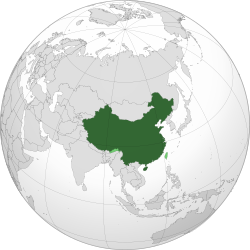
The People’s Republic of China (simplified Chinese: 中华人民共和国; Pinyin: Zhōnghuá Rénmín Gònghéguó), mostly known as China (simplified Chinese: 中国; pinyin: Zhōngguó), is a sovereign country in East Asia. It is one of the oldest countries in the world and the most populous in the world, with more than 1400 million inhabitants, and the world’s leading economic power by GDP in terms of purchasing power parity.
It adopted its current name in 1949, after being called Zhōngguó, Chinese Empire, or simply China, and since 1912, the Republic of China, disputing since that year with the Republic of China (DRC) – also known as Taiwan – the unitary representation of Greater China. The People’s Republic of China is, after Russia, the second largest country in Asia. The People’s Republic of China is a socialist state ruled by the Communist Party of China since 1949 and has its seat of government in the country’s capital, Beijing.
It is divided into twenty-two provinces, five autonomous regions, four municipalities under central jurisdiction—Beijing, Tianjin, Shanghai, and Chongqing—and two special administrative regions—Hong Kong and Macau. It also claims what it considers its Taiwan Province, which is controlled by the Republic of China with the political status of the controversial island. During the Cold War era, the term People’s China was frequently used to refer to the People’s Republic of China, while the Republic of China was nicknamed “nationalist”. The names of mainland China, Communist China or Red China have also been used to refer to the People’s Republic.
With an area of 9 596 960 km², China – which has borders with fourteen sovereign states – is the third largest country on the planet by land area behind Russia and Canada and the fourth if water bodies are counted, behind Russia, Canada and the United States. The Chinese landscape is vast and diverse, from the steppes and deserts of the Gobi and Taklamakan in the arid north to the subtropical forests in the humid south. The mountain ranges of the Himalayas, the Karakoram, Pamir and Tian Shan separate it from South and Central Asia. The Yangtze and Yellow Rivers, the third and sixth longest in the world, run from the Tibetan Plateau to flow into the densely populated eastern coasts. China has 14,500 km of coastline along the Pacific Ocean, where it is bathed by the Yellow, Bohai, East China and South China Seas.
China was one of the world’s leading economic powers for most of the two millennia from the first to the nineteenth century.
The Chinese civilization, one of the oldest in the world, flourished in the fertile yellow river basin. For millennia its political system was based on hereditary monarchies, known as dynasties. The first of which was the semi-mythological Xia Dynasty around 2000 BC. From 221 BC. C., when the Qin Dynasty conquered several states and formed the first Chinese Empire, the country has expanded, fractured and been reformed on numerous occasions.
The Republic of China overthrew the last dynasty in 1911 and ruled mainland China until 1949. After the defeat of the Empire of Japan in World War II and the withdrawal of its troops from China, the Communist Party of China prevailed in the Civil War and proclaimed the People’s Republic of China in Beijing on October 1, 1949. The defeated regime of the Republic of China, dominated by the Kuomintang party, moved its government to Taipei and since then, the jurisdiction of the Republic of China is limited to Taiwan and some outlying islands.
Since the introduction of the 1978 economic reforms, China has been the world’s fastest-growing economy, remaining the second-largest power by nominal GDP. China is also the largest exporter and importer of goods and the leading industrial power. China has the largest military in the world, possesses nuclear weapons and has the second-largest military budget after the United States. The People’s Republic of China has been a member of the UN since 1971, when it replaced the Republic of China as a permanent member of the United Nations Security Council, and is diplomatically recognized by almost every country in the world. It is also a formal or informal member of numerous multilateral organizations, such as the WTO, APEC, the BRICS, the Shanghai Cooperation Organization and the G20. China is considered by many analysts to be an emerging superpower.
Etymology
The word “China” derives from the Persian Cin (چین), which is an adaptation of the Sanskrit Cīna (चीन). The first record of this term dates from 1516, in the diary of the Portuguese explorer Duarte Barbosa. The word is believed to come from the name of the Qin Dynasty (秦, Chin).
The official name of the country is the People’s Republic of China (simplified Chinese: 中华人民共和国; pinyin: Zhōnghuá Rénmín Gònghéguó), although previous dynasties and governments changed the country’s official name on numerous occasions. Common names for the country in Chinese are Zhongguó (simplified Chinese: 中国, Zhong —’central’ or ‘middle’—, and guó —’state’ or ‘states’, and in modern times, ‘nation’—) and Zhonghuá (simplified Chinese: 中华).
The term zhongguó appeared in several ancient texts, such as the History Classic of the sixth century BC, and in pre-imperial times it was used as a cultural concept to distinguish Huaxia tribes from “barbarians”. This word, which can be singular or plural, referred to a group of states or provinces of the Central Plain, but was used to name the entire country until the nineteenth century. The Chinese were not the only ones to perceive their country as the “center of the world”, as other civilizations applied the same thought to their territories.
History in China
Prehistory
Archaeological evidence suggests that the first hominids that inhabited China arrived in that country about 2. 25 million years ago. A cave in Zhoukoudian—near present-day Beijing—contains fossils dating from between 680,000 and 780,000 BC. C. and belong to the so-called Peking man, a subspecies of Homo erectus that lived by hunting and gathering, used fire and stone tools. At the same site of the Peking man were found remains of a Homo sapiens, dating from 18,000-11,000 BC.
The earliest evidence of a completely modern human being in China is found in Liujiang (Guangxi), where a skull was found that has been dated to approximately 67,000 years. However, controversy persists over the dating of Liujiang’s remains, especially when compared to other similar skeletons, such as the one found at Minatogawa on the island of Okinawa. Some experts claim that since 5000 years ago there was a form of proto-writing in China.
Early dynasties
The Xia Dynasty was the first dynasty of the country, although they have not yet found concrete evidence of its existence, only literary records are available. According to these mentions in ancient texts, it is estimated that this dynasty may have reigned around 2205 BC. Preceding the Xia Dynasty, we find the narrative of a flood and the period of the Three Augustans: Fu Xi, Huang Di and Shen Nong. In times before the founding of the Xia Dynasty, supreme power was based on alternation in government between the Xia and Chi You.
The first Chinese dynasty to leave true historical records were the Shang, who maintained a vaguely feudal system on the banks of the Yellow River between the seventeenth and eleventh centuries BC. Although the early Shang ruled in the south of Shandong Province, a swampy area at the time, they attained greater power than the tribes in the east of the country, generically called yi, with whom they maintained close alliances. King Tang, regarded as a capable and virtuous king, expelled the Shang from the region and established the capital of his kingdom at Erligang.
The oldest Chinese script found so far is a bone-carved oracle from the Shang Dynasty, and contains direct antecedents of modern Chinese characters. The Shang were defeated by the Zhou people, who established the Zhou Dynasty, which ruled between the twelfth and fifth centuries BC. C. , when its centralized authority slowly dispersed among various feudal lordships until, finally, from the weakened kingdom of the Zhou emerged several independent states that fought each other during the period called Springs and Autumns. Between the fifth and third centuries BC. The Warring States period was established, during which present-day Chinese territory was divided into seven sovereign states, each with its own king, minister, and army.
China Imperial
The warring states ended in 221 BC. C. when the kingdom of Qin conquered the other six kingdoms, forming the first unified Chinese state. Qin Shi Huangse proclaimed himself the first emperor (始皇帝) and established reforms throughout China, highlighting the standardization of Chinese characters, measurements and mail. The Qin Dynasty collapsed after Shi Huang Di’s death, with the legalists leading a rebellion.
The next Han dynasty ruled between 206 BC. C. and 220 D. C. and created a Han cultural identity among the population that lasts to this day. The Han expanded the territory considerably with military campaigns in southern Korea, Vietnam, Mongolia and Central Asia, and established the Silk Road, which connected them to the rest of Eurasia. China gradually became the largest economy in the ancient world. Confucianism was adopted as the official ideology of the empire. Even though they abandoned legalism, the official ideology of the Qin Dynasty, legalistic institutions remained the basis of government.
After the collapse of the Han, the period of anarchy known as the Three Kingdoms begins. The brief unification of the Jin Dynasty was destroyed by the uprising of the five barbarians. In 581 the country was unified under the Sui dynasty, but defeat in the Goguryeo-Sui War (598-614) caused its downfall.
The Tang and Song dynasties began a golden age for Chinese economy, technology and culture. After the campaign against the Turks he regained control over the western regions and reopened the Silk Road, but was destroyed by the Lushan rebellion in the eighth century.
In 907, in northern China, the Kitan ethnic group established the Liao dynasty until 1125, when it was overthrown by the Yurchen, who established the Jin dynasty in the conquered area. After the fall of the Liao dynasty in 1125 AD. C., many Kitan migrated west where they established the Kara-Kitan State, finally destroyed by Genghis Khan in 1218.
The Song Dynasty was the first government in the world to use paper money and the first Chinese government to have a naval force to aid trade across the sea. Between the tenth and eleventh centuries the population doubled reaching 100 million thanks to the expansion of rice cultivation in the center and south of the territory. Confucianism was also revived, in response to the advance of Buddhism during the Tang, along with a revival of art and philosophy, reaching new levels of expression and maturity. But, their weak militia was attacked by the Yurchen, who established the Jin Dynasty.
In 1127, Emperor Song Huizong and the capital were captured during the Jin-Song Wars, forcing the remainder of the dynasty to retreat south.
In the thirteenth century, China was invaded by the Mongol Empire. Moreover, in 1271, the Mongol leader Kublai Khan established the Yuan dynasty. The Yuan conquered what was left of the Song Dynasty in 1279. Before the Mongol invasion the Chinese population was 120 million, more was reduced to 60 million by the census of 1300. Zhu Yuanzhang defeated the Yuan and established the Ming Dynasty in 1368. Under the Ming Dynasty another golden age was lived, developing the largest naval force in the world at that time. During this time Zheng He’s travels around the world unfolded, reaching as far away as Africa. In the first years of government, the capital was changed from Nanjing to Beijing. With the expansion of capitalism came philosophers like Wang Yangming, criticizing the government and expanding Neo-Confucianism with concepts such as individualism and social equality.
In 1644, Beijing was captured by a coalition of rebel forces led by Li Zicheng. The last Ming Emperor, Chongzhen, committed suicide when the city fell. The Manchu Qing dynasty allied with the Ming general Wu Sangui and dethroned the short Shun dynasty, taking control of the empire.
Portuguese
Beginning in 1513 with Jorge Álvares, Portugal first came into contact with China trying to establish colonies over the next 40 years along the Chinese coast and islands resulting in several naval battles and some massacres of settlers by imperial troops. Since the establishment of the Portuguese in Japan and their continued presence in the China Sea, the Portuguese began to act as interlocutors between Japan and India, uniting China with the rest of the world. In 1554 the Celestial Empire welcomed the creation of a Portuguese port in the region, giving way with a concession to the help that the Portuguese provided in the elimination of piracy. Macau became a Portuguese colony in the next 445 years.
With the crisis of the Ming Dynasty and the presence of the Jesuits in the Ming court, the Tianqui Emperor (1621-1627) and later the Chongzhen Emperor (1628-1644) before the Manchu invasions that would initiate the Quing dynasty, summon several times to the military assistance of men and weapons (especially cannons and gunners) to the Portuguese of Macau. These were to train Chinese troops or command regiments accompanied by Jesuits who were fluent in the Chinese language.
Later, after the fall of Peking in 1644 and the suicide of the last Ming Emperor, his wife and empress, now called “Helena” and other members of the Ming imperial family are baptized in 1648.
End of imperial rule
The Qing Dynasty, which ruled from 1644 to 1912, was the last in China. In the nineteenth century, the Qing had to confront Western imperialism in the two Opium Wars (1839-1842 and 1856-1860) against the United Kingdom. Defeated by the European nation, China was forced to sign inequitable treaties, pay compensation, allow extraterritoriality, and cede the port of Hong Kong to the British.
The First Sino-Japanese War (1894-1895) eliminated Qing influence on the Korean peninsula, as well as ceding control of the island of Taiwan to Japan. The weakening of the Qing regime increased internal problems. Between the 1850s and 1860s the war known as the Taiping Rebellion swept through southern China, while other uprisings such as the Punti-Hakka Clan Wars (1855-1867), the Nian Rebellion (1851-1868), the Miao Rebellion (1854-1873), the Panthay Rebellion (1856-1873) and the Dungan Rebellion (1862-1877) wreaked havoc throughout the country.
In the nineteenth century, the great Chinese diaspora began. Emigration rates were raised by internal conflicts and catastrophes such as the northern Chinese famine of 1876-1879, which claimed the lives of between nine and thirteen million people. In 1898, Emperor Guangxu planned a series of reforms to establish a modern constitutional monarchy, but was dethroned by Empress Ci Xi in a coup d’état, although he also developed an important reformist work introducing the telegraph and the railway and abolishing traditional practices such as the bandage of the feet in women. The Boxer Rebellion of 1899-1901, a movement against foreign influence in the country, further weakened the Qing government. Finally, the Xinhai Revolution of 1911 ended the Qing Dynasty and established the Republic of China.
Republic of China
On January 1, 1912, the Republic of China was established, and Sun Yat-sen, leader of the Kuomintang (KMT or Nationalist Party) was appointed its interim president. However, he had to cede the presidency to Yuan Shikai, a former Qing general, who in 1915 proclaimed himself Emperor of China. Faced with the condemnation of the people and the opposition of his own army, he was forced to abdicate and re-establish the republic.
After Yuan Shikai’s death in 1916, China was politically fragmented. His Beijing-based government was internationally recognized but virtually powerless; regional lordships controlled most of the territory. In the late 1920s, the Kuomintang led by Chiang Kai-shek was able to reunify the country under its control with a series of skillful military and political maneuvers, collectively known as the “Northern Expedition”. His government moved the national capital to Nanjing and applied “Political Tutelage,” a stage of political development described in Sun Yat-sen’s San-min doctrine, which was intended to steer China toward a modern democracy.
Since the outbreak of the Chinese Civil War in 1927, the Kuomintang fought the Communists, although the political division made this conflict more difficult, in which the Nationalists initially seemed to have the upper hand, especially after the Communists fled in the Long March, but the Japanese invasion of Manchuria and the Xi’an incident in 1936 had occurred and forced Chiang to focus his efforts on confronting the Empire of Manchuria.
The Second Sino-Japanese War (1937-1945), a scene of World War II, forced the Communists and the Kuomintang to agree to a truce and create an alliance. Japanese forces committed numerous war crimes against the civilian population; in total, nearly twenty million Chinese civilians were killed. In the city of Nanjing alone, approximately 200,000 Chinese were killed during the Japanese occupation. Japan surrendered to China in 1945.
Taiwan, along with the Fisherman Islands, were placed under the administrative control of the Republic of China, who immediately claimed sovereignty over them. Although the nation was victorious, it was devastated by the war and financially exhausted. Ongoing conflicts between the Kuomintang and the Communists led to the resumption of civil war. In 1947 the constitutional mandate was established, but due to constant unrest in many provinces, the constitution was never put in place in mainland China.
People’s Republic of China
The most important clashes of the Chinese civil war ended in 1949, when the Communist Party of China took control of the country’s mainland and the Kuomintang retreated to the island of Taiwan, reducing the territory of the Republic of China to only Taiwan, Hainan and the surrounding islands. Mao Zedong, chairman of the Communist Party, proclaimed the People’s Republic of China on October 1, 1949. There were two names for the People’s Republic: Communist China and Red China. In 1950, the People’s Liberation Army seized Hainan from the Republic of China. Also in 1950 he invaded Tibet, defeating the weak Tibetan army, which in 1913 the Dalai Lama had declared independent. During the 1950s nationalist forces continued the insurgency in the west of Chinese territory.
Mao Zedong fostered population growth and the population nearly doubled, from 550 to more than 900 million during the period of his leadership, which lasted until 1976. However, the large-scale economic and social plan, known as the Great Leap Forward, produced a famine that claimed the lives of 45 million people. At the same time, between one and two million peasant leaders were executed, accused of being “against the revolution. “
In 1966, Mao and his allies launched the Cultural Revolution, which brought with it a period of political recrimination that lasted until his death. The Cultural Revolution, motivated by power struggles within the Communist Party and fear of the Soviet Union, led to great upheaval in Chinese society. In October 1971, the People’s Republic of China replaced the Republic of China at the United Nations, and took its place as a permanent member of the Security Council. The following year, at the height of the Chinese-Soviet divide, Mao and Zhou Enlai met with Richard Nixon to establish diplomatic relations with the United States for the first time.
After Mao’s death in 1976 and the arrest of the Gang of Four—who were blamed for the excesses of the Cultural Revolution—Deng Xiaoping seized power and implemented a series of economic reforms. Subsequently, the Communist Party ceased to exercise government control over the personal lives of citizens and the communes were dissolved in favor of private leasing, which resulted in an increase in incentives and agricultural production.
This turn of events marked the transition from a planned economy to a mixed economy with an increasingly open mercantile environment, a system called “socialism with Chinese characteristics. ” The People’s Republic of China adopted its current constitution on 4 December 1982. In 1989, the violent repression of student protests in Tiananmen Square resulted in condemnation and sanctions against the Chinese government by several countries.
President Jiang Zemin and Premier Zhu Rongji led the nation in the 1990s. Under his administration, China’s well-functioning economy lifted about 150 million peasants out of poverty and maintained an average annual GDP growth rate of 11. 2%. The country formally joined the World Trade Organization in 2001 and maintained its high rate of economic growth under the presidency of Hu Jintao in the first decade of the twenty-first century. However, the rapid development of the country has also negatively impacted the natural resources and environment of its territory, and caused important social movements. Living standards have continued their rapid progress despite the recession of the late 2000s, but centralized political control remains unchanged.
In 2013, Xi Jinping and Li Keqiang took over as president and premier, respectively. With them, a series of reforms have been initiated in its economy, which in recent years has suffered structural instabilities and a slowdown in growth. Xi’s administration has also announced reforms to the prison system and the one-child policy. On December 14, 2013, China became the third country, after the United States and the Soviet Union, to conduct a moon landing with the Chang’e 3 mission and the Yutu robot.
At the end of 2019, wuhan saw the initial outbreak of the SARS-CoV-2 virus, which causes COVID-19, eventually leading to the COVID-19 pandemic.
Government and politics
The People’s Republic of China is one of the few remaining socialist states in the world. Its form of government has been described as communist and socialist, but also as authoritarian and corporatist, with strong restrictions in many areas, most notably regarding free access to the Internet, freedom of the press, freedom of assembly, the right to have children, the free formation of social organizations, and freedom of worship. Its leaders classify the political and economic system as “socialism with Chinese characteristics”—Marxism-Leninism adapted to Chinese circumstances—and “socialist market economy,” respectively.
The country is ruled by the Communist Party of China (CCP), whose power is enshrined in the constitution. The Constitution of the People’s Republic of China is the basic law of the State, and was adopted and brought into force on 4 December 1982. It also establishes two systems of administration: one central and one local. The System of Central Administration — or Council of State — comprises the central administrative bodies that are under the National People’s Congress, that is, the departments or ministries. For its part, the Local Administration System governs at the provincial and district level, and includes the bodies corresponding to a local government.
Compared to the political standards in place until the mid-1970s, China’s liberalization brought with it a less restrictive administrative system. China supports the Leninist principle of “democratic centralism,” but the National People’s Congress has been described as a body with considerable de jure but little de facto power. The current president is Xi Jinping, who is also the general secretary of the Communist Party of China, and the head of the Central Military Commission. The current premier is Li Keqiang, who is also the second most senior member of the Standing Committee of the Communist Party Political Bureau.
The electoral system is hierarchical, members of local People’s Assemblies are elected by direct suffrage, while at the highest levels of local congresses and in the National People’s Congress indirect elections are held in which members of the People’s Assembly from the immediate lower level participate. The political system is decentralized, and provincial and sub-provincial leaders enjoy a significant degree of autonomy. There are other political parties, known as “democratic parties”, which participate in the National People’s Congress and the Chinese People’s Political Consultative Conference (CCPPC).
There have been steps towards political liberalization, where open elections are held in all towns and cities. However, the party maintains effective control over the affairs of the government: in the absence of significant opposition, the CCP wins by default most of the votes. Major problems include the widening gap between the rich and poor and corruption. According to a series of surveys in 2011, between 80 and 95 percent of Chinese citizens said they were relatively or very satisfied with the central government.
External relations
China maintains diplomatic relations with 171 countries and has embassies in 162. Sweden was the first nation with whom it established relations on May 9, 1950. The Republic of China and other countries dispute its legitimacy, which makes it the largest and most populous limitedly recognized state in the world. In 1971, it replaced the international representation of the Republic of China as China’s sole representative to the United Nations and as one of the five permanent members of the Security Council. In addition, he was a former member and leader of the Non-Aligned Movement and is still defending developing countries.
According to the interpretation of the “One China” policy, Beijing has made it a precondition for the establishment of diplomatic relations with a country, that it recognizes its claim to Taiwan and breaks official ties with the government of the Republic of China. Representatives of the People’s Republic of China have protested on numerous occasions when other governments conclude diplomatic agreements with Taiwan, especially on the issue of arms sales. Political meetings between foreign officials and the 14th Dalai Lama are also opposed by the People’s Republic of China, which considers Tibet to be an integral part of it.
Much of its foreign policy is based on Zhou Enlai’s Five Principles of Peaceful Coexistence: non-interference in the affairs of other states, non-aggression, peaceful coexistence, equality and mutual benefits. It is also governed by the concept of “harmony without uniformity”, which encourages diplomatic relations between nations despite ideological differences. This policy has led him to support states deemed dangerous or repressive by the West, such as Zimbabwe, North Korea and Iran.
Foreign relations with many Western countries suffered for a time following military repression in the 1989 Tiananmen protests, although in recent years China has improved its diplomatic ties with the West. China maintains a close economic and military relationship with Russia, and often both vote equally in the UN Security Council.
In addition to its claim to the island of Taiwan, China is embroiled in several international territorial disputes. Since the 1990s, the government began negotiations to resolve conflicts over its land borders, such as the Kashmir dispute with India and its undefined border with Bhutan. In addition, there are other multilateral territorial claims about its sovereignty over several small islands in the South and East China Sea, such as the Senkaku Islands and Scarborough Reef. The prospection of resources in areas claimed by other countries has led to crises such as the one that occurred with Vietnam in 2014.
China is usually singled out as a new emerging superpower, noting that its rapid economic progress, growing military might, huge population and increasing international influence are signs that it will play a prominent global role in the twenty-first century. Others, however, warn that financial bubbles and demographic mismatch may slow or even halt China’s growth as the century progresses. Some authors also question the definition of “superpower,” arguing that its large economy alone would not be enough to qualify it as a superpower, noting that it lacks the military and cultural influence of the United States.
Armed forces
The Armed Forces of the People’s Republic of China are composed of the People’s Liberation Army (simplified Chinese: 中国人民解放军; pinyin: Zhōngguó Rénmín Jiěfàngjūn), which includes the Ground Forces (PLAGF), the Navy (PLAN), the Air Force (PLAAF) and a strategic nuclear force, the Second Artillery Corps. With 2. 3 million active elements, the People’s Liberation Army (PLA) is the largest military force in the world, commanded by the Central Military Commission (CMC). According to the Chinese government, spending on the military in 2012 totaled $100 billion, the world’s second-largest military budget. However, other nations such as the United States allege that China does not report its true military budget, which is supposedly higher than the official budget.
The People’s Liberation Army was founded on August 1, 1927—which can be seen reflected in the Chinese characters 八一 on its insignia, meaning ‘eight ones,’ that is, August 1—as the Communist Party’s fighting force in the Chinese Civil War, under the name Red Army (simplified Chinese: 紅軍; pinyin, hóngjūn). During World War II it was integrated into the National Revolutionary Army to combat the Japanese occupation and, once the war was won, it took its current name and continued again independently the confrontation with the nationalists who were finally defeated in 1949.
Since then it has intervened in several conflicts both in Chinese territory and outside it, such as the Sino-Vietnamese Conflict or the Tiananmen Square Protests of 1989. Hu Jintao established that the objectives of the People’s Liberation Army were the consolidation of the Communist Party’s command status; help ensure sovereignty, territorial integrity and domestic security in order to continue development, safeguard China’s expansionist interests, and help maintain world peace.
As a country that has recognized nuclear weapons, China is considered a regional military power and an emerging military superpower. According to the 2013 report of the U. S. Department of Defense, the military possesses between fifty and seventy-five nuclear long-range missiles, along with others of short range. However, compared to the other four permanent members of the UN Security Council, China has a relatively limited capacity to conduct expeditionary warfare. To remedy this, it has developed numerous projects — its first aircraft carrier entered service in 2012 — and maintains a substantial fleet of submarines, including several with nuclear power and ballistic missiles. In addition, China established a network of military relations with abroad along major sea routes.
Since the beginning of the twenty-first century, it has made significant progress in modernizing its air force, such as the purchase of the Russian Sukhoi Su-30 jet and the manufacture of its own aircraft, such as the Chengdu J-10, and the Shenyang J-11, J-15 and J-16. It is also developing its own stealth aircraft and numerous unmanned vehicles. The military also developed and acquired multiple advanced missile systems, including an anti-satellite missile, cruise missiles, and nuclear submarines with ICBMs.
Socio-political problems and human rights
The China Democratic Movement, social activists and some CCP members have recognized the need for political and social reforms. While economic control has been significantly relaxed since the 1970s, political freedoms remain severely restricted. The Constitution states that the fundamental rights of citizens include freedom of expression, freedom of printing, the right to a fair trial, freedom of worship, universal suffrage, and the right to property.
However, in practice these decrees do not provide significant protection against criminal prosecution by the State. Censorship of political speech and information, most notably on the Internet, is used openly and routinely to silence criticism of the government and the Communist Party’s mandate. In 2013, Reporters Without Borders ranked China 173rd out of 179 countries in its Annual World Press Freedom Index.
Rural dwellers who migrate to the cities are often treated as second-class citizens by the hukou registration system, which controls access to state benefits. Property rights are often poorly protected, and disproportionate taxes affect the poorest citizens. However, since the early 2000s, a number of agricultural taxes have been abolished or reduced, and the number of social services for rural residents has increased.
Some foreign governments, NGOs and news agencies constantly criticize the lack of protection of human rights in China, alleging multiple civil rights violations such as imprisonment without a trial, forced confessions, torture, forced removal of organs, restrictions on fundamental rights, and the excessive use of the death penalty.
The government suppresses demonstrations by organizations it considers a “potential threat to social stability,” as was the case with the Tiananmen Square protests of 1989. The Chinese state is regularly accused of large-scale repression and violation of the human rights of Uighur citizens, Tibetans, practitioners of the spiritual meditation discipline Falun Gong, or Christians in hiding, including violent policy campaigns, forced transfers, and restrictions on religious freedom.
The government has responded to international criticism by arguing that the notion of human rights must take into account the country’s current level of economic development and the “people’s right to subsistence and development. ” It also emphasizes the increase in the population’s quality of life, literacy rate and life expectancy since the 1970s, as well as improvements in job security and efforts to combat natural disasters such as the annual Yangtze floods.
In addition, some Chinese politicians spoke in support of democratization, although others remain more conservative about it. Multiple attempts have been made to achieve major reforms; for example, in November 2013 the government announced plans to abolish the much-criticized re-education by work program. Although during the twenty-first century the Chinese government became more tolerant of NGOs offering practical and efficient solutions to various social problems, the activities of these institutions continue to be heavily regulated by the state.
Chinese Provinces
- Sinkiang
- Mong. Interior
- Heilongjiang
- Jilin
- Liaoning
- Tibet
- Qinghai
- Gansu
- Ningxia
- Shaanxi
- Shanxi
- Hebei
- Beijing
- Tianjin
- Shandong
- Henan
- Sichuan
- Chongqing
- Hubei
- Anhui
- Jiangsu
- Yunnan
- Guizhou
- Hunan
- Jiangxi
- Zhejiang
- Shanghai
- Guangxi
- Canton
- Fujian
- Macau
- Hong Kong
- Hainan
- Taiwan
Territorial organization of the People’s Republic of China including 23 provinces, 5 autonomous regions and 2 special administrative regions.
The People’s Republic of China is officially articulated in three levels:
- Provinces: the country is divided into provinces, autonomous regions, municipalities under central jurisdiction and special administrative regions.
- Districts: Provinces and autonomous regions are divided into autonomous prefectures, districts, autonomous districts and cities.
- Cantons: Districts and autonomous districts are divided into cantons, ethnic minority cantons and villages.
The People’s Republic of China maintains administrative control over twenty-two provinces and considers Taiwan its 23rd province, even though the island of Taiwan is independently governed by the Republic of China.
China also has five subdivisions officially called autonomous regions (Xinjiang, Inner Mongolia, Tibet, Ningxia and Guangxi) in which there is an ethnic minority and which have greater autonomy; four municipalities under central jurisdiction (Beijing, Tianjin, Shanghai and Chongqing) and two special administrative regions (Hong Kong and Macau), which enjoy some degree of political autonomy. These twenty-two provinces, five autonomous regions, and four municipalities are collectively known as “mainland China,” a term that usually excludes Hong Kong and Macau. For its part, the government of the Republic of China does not recognize any of these administrative divisions, as it claims the entire extension of the People’s Republic of China as part of its territory.
Geography
The territory of the People’s Republic of China extends over much of East Asia. It is the second largest country in the world by territorial area, after Russia, and is the third or fourth by total area, after Russia, Canada and, depending on the definition of total area, the United States. The total area of China is usually estimated at around 9,600,000 km². Specific figures vary from 9,572,900 km² according to the Encyclopædia Britannica, to 9,596,961 km² according to the UN Demographic Yearbook, and 9,596,960 km² according to The World Factbook.
With a total length of 22,457 km, China has the longest land border in the world. It stretches from the mouth of the Yalu River on the border with North Korea, to the Gulf of Tonkin on the border with Vietnam. China shares borders with fourteen nations, more than any other country, and equals the number of Russia’s neighbors. It borders Vietnam, Laos and Burma in Southeast Asia; with India, Bhutan, Nepal and Pakistan in South Asia; Afghanistan, Tajikistan, Kyrgyzstan and Kazakhstan in Central Asia; and with Russia, Mongolia and North Korea in East Asia. In addition, it shares maritime borders with South Korea, Japan, Vietnam, the Philippines and Taiwan.
The territory of China extends between latitudes 18° and 54° N and longitudes 73° and 135° E. The relief varies significantly along its length. In the east, along the coasts of the Yellow Sea and the East China Sea, are the extensive densely populated alluvial plains, while further north, on the edges of the Inner Mongolian Plateau, wide grasslands predominate. Hills and low-lying mountain ranges cover southern China, while the deltas of China’s two main rivers—the Yellow River and the Yangtze River—are located in the east-central region.
Other important rivers include the Xi, Mekong, Brahmaputra and Amur. To the west sit the large mountain ranges, most notably the Himalayas. The high plateaus encompass the driest places in the north, such as the Taklamakan and Gobi deserts. The highest point in the world, Mount Everest (8848 m), is located on the Sino-Nepalese border. The lowest point in the country, and the third lowest in the world, is the dry lake bed of Lake Ayding (-154 m) in the Turfan Depression.
Climate
China’s climate is largely dominated by the dry season and monsoons, which cause a pronounced temperature difference between winter and summer. In winter, the north winds coming from higher latitudes are dry and cold; in summer, the south winds coming from the coastal areas are warm and humid.
The climate varies from region to region due to the complex orography of the country, although they can be differentiated into three large areas. The eastern monsoon zone, in which there is a humid climate; the dry zone of the northwest, where the climate is dry; and to the south, on the Tibetan plateau, the climate is cold. The climate of the mountains is characterized by a large amount of rainfall, particularly between 600 and 2000 m a. s. l. , where rainfall is usually above 1000 mm, although from 1000 meters above 1000 meters above sea level it is in the form of snow.
The east, coast and south have a humid subtropical climate. It is a warm climate dominated by monsoons and occasionally polar winds arrive from the Siberian area. Temperatures range between 15 and 30 °C and rainfall varies greatly: more than 1000 mm in the south and less than 500 mm in the north. The humid continental climate appears in the northeast of the country and in the transition zones between the dry and the humid subtropical climate; rainfall is less abundant – between 500 mm and 800 mm per year – and temperatures are hot in summer and very cold in winter, due to the influence of the Siberian anticyclone. Sometimes air masses arrive from the humid subtropical climate that bring rains and warm temperatures with them.
One of the main environmental problems in China is the continued expansion of its deserts, particularly the Gobi Desert. Although tree barriers planted since the 1970s reduced the frequency of sandstorms, prolonged droughts, aquifer depletion with falling water tables continue and cause dust storms that invade northern China each spring, sometimes spreading to other parts of the Far East. including Korea and Japan. According to environmental monitor Sepa, China loses one million acres (4000 km²) per year to desertification. Water quality, erosion and uncontrolled pollution have become major issues affecting China’s relations with other countries. Melting glaciers in the Himalayas could lead to a drought that would affect hundreds of millions of people.
Flora and fauna
China is one of seventeen megadiverse countries, and lies in two of the world’s largest ecoregions: the Palearctic and the Indomalaya. It has more than 34,687 species of amphibians, birds, mammals, reptiles and vascular plants, the third most biodiverse country on Earth, only after Brazil and Colombia. In fact, it is home to at least 551 species of mammals (3rd in the world), 1221 species of birds (8th), 424 species of reptiles (7th) and 333 species of amphibians (7th). Of the endemic mammal species of the country, the following stand out: the panda bear, the golden-haired monkey, the south Chinese tiger, the Moron pheasant, the red-crested crane, the Japanese ibis, the white river dolphin (extinct) and the Chinese caiman.
Within its territory, there are more than 32,000 species of vascular plants and it is home to a wide variety of forests. Cold coniferous forests predominate in the north and are the habitat of animals such as moose, Asian black bear and more than 120 species of birds. In the understory of wet conifers can be found bamboo trunks. Yew and juniper reside at higher altitudes, where rhododendron replaces bamboo. Subtropical forests, which predominate in the center and south, are home to more than 146,000 species of flora.
The tropical and seasonal rainforests, although restricted to Yunnan and Hainan, contain a quarter of all animal and plant species found in the country. More than 10,000 species of fungi grow in China, of which almost 6,000 are superior fungi. Other important plant species include: metasecouya, Chinese cypress, cataya, Chinese spruce, golden larch, Taiwanese pine, Fujian cypress, davidia, guatapercha and campotecia.
Chinese wildlife shares its habitat and is pressured by the world’s largest population of Homo sapiens. At least 840 animal species are threatened, vulnerable or endangered, mainly due to human activities such as habitat destruction, pollution and obtaining food, skins and ingredients for traditional medicine. Threatened species are protected by law, and in 2005 there were more than 2349 protected areas covering a total area of 149. 95 million ha, 15% of China’s territory. On 11 June 1992, the government signed the Rio de Janeiro Convention on Biological Diversity, and became a member of the convention on 5 January 1993. It subsequently produced the National Biodiversity Action Plan and Strategy, which after a review was accepted by the convention on 21 September 2010.
Environment
In the early 2000s, China has suffered from environmental deterioration and pollution due to its rapid pace of industrialization. Although regulations, such as the Environmental Protection Act of 1979, are fairly strict, they are poorly enforced, as local communities and government officials often ignore them in favor of rapid economic development.
China is the second country with the most deaths from air pollution, after India. There are approximately one million deaths annually caused by exposure to air pollution. Although China is the country that emits the most CO2 in the world, it only emits 8 tons of CO2 per capita, a figure much lower than that of developed countries such as the United States (16.1), Australia (16.8) and South Korea (13.6).
In recent years, China has clamped down on pollution. In 2020, CPC General Secretary Xi Jinping announced that China aims to reach a peak emissions by 2030 and achieve carbon neutrality by 2060, in accordance with the Paris climate agreement. According to Climate Action Tracker, if achieved, it would reduce the expected increase in global temperature between 0. 2 and 0. 3 degrees, “the largest reduction ever estimated by Climate Action Tracker”. In September 2021, Xi Jinping announced that China will not build “coal power projects abroad. ” The decision may be “fundamental” to reducing emissions. The Belt and Road Initiative did not include funding for such projects as early as the first half of 2021.
The country also had significant water pollution problems: 8. 2% of China’s rivers had been polluted by industrial and agricultural waste in 2019. China had an average forest landscape Integrity Index 2018 score of 7. 14/10, ranking it 53rd globally out of 172 countries. In 2020, the Chinese government passed a sweeping law to protect the ecology of the Yangtze River. The new laws include strengthening environmental protection standards for hydroelectric projects along the river, banning chemical plants within one kilometer of the river, relocating polluting industries, strictly restricting sand extraction, as well as a total ban on fishing in all natural waterways of the river, including all its major tributaries and lakes.
Economy
Since 2010, China is the world’s second-largest economy in terms of nominal GDP, totaling approximately $15. 66 trillion (101. 6 trillion yuan) through 2020. In terms of purchasing power parity (PPP of GDP), China’s economy has been the world’s largest since 2014, according to the World Bank. China is also the world’s fastest-growing major economy. According to the World Bank, China’s GDP went from $150 billion in 1978 to $14. 28 trillion in 2019. China’s economic growth has been consistently above 6% since the introduction of economic reforms in 1978. China is also the world’s largest exporter and second-largest importer of goods. Between 2010 and 2019, China’s contribution to global GDP growth has been 25% to 39%.
China had one of the world’s largest economies for most of the past two thousand years, during which it has seen cycles of prosperity and decline. Since economic reforms began in 1978, China has become a highly diversified economy and one of the most important players in international trade. Among the main competitive sectors are manufacturing, retail, mining, steel, textiles, automotive, power generation, green energy, banking, electronics, telecommunications, real estate, e-commerce and tourism. China has three of the ten largest stock exchanges in the world – Shanghai, Hong Kong and Shenzhen – which, together, have a market capitalization of more than $15. 9 trillion, as of October 2020.
China has four (Shanghai, Hong Kong, Beijing and Shenzhen) of the ten most competitive financial centers in the world, more than any other country in the World Financial Centers Index 2020. By 2035, the four Chinese cities (Shanghai, Beijing, Guangzhou and Shenzhen) are projected to be among the world’s ten largest cities by nominal GDP, according to a report by Oxford Economics.
China is the world’s No. 1 manufacturer since 2010, surpassing the United States, which had been No. 1 for the previous hundred years. China is also No. 2 in high-tech manufacturing since 2012, according to the U.S. National Science Foundation. China is the world’s second-largest retail market, next to the United States. China is a global leader in e-commerce, with 40% of the global market share in 2016 and more than 50% of the global market share in 2019. In addition, China is the world leader in electric vehicles, manufacturing and purchasing half of all plug-in electric cars (BEV and PHEV) in the world in 2018. China is also the leading producer of batteries for electric vehicles, as well as several key raw materials for batteries. China had 174 GW of installed solar capacity at the end of 2018, accounting for more than 40% of the world’s solar capacity.
Foreign sources and some Chinese sources have claimed that official Chinese government statistics exaggerate China’s economic growth. However, several Western academics and institutions have claimed that China’s economic growth is higher than official figures indicate.
China has a large informal economy, which emerged as a result of the country’s economic opening. . The informal economy is a source of employment and income for workers, but it is not recognized and suffers from lower productivity.
Wealth in China
In 2020, China was the second country in the world, after the United States, in total number of billionaires and total number of millionaires, with 698 Chinese billionaires and 4. 4 million millionaires. In 2019, China overtook the U. S. as home to the largest number of people who have a net personal wealth of at least $110,000, according to Credit Suisse’s global wealth report.
According to the Hurun Global Rich List 2020, China is home to five of the top ten cities in the world (Beijing, Shanghai, Hong Kong, Shenzhen and Guangzhou in the 1st, 3rd, 4th, 5th and 10th places, respectively) by the highest number of billionaires, which is more than any other country. China had 85 female billionaires in January 2021, two-thirds of the global total, and minted 24 new billionaires in 2020.
However, it lags behind more than 60 countries (out of about 180) in terms of economic output per capita, making it an upper-middle-income country. In addition, their development is very uneven. Its large cities and coastal areas are much more prosperous than rural and inland regions. China lifted more people out of extreme poverty than any other country in history: between 1978 and 2018, China reduced extreme poverty by 800 million. China reduced the extreme poverty rate — according to the international standard, it refers to an income of less than $1. 90 a day — from 88% in 1981 to 1. 85% in 2013.
According to the World Bank, the number of Chinese in extreme poverty fell from 756 million to 25 million between 1990 and 2013. The share of people in China living below the international poverty line of $1. 90 a day (2011 PPP) fell to 0. 3% in 2018 from 66. 3% in 1990. Using the lower-middle-income poverty line of $3. 20 a day, the share fell to 2. 9% in 2018 from 90. 0% in 1990. Using the upper-middle-income poverty line of $5. 50 a day, the portion dropped to 17. 0% from 98. 3% in 1990.
Economic History and growth
From its founding in 1949 until the end of 1978, China was a planned economy, similar to the Soviet Union. After Mao’s death in 1976 and the subsequent end of the Cultural Revolution, Deng Xiaoping and the new Chinese leaders began to reform the economic system towards a mixed, market-oriented economy under the domination of a single party.
They dismantled collective farms and privatized land, made foreign trade their main objective, and established special economic zones. They restructured parastatals and closed those that were no longer viable, leading to mass layoffs. In the twenty-first century, China is characterized by having a market economy based on the acquisition of private property, and is one of the leading examples of state capitalism. The government dominates strategic sectors such as energy production and heavy industries, but private companies have expanded enormously. In 2008 there were about 30 million companies registered in the country.
Since economic liberalization began in 1978, China has been among the world’s fastest-growing economies, which rely heavily on investment and exports. According to the IMF, between 2001 and 2010 average annual economic growth was 10. 5%. Between 2007 and 2011, its growth rate was equivalent to the sum of all the G7 countries. According to the Global Growth Generators Index made by Citigroup in February 2011, China has a very high growth rate among the group. Its high productivity, low cost of labor and relatively good infrastructure have made it a global industry leader. However, the Chinese economy spends a lot of energy and is inefficient; it was the largest consumer of energy in 2010, relies on coal for the production of more than 70% of the energy it uses, and in 2013 surpassed the United States as the largest importer of oil.
Economic growth and industrialization have damaged the environment. In the early 2010s, China’s economic growth rate began to slow amid domestic credit problems, weakening international demand for Chinese exports, and the fragility of the world economy. China’s GDP was slightly higher than Germany’s in 2007; however, in 2017, China’s $12.2 trillion economy became larger than those of Germany, the United Kingdom, France and Italy combined. In 2018, the IMF reiterated its forecast that China will surpass the United States in terms of nominal GDP by 2030. Economists also expect China’s middle class to expand to 600 million people by 2025.
In 2020, China was the only major economy in the world to grow, recording growth of 2. 3% thanks to its success in domesticating the coronavirus within its borders.
International economic relations
| Country | Percentage |
|---|---|
| United States | 17,2% |
| Hong Kong | 15,8% |
| Japan | 7,4% |
| South Korea | 4,3% |
| Other | 55,3% |
| Country | Percentage |
|---|---|
| Japan | 9,8% |
| South Korea | 9,2% |
| United States | 7,1% |
| Germany | 5,1% |
| Other | 68,8% |
In recent years, China has played an important role in creating free trade areas and security pacts between its Asia-Pacific neighbors.
Since January 1, 2010, the ASEAN-China Free Trade Area has been in force between the ten member states of the Association of Southeast Asian Nations (ASEAN) and the People’s Republic of China. The ANSA-China Free Trade Area is the largest free trade area in terms of population and the third largest in terms of volume.
In 2004, he proposed the creation of the East Asia Summit (EAC) as a forum to combat regional security problems. The EAC, which includes ASEAN+Three, India, Australia and New Zealand, held its first meeting in 2005. It is also a founding member of the Shanghai Cooperation Organization (SCO), along with Russia and the Central Asian republics. China became a member of the World Trade Organization on December 11, 2001.
In 2000, the U. S. Congress passed “Permanent Normal Trade Relations” (PNTR) to allow Chinese exports to enter at the same low rates as goods from other countries. China has a very significant economic surplus with the United States, its main export market. In the early 2010s, U. S. politicians argued that the Chinese yuan was significantly devalued, giving China an unfair advantage in business. In recent decades, the nation has pursued the policy of reaching out to African governments for bilateral trade and cooperation; in 2012, Sino-African trade was worth US$160 billion. It also created closer ties with major South American economies: it is Brazil’s main financial partner and is fostering strategic agreements with Argentina.
Class and income inequality
China has the world’s largest middle-class population since 2015, and the middle class grew to a size of 400 million in 2018. In 2020, a Brookings Institution study forecast that China’s middle class will reach 1.2 billion by 2027 (nearly 4 times the entire U. S. population today), making up a quarter of the global total. Wages in China have grown sharply over the past 40 years: real wages (adjusted for inflation) increased sevenfold between 1978 and 2007.
In 2018, median wages in Chinese cities like Shanghai were roughly equal to or higher than wages in Eastern European countries. China has the largest number of billionaires in the world, with nearly 878 as of October 2020, increasing at a rate of about five per week. The country has a high level of economic inequality, which has increased in recent decades. In 2018, its Gini coefficient was 0. 467, according to the World Bank.
Tourism sector
Tourism has become an important factor in improving the country’s international competitiveness. The tourism sector has grown significantly in recent years; in 2007 it accounted for 6. 1% of its GDP and it is estimated that in 2020 it will contribute 11%. In 2010, China was the third most visited country in the world, with 55. 7 million international visitors. In addition, this branch is greatly benefited by national tourism; in October 2012, about 740 million Chinese traveled within the country’s borders. China is the second country in the world with the most UNESCO World Heritage Sites, with 52, behind only Italy. Among the main tourist destinations in the country are: the Great Wall of China, the Forbidden City in Beijing, the Mausoleum of Qin Shi Huang, the Guilin Mountains, the Yangtze River, the Potala Palace and the Jiuzhaigou Valley.
Science and technology in China
Historical
From ancient times until the time of the Ming Dynasty, China was a world leader in the field of science and technology. Ancient Chinese discoveries and inventions, such as paper, compass, gunpowder, and printing — also known as “The Four Great Inventions” — spread throughout Asia and Europe. Even Chinese mathematicians were the first to use negative numbers. However, in the seventeenth century, the Western world surpassed the technological and scientific development of China. The causes of this phenomenon, known as “the great divergence,” are still being debated.
After several military defeats to Western nations during the nineteenth century, reforms in the country began to promote modern science and technologies in the so-called self-strengthening movement. After the Communists came to power in 1949, they made several efforts to organize this camp based on the model of the Soviet Union, where scientific research was a central part of their plans. After Mao’s death in 1976, science and technology were established as one of the Four Modernizations. The Soviet-inspired academic system was gradually reformed.
Modern era
Since the end of the Cultural Revolution, China has made significant investments in scientific research. In 2011 it spent more than $100 billion in this area. The government considers science and technology vital to achieving its economic and political goals and are even a source of national pride often described as “techno-nationalism. ” Four Chinese scientists won the Nobel Prize in Physics, and one the Nobel Prize in Chemistry.
China is rapidly developing its education system with an emphasis on science, mathematics and engineering. In 2009 more than 10,000 engineers obtained their Doctorate and another 500,000 the equivalent of a Bachelor of Science, more students than in any other country. China also became the world’s largest publisher of scientific papers in 2016. Chinese technology companies, such as Huawei and Lenovo, have become world leaders in telecommunications and personal computing, and Chinese supercomputers consistently rank among the most powerful in the world. China has been the world’s largest market for industrial robots since 2013 and will account for 45% of new robots installed between 2019 and 2021.
China’s space program is one of the most active in the world and a source of national pride. In 1970 China launched its first Dong Fang Hong 1 satellite. In 2003 it became the third country to send a human being into space when Yang Liwei traveled on the Shenzhou 5 spacecraft. By June 2013, nine other Chinese astronauts had repeated this feat. In 2011 they launched the first module of the Chinese space station, Tiangong-1, the first step to complete their own station by the early 2020s. In 2013, China successfully landed the Chang’e 3 lander and the Yutu rover on the lunar surface.
In 2016, the first quantum science satellite was launched in collaboration with Austria dedicated to testing the fundamentals of quantum communication in space. In 2019, China became the first country to land a Chang’e 4 probe on the farthest side of the Moon. In 2020, the first experimental 6G test satellite was launched and Chang’e 5 successfully returned lunar samples to Earth, making China the third country to do so independently after the United States and the Soviet Union. In 2021, China became the second nation in history to independently land a rover (Zhurong) on Mars, joining the United States and, in addition, the second nation to independently develop and launch a modular space station, Tiangong 3.
Infrastructure
Energy
China is the country that produces and consumes the most energy in the world. In 2012 it generated some 4. 94 trillion kWh of electricity, with an installed electricity capacity of 1. 146 million kW. In 2013, more than 70% of the energy produced in the country was generated with fossil fuels; its dependence on coal makes it the largest producer and consumer of this mineral in the world. To remedy this, the government began investing in new projects for harnessing energy from renewable sources, such as hydro power, wind power, solar, geothermal energy, biomass and biofuels.
In fact, China is the world’s leading investor in renewable energy and its commercialization, with 52,000 million dollars invested in 2011 alone; is a major manufacturer of renewable energy technologies and invests heavily in renewable energy projects on a local scale.
In 2015, more than 24% of China’s energy came from renewable sources, mostly hydropower: a total installed capacity of 197 GW makes China the world’s largest producer of hydropower. China also has the largest installed solar PV and wind power capacity in the world. China’s greenhouse gas emissions are the highest in the world, as are renewables in the country.
China also has twenty-one nuclear reactors in operation throughout its territory, while another twenty-eight are under construction. In 2012, nuclear power accounted for only 1. 1% of total installed capacity.
Similarly, in 2012 its oil production amounted to more than 4. 41 million barrels per day, the fourth place in the world. Despite this, the constant economic growth means that this production is insufficient to meet the country’s demands, so it has to import oil from Russia, the Middle East, Central Asia and Africa. In 2013, China overtook the United States as the world’s largest importer of crude oil, with nearly half of the oil used in China coming from abroad.
Telecommunications
China is the world’s largest telecom market and currently has the largest number of active mobile phones of any country in the world, with more than 1. 5 billion subscribers in 2018. It also has the largest number of internet and broadband users in the world, with more than 800 million internet users in 2018, equivalent to around 60% of its population, and almost all of them are also mobile. In 2018, China had more than one billion 4G users, accounting for 40% of the global total. China is making rapid progress on 5G: by the end of 2018, China had initiated large-scale and commercial 5G trials.
China Mobile, China Unicom and China Telecom are the big three mobile and internet providers in China. China Telecom alone served more than 145 million broadband subscribers and 300 million mobile users; China Unicom had about 300 million subscribers; and China Mobile, the largest of all, had 925 million users, in 2018. Combined, the three operators had more than 3. 4 million 4G base stations in China. Several Chinese telecommunications companies, most notably Huawei and ZTE, have been accused of spying for the Chinese military.
China has developed its own satellite navigation system, dubbed Beidou, which began offering commercial navigation services across Asia in 2012, as well as global services in late 2018. When the 35th Beidou satellite is completed, which was launched into orbit on June 23, 2020, Beidou will follow GPS and GLONASS as the third completed global navigation system in the world.
Transport
Since the late 1990s, the national highway network has expanded significantly by creating the highway network known as the National Major Highway System (SNAP). In 2011, its motorways were more than 85,000 km long, one of the largest in the world.
The number of private vehicles increased rapidly, so that in 2009 it surpassed the United States as the largest automotive market, with sales exceeding 13.6 million units. Analysts predict that annual car sales may rise as high as 40 million by 2020. A side effect of this rapid growth in the road network is the increase in car accidents, although poor road legislation is cited as a possible cause – in 2011 nearly 62,000 Chinese died in an accident. In urban areas, bicycles are still a fairly common means of transport, despite the prevalence of automobiles; in 2012, there were approximately 470 million bicycles in China.
China’s state-owned railways are the most widely used internationally, carrying a quarter of the world’s passengers and goods by rail. Due to the high demand, the system tends to become oversaturated, particularly during holidays, such as Chunyun during Chinese New Year. In 2010 alone, the railway network is estimated to have carried 1. 8 billion passengers.
China has 131 000 km of railway network, of which more than 9 676 km belong to high-speed tracks. In December 2012, the first leg of the world’s longest high-speed railway was inaugurated, linking Beijing with Guangzhou. More than 16,000 km of these roads are expected to be operational by 2020. The metro system is also developing rapidly in major cities, either as a subway or as a light rail. It is also producing its own satellite positioning and location system, called Beidou, which began offering commercial navigation services in Asia in 2012, and its continent-wide coverage is planned to be by 2020.
In 2013, more than two-thirds of the world’s airports under construction were in China, and Boeing expects the active commercial fleet in the country to grow from 1910 aircraft in 2011 to 5980 in 2031. However, 80% of Chinese airspace remains restricted to military use only, and Chinese airlines were eight of the ten worst airlines in Asia in terms of delays.
In 2011 Beijing International Airport was the second busiest in the world only behind Hartsfield Jackson in Atlanta (USA), with a passenger traffic of 78,675,058 people. The second most important is Hong Kong International Airport, the tenth busiest airport internationally with a traffic of 53,328,613 passengers. The third and fourth in importance are Baiyun International Airport in Guangzhou and Pudong International Airport in Shanghai – the 19th and 20th busiest in the world – with 45. 04 and 41. 44 million passengers, respectively.
Since 2000, the growth of rapid transit systems in Chinese cities has accelerated. In January 2021, 44 Chinese cities had urban mass transit systems in operation and another 39 had approved subway systems. By 2020, China will have the five longest metro systems in the world, with the Networks of Shanghai, Beijing, Guangzhou, Chengdu and Shenzhen being the largest.
China has more than 2,000 river and sea ports, of which about 130 are open to foreign navigation. In 2017, the ports of Shanghai, Hong Kong, Shenzhen, Ningbo-Zhoushan, Guangzhou, Qingdao and Tianjin ranked among the top 10 in the world in container traffic and cargo tonnage.
Water and sanitation
China’s water supply and sanitation infrastructures face challenges such as rapid urbanization, as well as water scarcity, pollution and pollution. According to data presented by the WHO-UNICEF Joint Water Supply and Sanitation Monitoring Programme in 2015, about 36% of China’s rural population still did not have access to improved sanitation. The South-North Water Transfer Project, currently underway, aims to alleviate water scarcity in the north.
Demography
The 2010 national census recorded that the population of the People’s Republic of China was 1,370,536,875. About 16. 6% were under the age of fourteen, 70.14% from 15 to 59, and 13.26% were over the age of sixty. The population growth rate in 2013 was 0.44%.
Although it is a middle-income country by Western standards, China’s rapid growth has lifted hundreds of millions of people out of poverty since 1978. However, it is estimated that about 10% of the population still lives below the poverty line of USD 1 per day; this figure fell from 64% in 1978. Since the end of 2007 urban unemployment has remained at around 4%, although the unemployment rate nationwide was 6. 4% in 2013.
China’s government is aware of the demographic problem and since 1979 has tried to implement a strict family planning policy, known as the “one-child policy”, with mixed results. Until 2013, this law restricted families to having only one child, with the exception of ethnic minorities and with some degree of flexibility in rural areas. Although this policy was planned to be maintained until at least 2020, in December 2013 the rule was modified to allow families to have two children if either parent is an only child. There is some resistance to the one-child policy, particularly in rural areas, due to the need for agricultural workers and the traditional preference for boys. Families who break the decree often lie on censuses. Data from the 2010 census imply that the fertility rate is 1. 4 children per woman.
The traditional preference for males contributes to the imbalance in the index of masculinity at birth. According to the 2010 census, the rate of masculinity at birth was 118. 06 males per 100 females, which is above the median range of 105 males per 100 females. The census also revealed that men make up 51. 27% of the population, down from 51. 82% in 1953.
Ethnic groups
China officially recognizes fifty-six ethnic groups, the largest of these being the Han, which constitutes 91. 51% of the total population. The Han — the world’s largest ethnic group — outnumber other ethnicities in all provinces except Tibet and Xinjiang. According to the 2010 census, ethnic minorities represent 8. 49% of the population. Minority ethnic groups are mainly distributed in the western part of the country, each has its own history and subtypes within them. Compared to the 2000 census, they have grown by 5.74%, i.e. 66 537 177 inhabitants, while the population of the fifty-five minorities combined grew by 6.92%, i.e. 7 362 627 inhabitants. The 2010 census recorded a total of 593,832 foreign nationals living in China. The largest groups came from South Korea (120,750), the United States (71,493) and Japan (66,159).
Chinese languages
The most widely spoken languages in the country belong to the Sino-Tibetan language family, often encompassed under the name of “Chinese language”. This macro language is made up of several dialects; the most widely spoken of these are: Mandarin (spoken by 70% of the population), Wu (including Shanghainese), Yue (including Cantonese and Toisanés), Min (including Hokkien and Teochew), Xiang, Gan and Hakka. Ethnic minorities widely use some non-Sinitic languages such as Chuang, Mongolian, Tibetan, Uighur, Hmong and Korean. Standard Mandarin, a variety of Mandarin based on the Beijing dialect, is the official language of China and is used as a lingua franca among people with different linguistic contexts.
Classical Chinese was the standard form of writing for thousands of years and allowed written communication between speakers of the different languages and dialects existing at that time. The Chinese vernacular alphabet, or Baihua, is the standard script, based on the Mandarin dialect and popularized by novels of the Ming Dynasty era. In the early twentieth century, it was adopted as the national standard, with some modifications. Classical Chinese is still part of the high school curriculum, so the Chinese still know how to use it up to a certain level. Since its enactment in 1956, simplified Chinese characters became the official standard alphabet used to write the Chinese language in the territory of mainland China, replacing the use of traditional Chinese characters.
Religion
The constitution guarantees freedom of worship, although religious organizations that lack official approval may be subject to state persecution. Statistics on religion in China vary. A 2007 survey found that 31. 4 percent of Chinese over the age of 16 had a religion, while a 2006 study made the same finding by 46 percent.
Over millennia, Chinese civilization has been influenced by various religious movements. The San Jiao—’three doctrines’ or ‘three religions’—of China are Confucianism, Buddhism, and Taoism, which have historically had a major impact on the development of Chinese culture. The syncretism of these three belief systems, often in the form of popular religious traditions, is still a common phenomenon in China. A 2008 study of villagers in six provinces found that:
46. 59% claimed to have some kind of religious faith. . . but more than two-thirds of those who proclaimed themselves religious believers (or 31. 09% of all sample villagers) could not clearly identify their faith. . . These people believe that there are supernatural powers that dominate or strongly influence the fate of human beings, and believe that their destinies can be changed by offering sacrifices to the gods or ancestors. These beliefs and practices often have their roots in traditional Chinese cultures and the customs of local communities.
A 2007 survey by Horizon Research Consultancy Group found that individuals who identified as Buddhists accounted for 11-16 percent of Chinese adults, while Christians comprised about 3-4 percent and Muslims about 1 percent. Some of the ethnic minorities practice ethnic religions of their own—Dongbaism is the traditional religion of the Naxi, Maoism of the Zhuang, and Ruism of the Qiang. The traditional religion native to Tibet is bön, although most Tibetans follow Tibetan Buddhism, a form of Vajrayana.
Education
Since 1986, compulsory education in China comprises primary and lower secondary school, which together last nine years. In 2019, about 89. 5 percent of students continued their education at a three-year upper secondary school. The Gaokao, China’s national university entrance examination, is a prerequisite for entry into most higher education institutions. In 2010, 27% of secondary school graduates are enrolled in higher education. This figure has increased significantly in recent years, reaching an enrolment in higher education of 58. 42% in 2020. Vocational training is available for students at the secondary and tertiary level. More than 10 million Chinese students graduate each year from vocational schools across the country.
China has the world’s largest education system, with some 282 million students and 17. 32 million full-time teachers in more than 530,000 schools. In February 2006, the government pledged to provide a completely free nine-year education, including textbooks and fees. Annual investment in education went from less than $50 billion in 2003 to more than $817 billion in 2020.
However, there is still inequality in spending on education. In 2010, annual spending on education per high school student in Beijing amounted to 20,023 yen, while in Guizhou, one of China’s poorest provinces, it was only ¥3,204. Compulsory and free education in China consists of primary school and lower secondary school between the ages of 6 and 15. In 2020, the graduation rate at the level of compulsory education reached 95. 2%, exceeding the average levels recorded in high-income countries, and about 91. 2% of Chinese have received secondary education.
China’s literacy rate has grown dramatically, from just 20% in 1949 and 65. 5% in 1979 to 96% of the population over the age of 15 in 2018. In that same year, China (Beijing, Shanghai, Jiangsu and Zhejiang) ranked first in the world in the Programme for International Student Assessment rankings in the three categories of Mathematics, Science and Reading. China ranks first in the historic medal table of the International Mathematical Olympiad, with 168 finish medals since its first participation in 1985. China also ranks first in the historical medal table of the International Physics Olympiad, the International Chemistry Olympiad and the International Computer Science Olympiad.
China has more than 3,000 universities, with more than 40 million students enrolled in mainland China. In 2020, China was the second country in the world with the highest number of high-level universities. Currently, China is only behind the United States in terms of representation in the lists of the 200 best universities according to the Academic Ranking of World Universities (ARWU). China is home to the top two universities (Tsinghua University and Peking University) from across the Asia-Oceania region and emerging countries, according to the Times Higher Education World University Rankings. Both are members of the C9 League, an alliance of elite Chinese universities that offer a comprehensive and cutting-edge education.
Bless you
The Minister of Health, together with his counterparts at the provincial level, is responsible for monitoring the health needs of the population. Since the early 1950s, Chinese health policy has been characterized by an emphasis on public health and preventive medicine. At that time, the Communist Party began the Patriotic Health Campaign, which aimed to improve sanitation and hygiene, as well as the treatment and prevention of various diseases.
Some ailments such as cholera, typhoid fever and scarlet fever, which were previously common in China, were almost eradicated by the campaign. After Deng Xiaoping began implementing economic reforms in 1978, the health of the population improved rapidly thanks to better nutrition, although many of the free health services provided in the countryside disappeared along with the popular communes. Health care in China was almost privatized and experienced a significant increase in quality. In 2009, the government began a three-year initiative to provide health care at a cost of $124 billion; as a result, two years later 95% of its inhabitants had social security. China is the third largest supplier of drugs, but its population suffers from the development and distribution of pirated drugs.
In 2017, the average life expectancy at birth in China is 76 years, and the infant mortality rate is 7 per thousand. Both have improved considerably since the 1950s. Rates of stunting, a condition caused by malnutrition, have declined from 33. 1% in 1990 to 9. 9% in 2010. Despite major sanitary improvements and the construction of advanced medical facilities, China has several emerging public health problems, such as respiratory diseases caused by widespread air pollution, hundreds of millions of cigarette smokers, and rising obesity among urban youth.
China’s large population and densely populated cities have led to serious disease outbreaks in recent years, such as the 2003 SARS outbreak, though it has since been largely contained. In 2010, air pollution caused 1. 2 million premature deaths in China.
The COVID-19 pandemic was first identified in Wuhan in December 2019. More studies are underway around the world on the possible origin of the virus. The Chinese government has been criticized for its handling of the epidemic and accused of concealing the extent of the outbreak before it became an international pandemic.
Urbanization
China has urbanized considerably in recent decades. The percentage of the country’s population living in urban areas increased from 20% in 1980 to more than 60% in 2019. China’s urban population is estimated to reach one billion by 2030, potentially equivalent to one-eighth of the world’s population.
China has more than 160 cities with more than one million inhabitants, including the 19 megacities (metropolitan areas with more than 10 million inhabitants) of Chongqing, Shanghai, Beijing, Chengdu, Guangzhou, Tianjin, Shenzhen, Wuhan, Harbin, Shijiazhuang, Suzhou, Hangzhou, Xi’an, Zhengzhou, Baoding, Linyi, Changsha, Dongguan and Qingdao. Shanghai is the most populous urban area in China, while Chongqing is its largest city proper.
It is estimated that in 2025 the country will host 221 cities with more than one million inhabitants. The figures in the table below come from the 2017 census, and are only estimates of urban populations within the administrative boundaries of the city; there is a different classification if total municipal populations (which include suburban and rural populations) are considered. Large “floating populations” of migrant workers make it difficult to conduct censuses in urban areas.
| No. | City | Province | Room. | No. | City | Province | Room. |
|---|---|---|---|---|---|---|---|
| 1 | Shanghai | Shanghai | 24 256 800 | 11 | Quanzhou | Fujian | 5 913 000 |
| 2 | Beijing | Beijing | 18 241 000 | 12 | Nanjing | Jiangsu | 5 770 000 |
| 3 | Canton-Foshan | Canton | 17 681 000 | 13 | Shenyang | Liaoning | 5 631 000 |
| 4 | Shenzhen | Canton | 12 506 000 | 14 | Xi’an | Shaanxi | 5 332 000 |
| 5 | Tianjin | Tianjin | 9 277 000 | 15 | Harbin | Heilongjiang | 4 543 000 |
| 6 | Dongguan | Canton | 8 591 000 | 16 | Qingdao | Shandong | 4 444 000 |
| 7 | Chengdu | Sichuan | 8 386 000 | 17 | Suzhou | Jiangsu | 4 402 000 |
| 8 | Wuhan | Hubei | 7 411 000 | 18 | Zhengzhou | Henan | 4 184 000 |
| 9 | Chongqing | Chongqing | 6 632 000 | 19 | Dalian | Liaoning | 3 777 000 |
| 10 | Hangzhou | Zhejiang | 6 559 000 | 20 | Fuzhou | Fujian | 3 625 000 |
(Does not include the special regions of Hong Kong and Macau) – Estimate for 2013
Culture in China
Since ancient times, Chinese culture has been strongly influenced by Confucianism and conservative philosophies. For much of the dynastic era, the opportunity to climb the social pyramid presented itself by performing well in the prestigious imperial examination, whose origins date back to the Han Dynasty.
The literary emphasis of the test affected the general perception of cultural refinement in China, so that calligraphy, poetry, and painting were thought to be art forms superior to dance or theater. The Chinese culture has consistently emphasized a deep sense of history and a perspective of national introspection. Exams and merit culture are still highly valued in China today.
The first leaders of the People’s Republic of China were born during the traditional imperial order, but were influenced by the May Fourth Movement and reformist ideals. They sought to change some traditional aspects of culture, such as land tenure, sexism and the Confucian education system; at the same time, they preserved others, such as the family structure and the culture of obedience to the State.
Some observers saw the period following the establishment of the People’s Republic in 1949 as a continuation of traditional Chinese dynasties, while others claimed that the Communist Party’s rule had damaged the foundations of Chinese culture, especially through political movements such as the Cultural Revolution of the 1960s where they destroyed many traditional aspects of their culture, and denounced them as “retrograde and harmful” or “vestiges of feudalism”.
Many important aspects of Chinese morality and culture, such as Confucianism, art, literature, and the performing arts such as Peking Opera, were altered to comply with government policies and propaganda at the time. Access to foreign media is still restricted; only 34 foreign films a year are allowed to be screened in Chinese cinemas.
The government accepts numerous elements of traditional Chinese culture as an integral part of Chinese society. With the rise of nationalism and the end of the Cultural Revolution, a strong renaissance is taking place in various forms of art, literature, music, film, fashion and architecture, and handicrafts have aroused great national and even global interest.
Art
Traditional Chinese architecture is influenced by the Greco-Buddhist art of the first century AD. C.
They are generally wooden and brick constructions. The columns usually have a low height and lack capital. The decks feature thick eaves and hunched slightly upwards. In addition, various polychrome decorations are used, such as tiles, porcelain tiles, inlays, bells and toys; with a variety of details. After the creation of the People’s Republic, architecture was modernized and in 1980 began to diversify.
Chinese painting dates back about 5000 years, a time when the Chinese drew images of people and animals on rocks with dyes made with ore, and made drawings of various ceramic objects. Afterward, they engraved drawings and mystical motifs on bronze pieces. The few that have been found verify what that painting was like; they are painted in silk and are estimated to have been painted around 2000 years ago.
Early Chinese painting is based on various types of figures, taking from human figures to representations of landscapes with birds and plants. Already towards the seventeenth century, paintings from Europe were introduced into China; this type of art was called “painting of the West”, and national art, “traditional painting of China”. In the Far East, the country’s painting is the main current of pictorial art.
Cinema arrived in the country in 1896. The first Chinese production was made in 1905, The Battle of Dingjunshan, a recording of a performance of the Peking Opera. As the twentieth century progressed, Chinese cinema went through decades of boom and bust, a reflection of the country’s political situation. With the liberalization of the 1970s, Chinese films began to be presented abroad.
In 1997 Feng Xiaogang’s The Dream Factory became the first Chinese film to achieve commercial and critical success in the West. All films, whether foreign or not, must be approved by the Council of State, where certain scenes are censored. Seven of the ten most successful films are national productions. The film industry continues to grow, Lost in Thailand (2012) was the first film to gross more than one billion Chinese yuan.
Gastronomy
Chinese cuisine is very diverse, and developed over millennia of culinary history. The emperors of ancient China had many dining rooms in their palaces, each room divided into several departments, and each department responsible for a specific type of dish. China’s staple food is rice. Pork is the most consumed meat in the country, accounting for three-quarters of the total meat. Spices play a central role in Chinese cuisine. Chinese cuisine gave rise to numerous gastronomic styles, such as Hong Kong cuisine and Chinese-American food.
The main ingredients used in the Chinese culinary diet are poultry, meat (pork, beef or lamb), vegetables, fruits and soy. Among the most commonly used condiments are leeks, ginger, garlic, peanut and sesame oils, lard, vinegars, yellow wine, chicken and pork broth, and sesame paste.
China is considered the country of origin of tea, since the methods of cultivation and elaboration of this product have been developed there since ancient times. In contrast to the West, the main kitchen utensils are chopsticks; Asians learned to use them because the pieces of food were very small and could not be pricked with a fork. Among the best-known dishes of the country’s gastronomy are: pork with pineapple, sautéed soy sprouts, chicken with hot chili, fried eggs with black mushroom or pork with garlic sprouts.
Literature
Chinese literature began as a way to keep records and divination in the oracular bone. The extensive collection of books that have been preserved since the Zhou Dynasty demonstrates how advanced and intellectual they were. In fact, the era of the Zhou Dynasty is often seen as an important point in Chinese cultural development. The Five Cardinal Points are the basis of almost all major studies. The concepts covered by classical Chinese texts present a wide range of topics, including poetry, astrology, astronomy, the calendar, constellations, among others. Many of these Chinese concepts, such as yin and yang, qì, and the four pillars of destiny in relation to heaven and earth, were theorized in those dynastic periods. Some of the most important ancient writings are I Ching and Shujing within the Four Books and the Five Classics.
The Song Dynasty was also a period of great scientific literature, and saw the creation of works such as Su Song’s Xin Yixiang Fayao and Shen Kuo’s Mengxi Bitan. There were also many works of historiography and great encyclopedias, such as Zizhi Tongjian by Sima Guang (1084) and the Four Great Books of the Song, fully compiled and edited in the eleventh century. Several notable Confucianists and Taoists and scholars of all classes have made significant contributions to and from documenting the history of authorship of holy concepts that seem hundreds of years ahead of their time.
Many of the characters in Chinese literature were part of the country’s government or with important positions, who spoke with knowledge of the facts, and sometimes proposed and executed new forms of government. By the seventeenth century, Chinese authors had produced more written texts than the rest of the world. Many novels such as the Four Great Classic Novels generated countless fictional stories. In the late Qing Dynasty, Chinese culture embarked on a new era when calligraphy became available to ordinary citizens. Hu Shih and Lu Xun were pioneers in modern literature. In 2000, Gao Xingjian won the Nobel Prize for Literature thanks to his novels such as The Mountain of the Soul, which has been translated into different languages.
Music and dance
Traditional Chinese music can be divided into two main branches: classical and folk music. Until the end of the Qing Dynasty, classical music was a luxury of the upper class, and ordinary people were not very related to this style. It is usually instrumental only, played with a single instrument or in small ensembles including string instruments, flutes and various timpani, gongs and drums. The bamboo flute and guqin are among the oldest instruments used in the country. Chinese instruments are traditionally divided into eight groups or Bayin (八音), depending on the material from which they are made. The categories are: silk, bamboo, wood, stone, metal, clay, pumpkin and leather. The term Guoyue, or national music, became popular in the early twentieth century and was used to encompass all music written for Chinese instruments, in response to nationalist movements.
Each ethnic group that inhabits the Chinese territory has its own traditions regarding folk music. Compared to the classical style, folk traditions have a vocal accompaniment and may include larger groupings. In fact, folk traditions were those that mixed with the Western styles of the twentieth and twenty-first centuries to give way to new genres and a new stage in Chinese music. C-pop, mandopop, cantopop, Chinese rock and Chinese rap are some of the genres that resulted from this fusion. However, unlike neighboring countries, China is not considered an important market for the production and consumption of popular music.
Chinese dance is an art that features many traditional and modern styles and genres. It can range from folk dances to opera and ballet performances and can be used in public celebrations, rituals and ceremonies. Dance was one of the first art forms developed in Ancient China, and some styles have their origins in the Zhou Dynasty. Like music, each ethnic group has its own folk dance traditions. Some of the most internationally known Chinese dances include the dragon dance and the lion dance.
Media in China
From the formation of the People’s Republic of China until the late 1980s, almost all media outlets were run by the state. Private initiative chains began to appear with economic reforms, but they are still only a small part of the market. Government-controlled companies — Xinhua, CCTV and People’s Daily — grab much of the viewership on radio, newspaper and television. In fact, the first two maintain a monopoly on international news. CCTV is one of the largest television networks in the world, operates 45 channels and has an audience that exceeds one billion viewers. The content offered by radio and television are news, documentaries, soap operas and cartoons; most of them are national productions. Foreign programs are broadcast on specific times and channels. All media outlets must broadcast Chinese government propaganda in their commercial space.
The State Administration of Press, Publications, Radio, Film and Television of the People’s Republic of China and the General Administration of Press and Publications are the regulatory agencies of the State, responsible for monitoring media broadcasts, censoring content they deem inappropriate, and approving or disapproving foreign productions for broadcast in the country. Some of the topics banned from Chinese media include: conflicts in Tibet and Xinjiang, protests and public demonstrations against the system, dissidents, and any content that contains explicit violence, pornography, and criticism of the Chinese administration.
Since its arrival in the country, content on the Internet is also examined by government agencies. Some of the most popular Internet pages in the West, such as Facebook, Twitter and YouTube, are unavailable. Others that, if they are, such as Flipboard or Bing, are forced to partner with similar Chinese companies such as Renren or Baidu. The government justifies the censorship by stating that it only bans material that “endangers national unity, sovereignty, territorial integrity, security, and honor. “
Cinema
Cinema was first introduced to China in 1896 and the first Chinese film, Dingjun Mountain, was made in 1905. China has the largest number of cinema screens in the world since 2016, China became the largest film market in the world in 2020. The 3 films with the highest grosses in China currently are Wolf Warrior 2, Ne Zha and The Wandering Earth.
Festivities
The Chinese government recognizes seven festivities of mandatory observance for the entire population, and another four applicable only for one sector. For this, they use the Gregorian calendar and the Chinese calendar. Every year the Council of State publishes the calendar of festivities a couple of days before January 1. Since 2011, holidays have been arranged to be combined with the weekend, so there are festivities that last three days – Saturday, Sunday and Monday or Friday.
| Date | Party | Local name (pinyin) | Notes |
|---|---|---|---|
| January 1 | New Year’s Day | 元旦 (Yuándàn) | Start of the Gregorian calendar |
| 1. er day of the first lunar month | Chinese New Year | 春节 (Chūnjié) | Start of the Chinese calendar. Duration: three days. |
| March 8 | International Women’s Day | 国际妇女节 (Guójì fùnǚ jié) | Women only work part-time. |
| Fifth solar period | Festival de Qingming | 清明节 (Qīngmíng jié) | Celebration in memory of the dead. |
| May 1 | Labor Day | 劳动节 (Láodòng jié) | Local celebration of International Workers’ Day. |
| May 4 | Youth Day | 青年节 (Qīngnián jié) | Young people aged 14 to 28 only work part-time. |
| June 1 | Children’s Day | 六一儿童节 (Liùyī értóng jié) | Children under the age of 14 do not attend school. |
| 5th day of the fifth lunar month | Dragon Boat Festival | 端午节 (Duānwǔ jié) | Festivity for the summer solstice. |
| August 1 | Army Day | 建军节 (Jiàn jūn jié) | Military personnel only work part-time. |
| 15th day of the eighth lunar month | Mid-Autumn Festival | 中秋节 (Zhōngqiū jié) | Harvest festival. |
| October 1 | National Day | 国庆节 (Guóqìng jié) | Anniversary of the establishment of the People’s Republic of China. |
Sport
China boasts one of the oldest sports cultures in the world. There is evidence that during the Han Dynasty a form of football called cuju was played. Some of the most popular sports in the country include martial arts such as Sanda combat, basketball, soccer, table tennis, badminton, swimming, and snooker. Board games such as Go (known as Weiqi in China), xiangqi and more recently chess, are played at a professional level.
Physical care is widely emphasized in Chinese culture, many perform morning exercises such as qigong and tai chi, and gyms and sports clubs begin to gain popularity in the country. Young people also play football and basketball, especially in urban areas with green areas and limited open spaces. The NBA has a large following among Chinese youth, even some domestic players like Yao Ming and Jeremy Lin have played in the league. In addition, China is home to a large number of cyclists, in fact in 2012 there were more than 470 million bicycles in the country. Also very popular are several traditional sports such as dragon boat racing, Mongolian wrestling and horse racing. International motorsport races such as the Macau Grand Prix, the Formula 1 Chinese Grand Prix, the Shanghai 6 Hours of the World Endurance Championship and the Formula E China ePrix are held in China.
China has participated in the Olympic Games since 1932, although it has only participated as the People’s Republic of China since 1952. China hosted the 2008 Summer Olympics in Beijing, where its athletes received 51 gold medals, the highest number of gold medals of any participating nation that year. China also won the most medals of any nation at the 2012 Summer Paralympics, with 231 in total, including 95 gold medals. In 2011, Shenzhen, in Guangdong, hosted the 2011 Summer Universiade.
China hosted the 2013 East Asian Games in Tianjin and the 2014 Summer Youth Olympics in Nanjing; it was the first country to host a regular Olympic and other youth Games. Beijing and its neighboring city, Zhangjiakou, from Hebei province, were chosen to host the 2022 Winter Olympics in collaboration, making Beijing the first city in the world to host both the Summer and Winter Olympics.
References (sources)
|