
A gnome is a small legendary humanoid creature from European folklore. It is often confused with goblins and elves, who like it are part of the “little people”. Paracelsus, in the sixteenth century, included it in his list of elementals, as an elemental of the earth.
It is characterized by a very small size, an underground life, and a great knowledge of telluric secrets. From now on, the gnome has “folklorized”.
| Gnome | |
|---|---|
| Creature | |
| Group | Popular folklore creature |
| Subgroup | “Little people” |
| Characteristics | Humanoid, small size |
| Habitat | Underground places |
| Close | Dwarf |
| Origin | |
| Origin | Renaissance Hermeticism |
| Region | Europe |
| First mention | Paracelsus around 1537 Talks on the Occult Sciences, 1670 |
Etymology and terminology of gnome
The word “gnome” is derived from the Neo-Latin gnomus, often presented as descended from the ancient Greek gnosis (“knowledge”), but could more likely descend from genomos (“underground dweller”). There is a tendency to render the terms in English as “dwarf” or “gnome” for the little people “if they are in relation to the depths of the earth and its riches, and by “leprechaun” if they live in a house or its surroundings”.
There is considerable confusion between dwarves and gnomes, whose name comes first to designate the dwarf with the pointed cap in the French language. Gnomes are indeed more robust and tenacious creatures.
Paracelsus and the Abbot of Villars
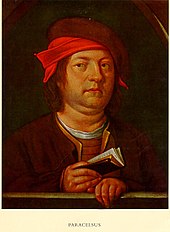
The alchemist Paracelsus counts seven races of soulless creatures, and mentions the dwarves on earth. He believes in the geniuses of the four elements. The Earth, by spontaneous generation, produces dwarves who guard the treasures under the mountain. He describes them two spans high (40 cm), and very taciturn. Giants and dwarves are according to him from the air, but live on the earth:
“The other two families are composed of men who were also born without a soul; but who, like us, breathe outside the Elements. They are on the one hand the giants and on the other hand the dwarves who live in the shadow of the forests, umbragines … There are beings who naturally dwell within the same Element. Thus the phoenix, which stands in the fire like the mole in the earth. […] As for the giants and dwarves of the forest, they have our world for a stay. All these soulless beings are produced from seeds that come from heaven and the Elements, but without the silt of the earth… They come into the world like insects formed in the mud “by spontaneous generation”.”
Paracelsus, The Great Astronomy. (Astronomia magna).
The abbot of Villars simplified it in 1670:
“The earth is filled almost to the center of Gnomes, people of small stature, guardians of treasures, mines and gems. These are ingenious, friends of man and easy to order. They provide the children of the Sages with all the money they need and ask little as a price for their service but the glory of being commanded. The Gnomids their wives are small, but very pleasant, and their costume is very curious…”
Henri de Montfaucon de Villars, Le comte de Gabalis ou Entretiens sur les sciences occultes.
Gnome in folklore
Often described in Germanic tales, for example, those of the Brothers Grimm, the gnome often resembles a wrinkled old man living in a deep underground where he keeps a buried treasure. For this reason, Swiss bankers are sometimes referred to as “Zurich gnomes”.
The gnome archetype is found in the legends and folklore of many European countries, under other names, such as Icelandic vættir and Prussian kaukis. But many confusions arise, because the gnome is one of many small supernatural creatures, similar but subtly different from other creatures of European folklore, including dwarves and goblins, with which he is often confused. According to still other interpretations, gnomes are dwarves, ugly, deformed, mischievous and wicked, or they belong to the category of geniuses who, according to Kabbalah, hold underground treasures of precious stones and metals.
The Thieving Gnomes
According to some folklore, there are Thieving Gnomes, also called Mountain Gnomes (gnome der Berge). They are small humanoid creatures often depicted as a small old man with a beard, wearing a hat and dressed in red or green. Beliefs vary, in Ireland for example, the “Leprechauns” would live at the foot of a rainbow where they would keep a cauldron filled with gold. They would grant three wishes if captured. In other folklore, the thieving gnome would live in groups in houses and steal things like socks. It is impossible to know exactly where these beliefs and the origins of gnomes come from, but it is noted that they are represented differently in many parts of the world. What they have in common is that they are small and materialistic. In Switzerland, the term “Zurich Gnomes” is used to refer to the bankers who keep the money.
Symbolic
The gnomes are closely related to the study of crystals and precious stones and announce “a new man reconciled with nature and the knowledge of nature”, one “who is changed into true gold” and “who has found the true sulfur which he had forgotten in his first operations.”
Some books refer to gnomes as a vast species that encompasses other specimens well known by other names: gremlin, etc.
Posterity
During the nineteenth century, the first garden gnomes arrived in England (garden gnomes), where they enjoyed great popularity.
Gnome in literature
Tolkien
In his writings, J. R. R. Tolkien used for some time the term “gnome” to refer to the Ñoldor, a group of Elves reputed to be the most learned of all, in reference to the Greek term gnome which means “thought, intelligence”. He later renounced it, because of the association of the word with the Dwarves.
C. S. Lewis
In The Chronicles of Narnia saga of C. S. Lewis, in The Silver Chair, gnomes are the inhabitants of the Underworld.
J. K. Rowling
In the Harry Potter universe, gnomes are creatures that invade the garden of the Burrow, the home of Ron Weasley. They are described as a plague like slugs. They are mentioned in the second book, Harry Potter and the Chamber of Secrets, and also several times in the following volumes because getting rid of them (“degnosing” the garden) is a daunting task that Weasley children must regularly perform.
Music
- 1874: The second movement of Mussorgsky’s work, Pictures at an Exhibition, is entitled “Gnomus” (Latin for “The Gnome”). It is written to represent a gnome hopping from place to place, his movements constantly changing speed.
- 1967: The Gnome is a song by Pink Floyd, written and composed by guitarist Syd Barrett, on their first psychedelic album, The Piper at the Gates of Dawn. The song takes place in a fictional world from the point of view of a gnome named Grimble Grumble.
- 1967: The Laughing Gnome by David Bowie, released as a single. It became a hit when it was reissued in 1973, following Bowie’s commercial success.
- 1970: All Things Must Pass by former Beatles lead guitarist and singer George Harrison. The album cover features a black and white photo of the musician sitting among a group of garden gnomes.
Gnome in television
- The Spanish series David el Gnomoi (David le gnome for the French version) was broadcast in 1985, its sequel (La llamada de los gnomos) in 1996. It is multicast in Western countries (Spain, France, Canada, United States for the last series).
Role-playing

They appear in several medieval-fantasy role-playing games. In Dungeons & Dragons, they are described as “people appreciated by all for their talents in alchemy, engineering and inventors”. In addition, they are known for their humor and curiosity. Gnomes are between 90 and 120 cm tall and weigh just over 20 kilograms. Their skin is usually very tanned, even up to the color of the bark. Their hair is usually blonde and their eyes have all shades of blue.
References (sources)
|